 LOCAL FIT KUMANOBack to list
Shingu City: The Gateway to the Kumano Sanzan, Connected on Foot
Among the three grand shrines of Kumano (Kumano Sanzan), Hongu and Nachi are strongly associated with mountain settings, but Shingu City is a town that opens out to a river and the sea. Located at the mouth of the Kumano River, both Kumano Hayatama Taisha and Kamikura Shrine sit close to the city center. This means you can enjoy a half-day of sightseeing on foot without being rushed by transportation.
Here, we outline a comfortable half-day route centered on Kamikura Shrine and Kumano Hayatama Taisha in Shingu City.
Recommended Order: Kamikura Shrine → Kumano Hayatama Taisha
Start by Getting Moving at Kamikura Shrine
Kamikura Shrine enshrines a massive boulder called "Gotobiki Rock" as its sacred object. "Gotobiki" is the local dialect word for toad, and the name is said to come from the shape of the rock. Some theories link it to "Ame-no-Iwatate," which appears in the legend of Emperor Jimmu's eastern expedition, making it a place where you can sense the origins of Kumano faith.
The approach is a steep stone stairway built of natural stones in what is said to be a Kamakura-period style. Because the footing is uneven, what you might expect to be a leisurely stroll can feel surprisingly demanding. Climbing in the morning, while you still have energy, makes the rest of your town walk much easier.
- Wear sneakers or other non-slip shoes
- Be cautious on wet or humid days, as the stone steps can be slippery
- Keep your belongings compact so both hands are free
- If you feel unwell or the weather is uncertain, don't hesitate to turn back partway
At the top, you can look out over the townscape of Shingu and the Kumano-nada Sea. Combined with the impressive presence of Gotobiki Rock, the view makes the climb thoroughly worthwhile.
Then on to Kumano Hayatama Taisha
After descending from Kamikura Shrine, walk through town to Kumano Hayatama Taisha. One of the three Kumano Sanzan shrines, it has historically been called "Shingu" (new shrine) in contrast to the "Motomiya" (original shrine) on Mount Kamikura. Since this relates to the origin of the name Shingu itself, visiting Kamikura Shrine first makes the story flow naturally.
The grounds are notable for their vermilion-lacquered shrine buildings, which give off a brighter atmosphere than mountain shrines. Within the precincts stands a nagi tree that has been treasured since ancient times. Beyond the shrine buildings themselves, take your time to enjoy the trees and the overall ambiance.
Side Trips Around Town If You Have Time
Even on a half-day visit, it would be a shame to end after just the two shrines. If you have extra time, consider these additional stops:
- Around Asuka Shrine: Located near the Kumano River, this area is often walked together with Hayatama Taisha
- Around the Shingu Castle Ruins (Tankaku Castle Park): A pleasant stroll where you can feel the town's history
- Restaurants near the station: A chance to try seafood unique to this port town and other local favorites
Note that opening hours and visiting information can change by season. Before heading out, it's a good idea to check official sources for the latest information.
Tips to Know Before You Walk
Because Shingu City lies at the mouth of the Kumano River, the perceived temperature changes with the weather and wind. Prepare for strong sun and heat in summer, and chilly mornings and evenings in winter—bringing a light jacket and drinks is a good idea. Also, Kamikura Shrine involves stone steps and makes it tricky to judge your timing, so avoid times close to sunset and plan to descend while there's still daylight.
Summary
Touch the primal landscape of Kumano faith at Kamikura Shrine, then take your time walking the sacred grounds of Kumano Hayatama Taisha. This combination makes for a satisfying half-day walking tour in Shingu City. It's a great course for those who don't have time for a long hike on the Kumano Kodo, or for those choosing Shingu as the first or final stop in their Kumano Sanzan pilgrimage. Just make sure to prepare proper footwear, and enjoy exploring at the town's own pace.
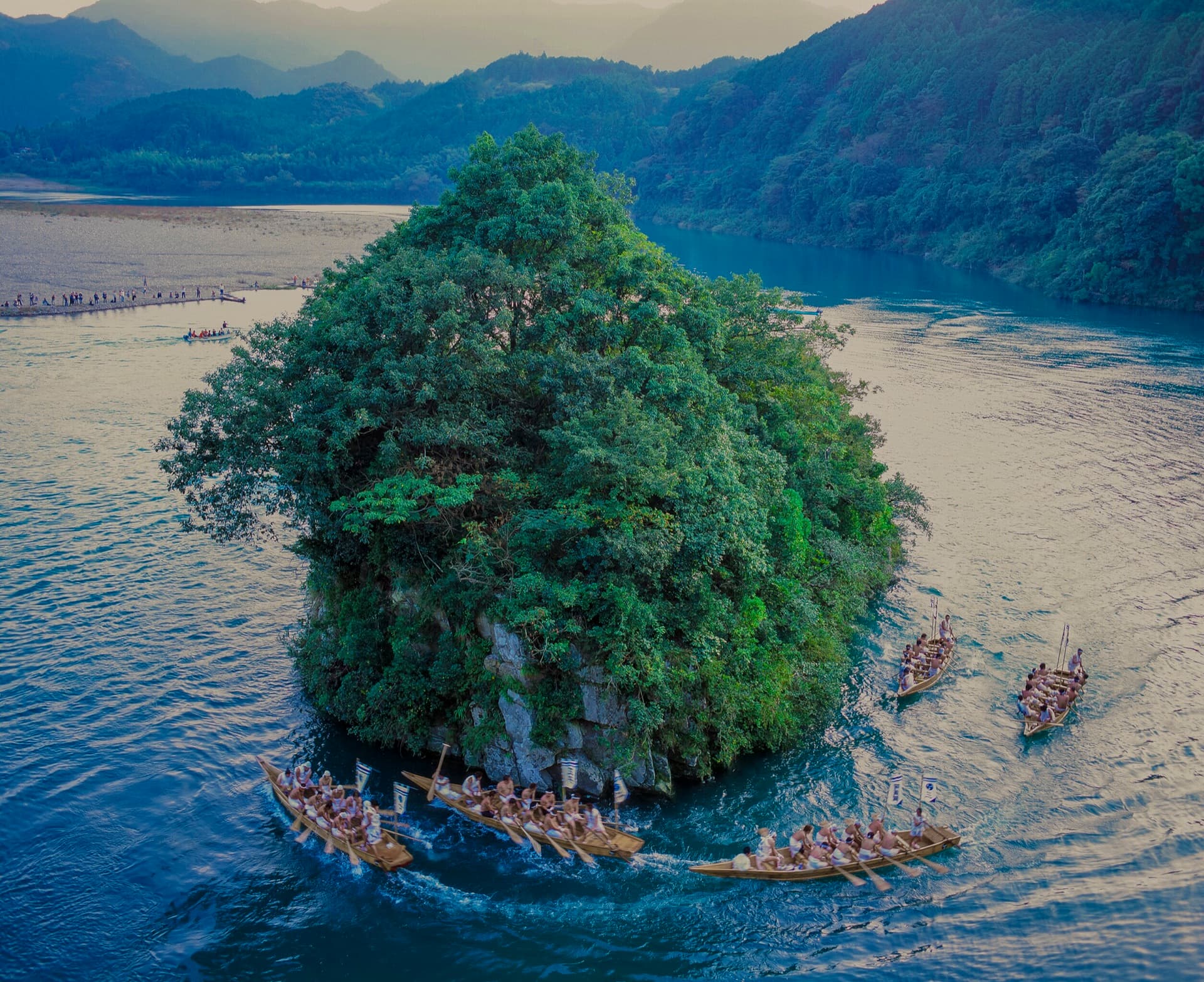
Image: 御船祭 (via 熊野速玉大社例大祭)((公社)和歌山県観光連盟)


