 LOCAL FIT KUMANOBack to list
Kumano Hayatama Taisha in Shingu: A Place to Savor Vermilion Shrines and Ancient Trees
Kumano Hayatama Taisha, one of the three Kumano Sanzan shrines, sits in the heart of Shingu City. Located near the mouth of the Kumano River, it is easy to reach on foot from the city center. Its vibrant vermilion-lacquered shrine buildings exude a bright, open atmosphere—quite different from Hongu or Nachi, which are tucked deep among verdant mountains.
In this article, we introduce a leisurely way to enjoy the grounds by focusing on three highlights: the nagi tree you’ll want to meet in the precinct, the Kumano Shinpokan, which preserves ancient ritual objects, and the Kumano Goō Hōin—a talisman essential to understanding Kumano faith.
Meeting the Nagi Tree | A Thousand-Year Life and a Leaf-Shaped Charm
The Deep Bond Between Kumano and the Nagi Tree
One of the precinct’s highlights is an ancient nagi tree. Designated a natural monument, this great tree is said to have been planted by Taira no Shigemori and is believed to be around a thousand years old. When you arrive, look up at the thickness of its trunk and the spread of its branches. Many visitors find themselves stopping in their tracks before it.
How to Look at Nagi Leaves
Knowing a few features of the leaves before you visit will change how you see the tree.
- A conifer with broad leaves: The nagi belongs to the Podocarpaceae family, yet its leaves are oval and smooth. If you were expecting needle-like foliage, seeing them up close may come as a surprise.
- Fine, lengthwise veins: Look closely and you’ll see thin veins running straight along the length of the leaf. These leaves are notoriously hard to tear sideways, and so they’ve long been spoken of as symbols of bonds that won’t break and harmonious marriages.
- A name linked to “nagi” (calm seas): The word “nagi” also evokes *nagi*—a calm sea. In Kumano, close to the ocean, the tree has long been cherished as one that prays for safe travel, secure daily life, and inner peace.
The Story of Nagi Leaves and the Kumano Pilgrimage
In the era of the Kumano pilgrimage, it is said that pilgrims carried nagi leaves with them, praying for safe passage. The custom of bringing leaves home carefully continues today in the shrine’s amulets and offerings. Since the types of amulets and their availability can change, please inquire at the shrine office or front desk during your visit if you are interested.
Etiquette for Viewing the Nagi Tree in the Precinct
Ancient trees are objects of faith and living cultural treasures. Think of trees within a sacred precinct as belonging to the deities, and approach them with the quiet reverence of simply looking and offering a prayer.
- Do not pick leaves or branches on your own
- Don’t approach too close to the base: The larger the tree, the more soil compaction becomes a burden. Please respect any ropes or signage.
- Pay your respects first: Greet the deities at the main shrine first, then look up slowly at the tree—you’ll feel more settled.
- Be considerate when taking photos: Try not to block the paths of other worshippers.
Encountering Ancient Forms of Prayer at the Kumano Shinpokan
The Key Is to See “Prayers That Were Used”
The Kumano Shinpokan, located within the precinct, is a facility that houses the ancient sacred treasures passed down at Kumano Hayatama Taisha. “Shinpō” (sacred treasures) refers to furnishings, personal ornaments, and craft objects offered to the deities. The fact that some of the items held here are designated National Treasures speaks to the depth of Kumano’s history.
The trick to appreciating the exhibits is not only to admire their individual beauty, but to imagine “who dedicated this, and with what wish?” Through the objects, you can sense the lives and prayers of people from the age when the Kumano pilgrimage flourished. Exhibition contents and opening status may change, so checking the official information before your visit will help you plan with peace of mind.
Kumano Goō Hōin | A Paper of Oaths That Speaks of Faith
The Kumano Goō Hōin is a talisman bestowed by the three Kumano Sanzan shrines. It is distinguished by its unique script formed from stylized crow figures. Beyond being enshrined in homes as protection against misfortune and evil, it was also historically used on the reverse side for *kishōmon*—written oaths. Breaking such an oath was believed to invite divine punishment, lending real weight to people’s promises.
The basics of the talisman itself are covered in another article. Here, consider viewing it alongside the treasures at the Shinpokan and the nagi leaves through the lens of: “The people of Kumano have long entrusted invisible promises and safety to tangible forms.” Availability and distribution methods vary by season and shrine, so please check on-site.
A Half-Day Itinerary and Tips for Side Stops
1. Worship around the main hall: Look up at the vermilion shrine buildings and quietly offer your prayers first.
2. Head to the ancient nagi tree: After worship, gaze slowly at the tree while reflecting on the shape of its leaves, its veins, and the meaning of its name.
3. Visit the Kumano Shinpokan: Look at the ancient prayer objects and imagine the history of the Kumano pilgrimage.
4. Walk through the town of Shingu: If you have time, take in Kamikura Shrine—said to be the original shrine—and the scenery along the Kumano River. You’ll get an even deeper feel for Kumano faith. For detailed routes, see our other articles on the Shingu area.
Comfortable walking shoes are recommended. On rainy days, the stone paths and stairs can be slippery, so allow yourself extra time.
In Closing
Kumano Hayatama Taisha in Shingu is a place where you feel the “layered passage of time” rather than flashy spectacle. Even in the single leaf of a nagi tree, you’ll find prayers distinctly of Kumano—“protect the bonds we have,” “grant us calm seas.” Combine that with the ancient prayer objects of the Kumano Shinpokan and the culture of oaths conveyed by the Kumano Goō Hōin, and the shape of the Kumano pilgrimage comes into view. Whether on a tour of the three Kumano Sanzan shrines or a day spent just in Shingu, this is a precinct well worth taking your time to explore.
*Updated and revised on November 10, 2026.*
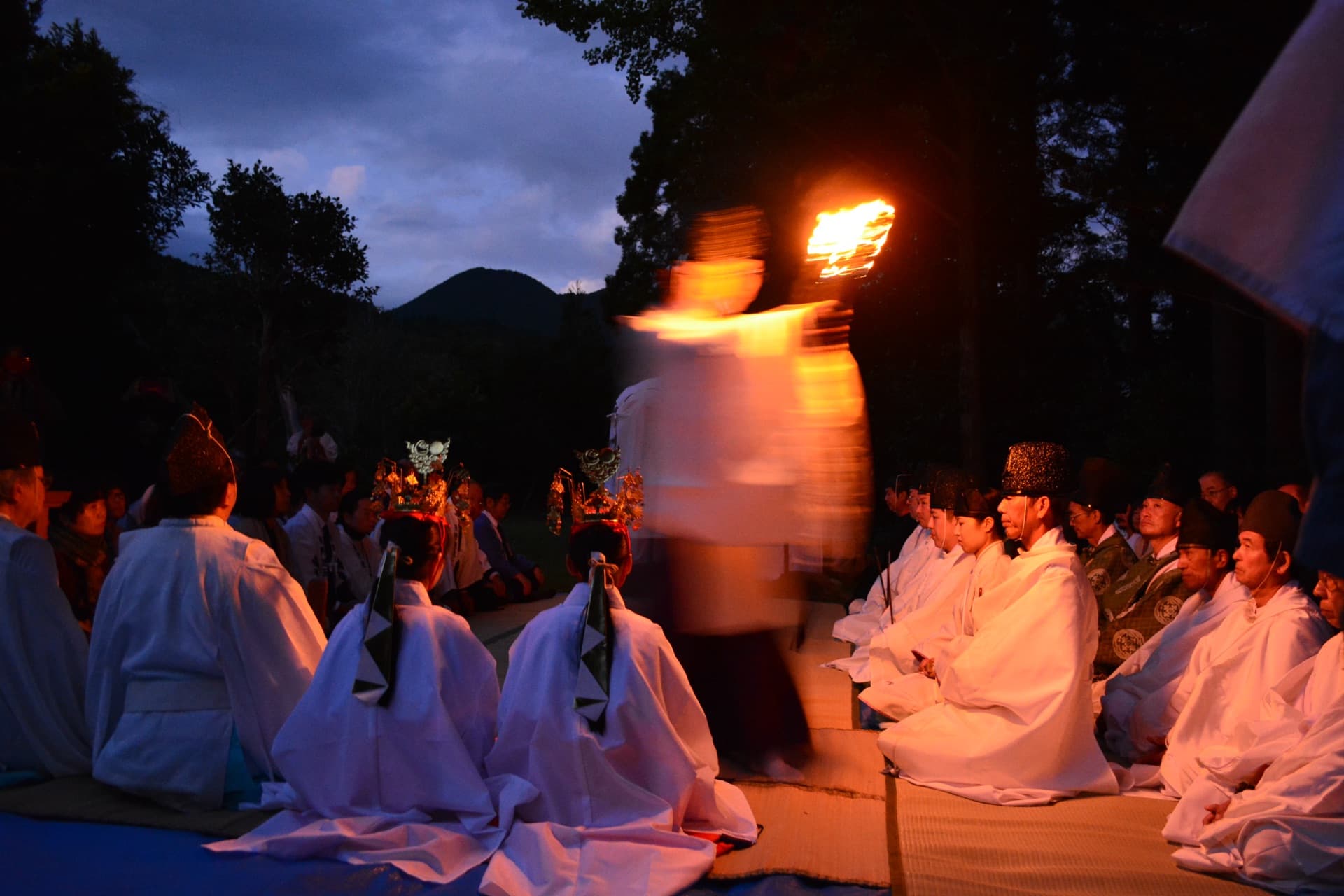
Image: 熊野速玉大社 御旅所神事 (via (公社)和歌山県観光連盟)


