 LOCAL FIT KUMANOBack to list
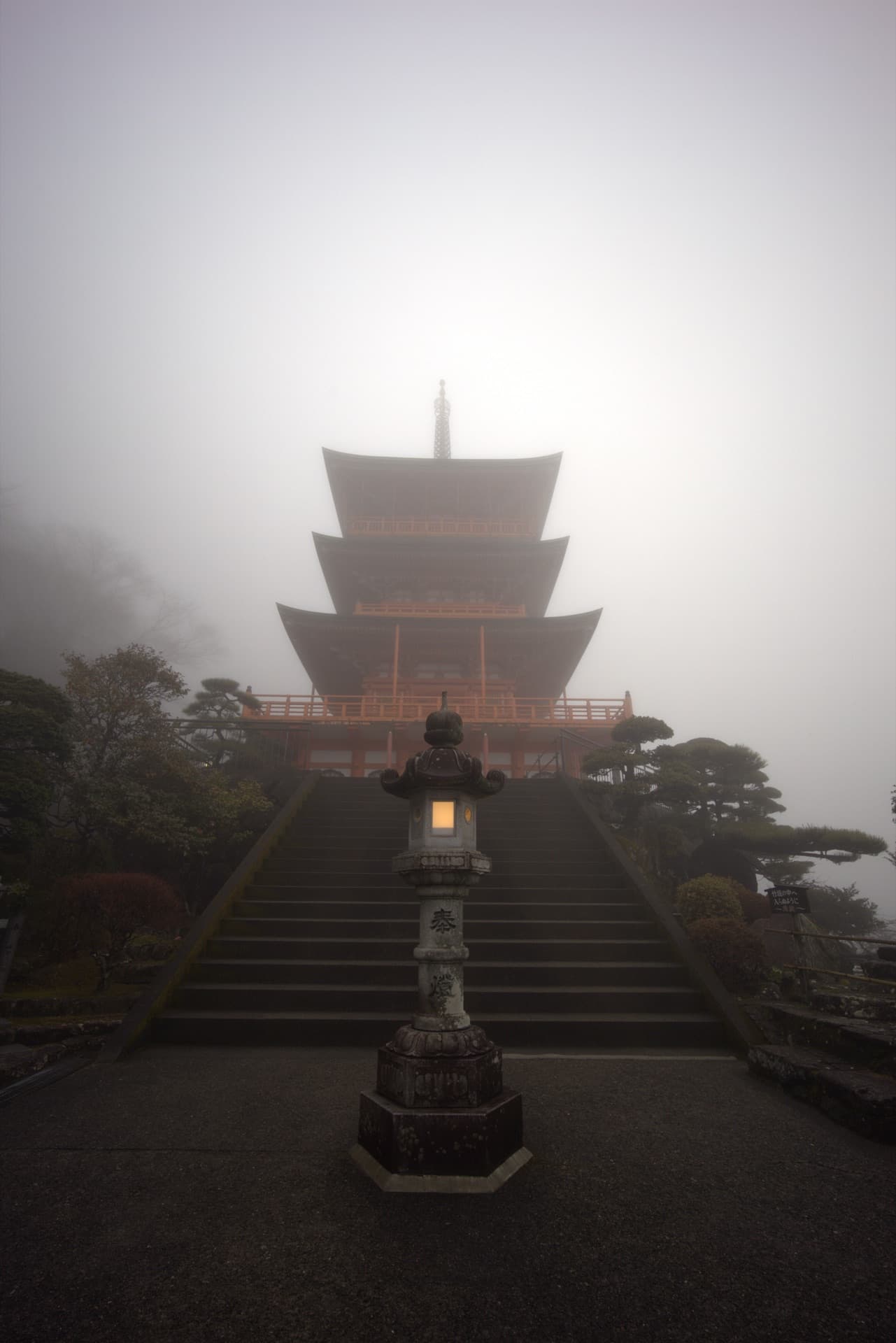
The View Where Seiganto-ji's Pagoda Meets Nachi Falls
In photos introducing Kumano, you'll often see a familiar composition: "the white Nachi Falls plunging beyond a vermilion three-storied pagoda." With the three colors of mountain green, pagoda vermilion, and waterfall white coming together, it's a scene that even first-time visitors instantly recognize as "the place."
The setting is Seiganto-ji, a temple on the midslope of Mount Nachi. Known as the first of the 33 temples on the Saigoku Pilgrimage, its main hall is an ancient structure that retains the atmosphere of the Momoyama period. Standing in one corner of the precincts is the three-storied pagoda, and beyond it rises Nachi Falls—one of Japan's tallest waterfalls.
This time, rather than covering the trip itinerary, we'll focus on how to capture this one shot.
Three Ways to Think About Composition
1. Pagoda as the Star, or the Falls?
The first thing to decide is your main subject. Placing the pagoda large in the foreground turns the falls into a thin white line in the distance, creating a photo with depth that says, "viewing the falls from a place of prayer." Conversely, if you make the falls dominant, the pagoda becomes a small vermilion accent, conveying the sheer scale of the scene.
Even with a smartphone, simply switching the zoom changes the impression dramatically, so shoot both and choose later.
2. Create "Negative Space" and "Vertical Lines" in the Foreground
Since the falls plunge vertically, portrait orientation is a perfect match. The stacked roofs of the pagoda also create vertical flow, giving the image a sense of stability. Letting tree branches enter slightly at the edges of the frame adds the atmosphere of being deep in the mountains.
3. Keep Horizontals and Verticals Aligned
The pagoda is a structure full of straight lines. Even a slight tilt makes the photo feel uneasy, so turn on your grid lines to check horizontal and vertical alignment.
How Weather and Time of Day Change the Image
The direction and strength of light shift with the season and the hour. The surest approach is to move around on site while checking how the shadows fall. Here are some general guidelines:
- Sunny days: Vermilion and green stand out sharply. However, strong sunlight can easily blow out the white of the falls, so slightly lowering the exposure will preserve the water's texture.
- Cloudy days: Contrast is gentle, and the fine flow of the falls and the pagoda's color come through naturally. It's actually an easy day to shoot.
- After rain or on misty days: Mist clinging to the mountains creates a dreamlike overlap of pagoda and falls. This is a popular target—a moist, atmospheric scene that feels distinctly Kumano.
The weather on Mount Nachi often differs from that along the coast. Bring a cloth to wipe your lens or smartphone, just in case of mist or rain.
Etiquette and Safety to Keep in Mind Before Shooting
Seiganto-ji is both a sightseeing destination and a place where prayer continues to this day. Please be mindful of the following when photographing:
- Don't point your lens at worshippers or during sutra chanting
- Don't block pathways (be especially considerate of others when using a tripod)
- Don't touch buildings or Buddhist implements, and don't enter restricted areas
- Stone steps and pilgrim paths get slippery when wet—don't get so absorbed in shooting that you forget your footing
Whether photography is allowed varies by location within the precincts. Please follow the posted notices and guidance.
Also, as a local recommendation: offer your prayers at the main hall first, then take your photos. Your mind settles, and curiously, the photos seem to turn out calmer too.
A Word from the Editors
When you actually stand before the view of the three-storied pagoda and Nachi Falls, what stays with you most—more than the photos—is the sound. The distant roar of water, trees swaying in the wind, the quiet precincts. After pressing the shutter, take your eyes off the screen for a moment and take it in with your own eyes.
That brief pause will leave the deepest impression of your Kumano journey.
Image: 那智山青岸渡寺 三重塔 (via (公社)和歌山県観光連盟)


