 LOCAL FIT KUMANOBack to list
The History of Oyunohara Begins on a 'Sandbar in the River'
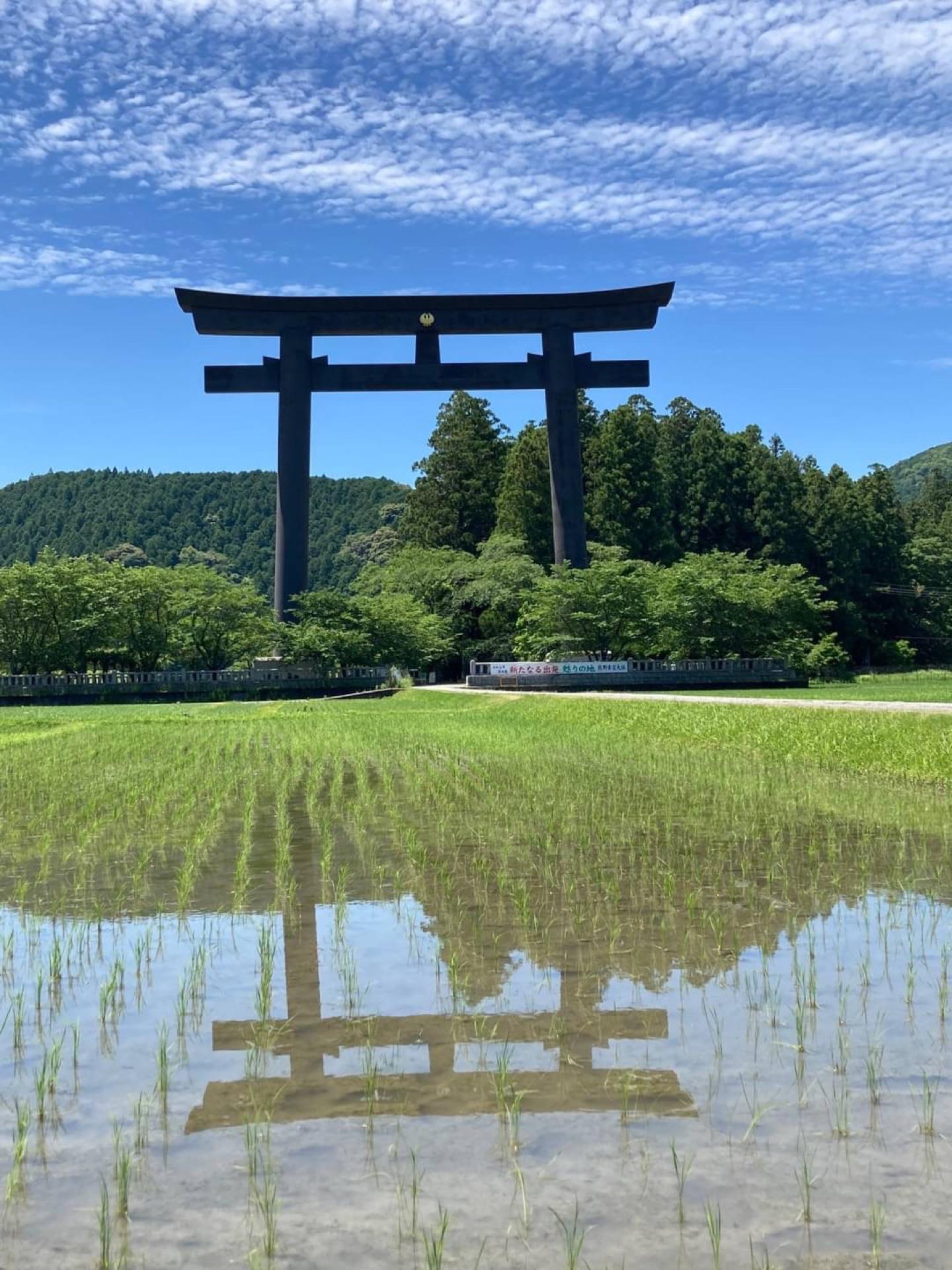
Pass through the main approach of Kumano Hongu Taisha, look beyond the rice paddies, and you will see a quiet grove where an enormous torii gate stands. That place is Oyunohara.
Oyunohara was a sandbar formed where the Kumano River, Otonashi River, and Iwata River meet. It is said that this terrain — where flowing waters converge — was chosen as the place to welcome the Kumano deities. The sense of crossing a river to enter a sacred site fits beautifully with the journey of the Kumano pilgrimage.
Once, the Main Shrine Buildings Stood Here
The current shrine buildings of Kumano Hongu Taisha sit on higher ground, but until the early Meiji era, the main shrine buildings stood here at Oyunohara. The 'Hongu' that pilgrims journeyed toward was, in fact, this very sandbar.
In the age when Kumano faith flourished in the syncretic form of blended Shinto and Buddhism, worshippers walked the ancient trails and arrived here with the presence of the river all around them. Today the space is open and wide, but if you walk here imagining the great sacred precinct where shrine buildings once stood in rows, the scenery takes on a different meaning.
The Great Flood of 1889 and the Relocation of the Shrine
The turning point came with the great flood of 1889 (Meiji 22). Torrential rain struck the mountains of the Kii Peninsula, swelling the Kumano River, and many of the shrine buildings on the sandbar are said to have been swept away.
The buildings that escaped destruction were later moved to their current location on higher ground (around 1891). Since then, Oyunohara has been carefully preserved as the 'former shrine site.'
The Stone Shrines That Remain on the Sandbar
At the former site, small stone shrines remain that enshrine the deities of the buildings lost to the flood. In a place where the great structures are gone, a quiet space for prayer continues — and in this, you can feel the devotion of the local people.
The Giant Torii Was Built in 2000
The giant torii gate standing at the entrance to Oyunohara was erected in 2000 (Heisei 12). Said to be one of the largest steel torii in Japan, it stands out clearly even from a distance. The combination of a historically ancient site with a new torii gate can be seen as a symbol of carrying the former shrine site into the future.
Points to Study Before You Walk
- If you have time, take the long way around: Viewing the torii across the rice paddies lets you truly appreciate its presence on the sandbar.
- Be aware of where the rivers are: Looking around at the surrounding rivers and terrain brings the history of flooding closer to home.
- Compare it with the elevated main shrine: Walking between the two locations — the shrine buildings and the former site — helps you grasp the flow of history.
- Pause for a breath when paying respects: The former site is a place of prayer. Please refrain from loud voices or running, and spend your time quietly.
Summary
The history of Oyunohara is a story born from water, transformed by water, and still alive today as a place of prayer. Precisely because the shrine buildings are gone, the wide sky and the grove have something to speak to us. When you visit Kumano Hongu, be sure to extend your walk beyond the elevated shrine buildings all the way to the former site.
*For detailed information about opening hours, worship, and event schedules, please check the official Kumano Hongu Taisha website in advance.
Image: 大斎原 (via (公社)和歌山県観光連盟)


