 LOCAL FIT KUMANOBack to list
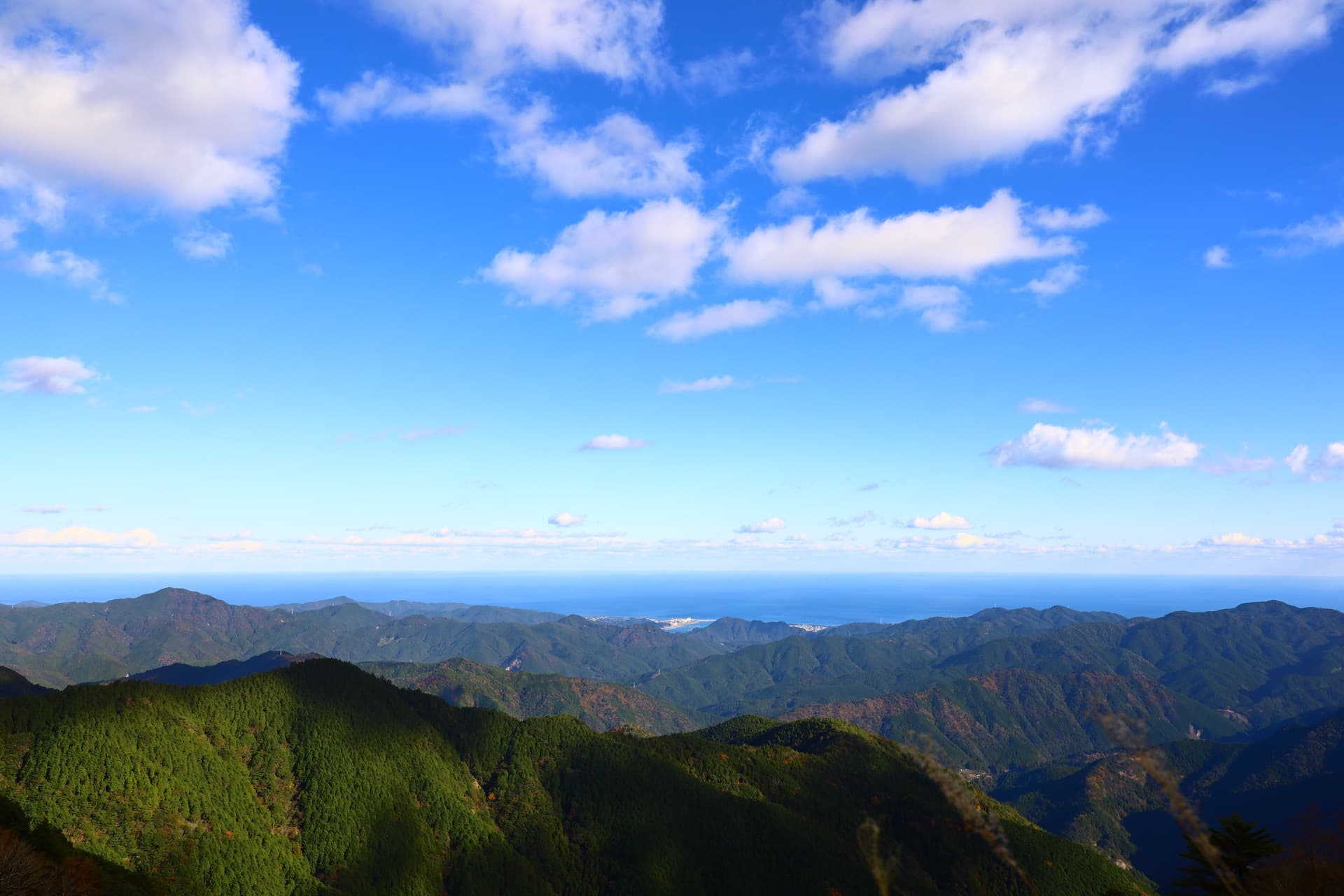
A different face of Kumano — the sea, not the mountains
When most people hear "Kumano," they picture moss-covered stone paths and groves of cedar. But travel across to Kumano City on the Mie Prefecture side, and the scenery opens up dramatically. Before you spreads the Kumano Sea, where the Kuroshio Current flows. This time, the theme is walking along that coastline to see the landscapes that waves have carved from rock.
Onigajō | A rocky corridor sculpted by wind and waves
The signature sight of Kumano City's coast is Onigajō, designated as a National Place of Scenic Beauty and Natural Monument. Along the sea-facing cliffs, you'll find caves hollowed out over countless years by wind and waves, and rock surfaces that look like layered slabs stacked one upon another.
Feeling the "texture of the rock" on foot
As you follow the walking path, your view changes again and again — rocks loom overhead, waves lap at your feet. Up close, the rock surfaces reveal honeycomb-like pits and finely striped ridges, something quite different from the view taken in from afar. If you're taking photos, try getting in close to capture the "expressions" of the rock rather than the sweeping vista.
The legend behind the name
The name Onigajō ("Demon's Castle") is said to come from an old legend that demons once lived in these caves. When you think of how people stood in awe of the wild forces of nature and gave them shape through stories, the sheer presence of the rocks takes on a deeper flavor.
Shishiiwa | A "lion gazing at the sea" beside the highway
Continue a little further along the coast from Onigajō, and you'll come upon Shishiiwa — a massive rock that looks like a lion opening its mouth toward the sea. Its expression shifts with the angle of view and the quality of the light, so it's worth pausing and looking again after a little while.
In morning and evening, the rock's outline softens into view, and combined with the sound of the waves, it brings a quiet, unhurried feeling.
On to Shichirimihama | Treading a beach of rounded stones
Shichirimihama, which stretches on from this area, is not a sandy beach but a shore of smooth, rounded pebbles. With every step the stones click softly underfoot, and the sound of the waves retreating is distinctive too. Knowing that pilgrims of old Kumano walked this same shore, even a short stroll in the sea breeze brings a real sense of journey.
A few things to keep in mind when walking
- Rocky areas and walking paths can be slippery when wet. Comfortable, non-slip shoes are a safe choice.
- On days with high waves or strong winds, take care not to get too close to the sea side.
- Before heading out, check the city's tourism information for opening conditions and weather updates.
- On days with strong sun or glare, don't forget a hat and something to drink.
A word from the editors
Kumano travel carries such a strong image of "mountains and waterfalls" that the rocky seaside scenery can come as a surprising discovery. Combine it with Hana-no-Iwaya Shrine or the Iseji route of the Kumano Kodō, and you can experience mountain, shrine, and sea in a single day — all within Kumano. Take your time, and walk to the rhythm of the waves.
Image: 熊野灘 (via (公社)和歌山県観光連盟)


