 LOCAL FIT KUMANOBack to list
Reading the Shapes of Rocks at Kumano's "Gateway to the Sea"
When people think of Kumano, many picture mountains and ancient pilgrimage trails. But once you reach Kumano City on the Mie Prefecture side, the sea takes center stage in the landscape.
The prime example is Onigajō. Facing the Kumano-nada Sea, this scenic coastline is lined with sheer rock walls and cave-like hollows, and has been designated a National Place of Scenic Beauty and Natural Monument. The rocks have been carved over long ages by waves and wind, and as you walk, it feels as if you're inside a "corridor made by nature."
The Story Behind the Name Onigajō
According to legend, the name comes from a tale in which Sakanoue no Tamuramaro defeated an ogre (oni) here. Another story tells of pirates who used the caves as their hideout. True or not, when you see the dramatic shadows cast behind the rocks, it's easy to understand how such stories could have been born.
What to Look For as You Walk
Pay Attention to the "Patterns" on the Rock Surface
Look closely and you'll see honeycomb-like dimples and layered striations on the rock. These are traces of erosion by waves and salty sea winds. Walking while imagining "which direction did the waves come from, and which parts eroded most easily?" turns a flat view into a three-dimensional landscape.
Looking Down at the Sea, and Looking Up at the Rocks
From atop the rocks, the Kumano-nada Sea stretches unbroken to the horizon—on a clear day, it's a wonderfully refreshing view. On the other hand, peering down at the water's surface from the edge of the rocks, you can feel the raw power of waves crashing against stone. The more you want to enjoy the view, the more it pays to stand a little back from the edge for safety.
Preparing Before You Walk
- Shoes: Rocky areas can be slippery when wet, so shoes with grippy soles are best. Sandals and heels should be avoided.
- Wind and waves: On days with strong sea winds or high waves, don't push yourself. You may also be splashed by sea spray, so a light jacket or layer is helpful.
- Luggage: Keep your hands free—a backpack or other light setup is recommended.
- Latest information: Open areas and accessibility can change with the weather. Before heading out, check with the tourist information center or official city information for peace of mind.
Connecting Along the Coast to Shishi-iwa and Shichirimihama
Near Onigajō stands Shishi-iwa (Lion Rock), a massive boulder that resembles a lion roaring toward the sea. Once you hear the name and look again, the profile really does come into view—it's quite striking.
Continuing on, Shichirimihama is, as its name suggests, a long pebbled beach. The sound of rounded stones underfoot blends with the rhythm of the rolling waves, offering a slower, more relaxed pace of time—quite different from the drama of the rocky cliffs.
Combining the Mountain Kumano with the Sea Kumano
After encountering the mountain-and-water faith of Hongu and Nachi, meeting the rugged coastline at Kumano City gives you a real sense of how wide-ranging the land called "Kumano" truly is. Why not add a half-day walk along the sound of the waves into your travels?
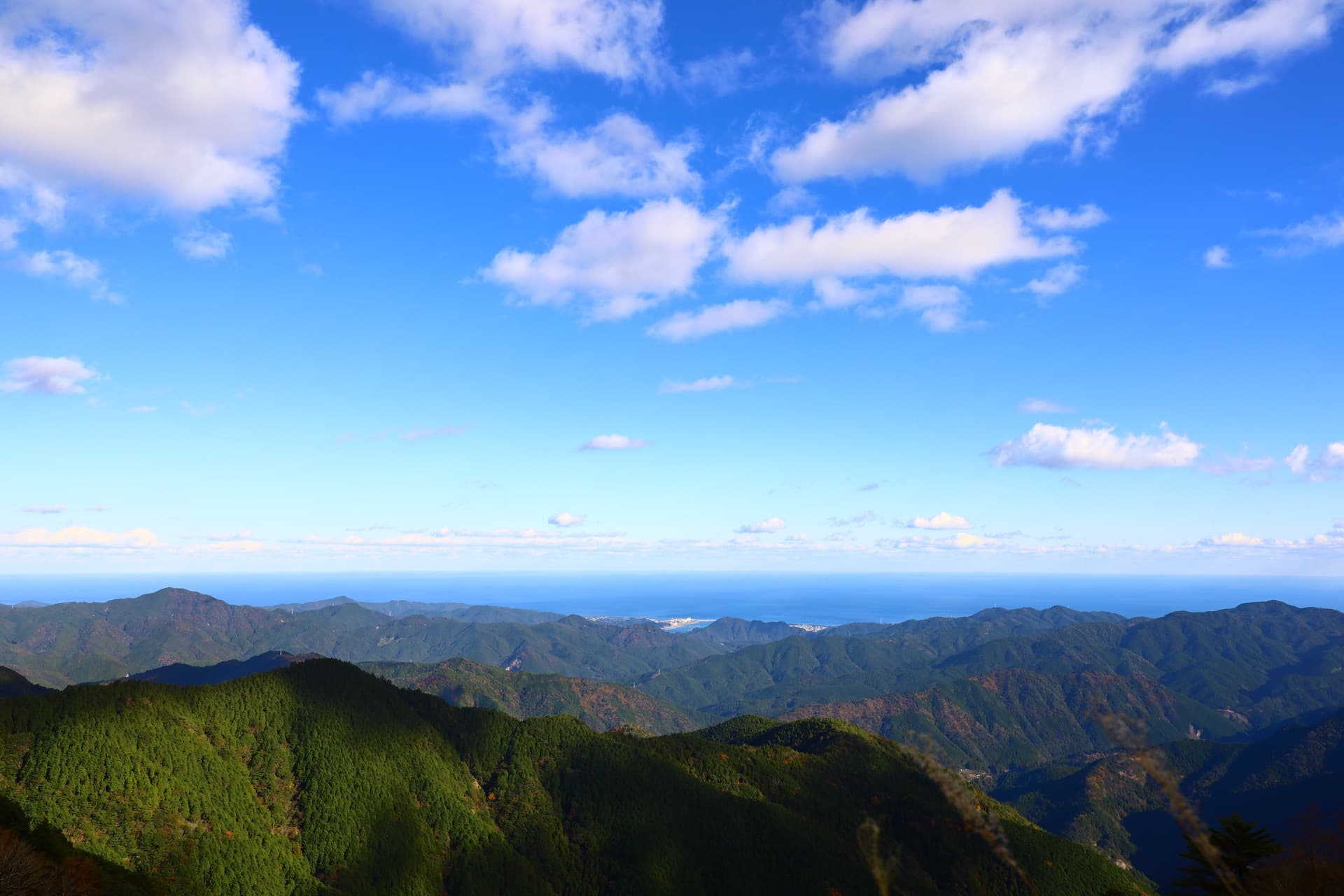
Image: 熊野灘 (via (公社)和歌山県観光連盟)


