 LOCAL FIT KUMANOBack to list
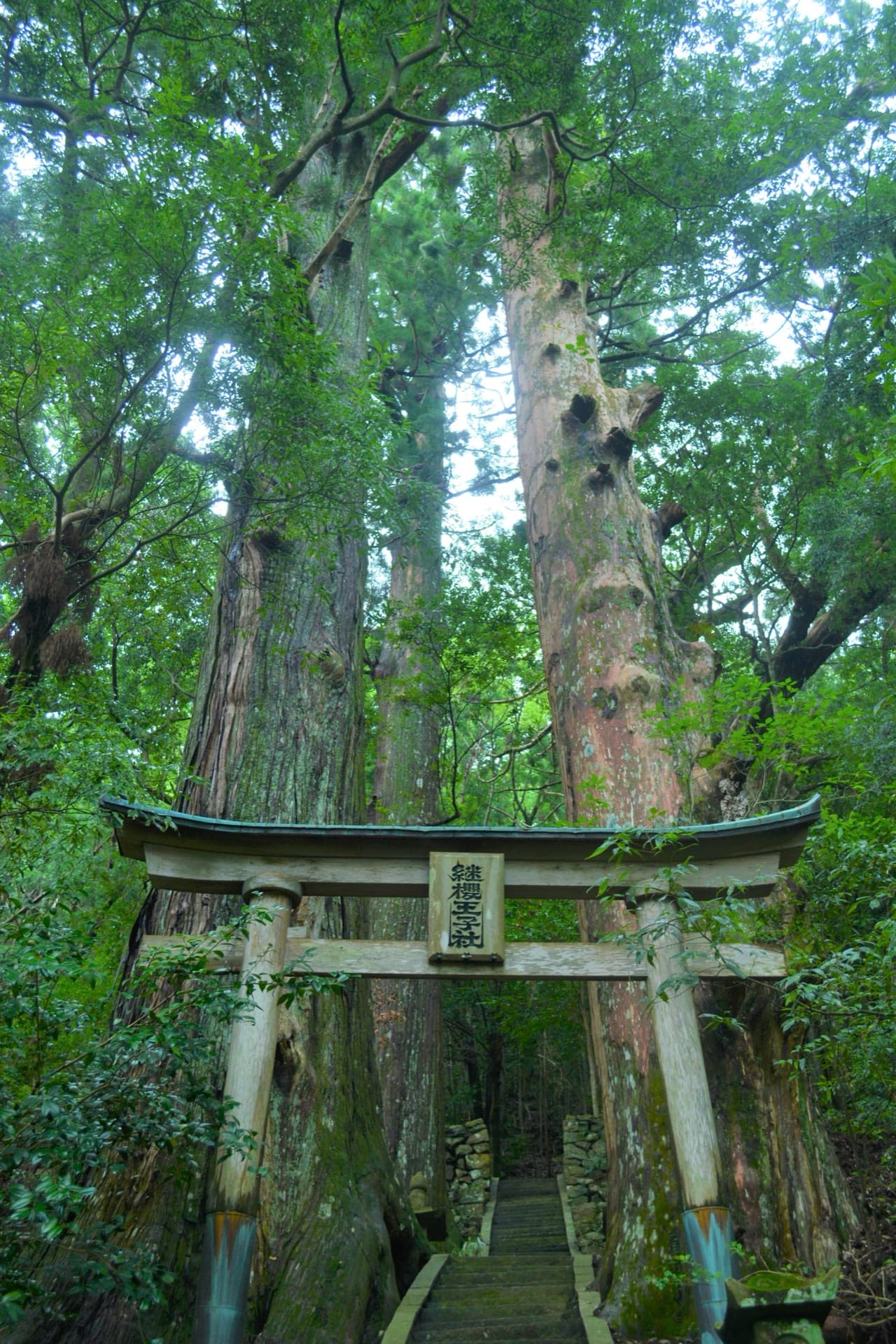
Nonaka no Ippo-sugi: A Place to Read the "Direction of the Branches"
Along the Nakahechi route leading to Kumano Hongu lies a quiet hamlet called Nonaka. It's here that you'll want to pause, at the Nonaka no Ippo-sugi — the great cedars rising within the precincts of Tsugizakura-oji Shrine.
Look up, and you'll see the massive cedar branches extending horizontally from the trunks. What's more, nearly all of them point in the same direction. The name "Ippo-sugi" (One-Way Cedars) comes from this striking appearance.
Why Do the Branches All Grow in the Same Direction?
Local tradition holds that the branches reach toward Kumano Hongu Taisha. For ages, people have said the cedars look as though they're bowing in reverence toward the deity.
In reality, sunlight, terrain, and prevailing winds likely all play a part. Still, looking up and imagining that "even the cedars, along this road to Hongu, are facing Hongu themselves" gives the journey a different feel. The thick trunks and deeply etched bark speak quietly of long passing years.
The Origin of the Name Tsugizakura-oji
"Oji" refers to the small shrines dotted along the Kumano Kodo, enshrining child deities of the Kumano gods. Pilgrims would stop here, press their palms together, and pray for safe travels.
One account says the name Tsugizakura-oji comes from the sight of a cherry tree (sakura) growing at the base of a great cedar (sugi) — as though the cherry had been "grafted" onto the cedar. In spring there's the cherry blossoms, and year-round there are the cedars; part of the pleasure is imagining the different faces the place shows across the seasons as you walk.
A Breather in a Village of Pure Spring Water
Near the Nonaka no Ippo-sugi flows a spring that locals have cherished since ancient times. Known as a famous water source, it has quenched the throats and refreshed the hearts of travelers passing by.
For a body that's just walked the mountain trail, even the sound of the water brings a moment of relief. Please follow the on-site signage regarding whether the water is drinkable and any rules for drawing it.
Three Things to Keep in Mind Before You Visit
- Tilt your head back and look slowly: Move your gaze gradually from the roots up to the branch tips to really appreciate the scale.
- Notice the direction of the branches: Step back and view the whole, and you'll see how they stretch together in unison.
- Be quiet in the shrine precincts: This is a place of prayer, and the cedars have been protected by local people for generations. Take care not to trample the roots.
A "Giant-Tree Signpost" Along the Nakahechi
The Nakahechi route is lined with small highlights — Gyuba Doji, oji shrines, stone-paved paths. Among them, the Ippo-sugi makes you feel that "the Kumano gods are right here beside you."
As Hongu draws nearer, the road subtly shifts in atmosphere. At Nonaka, take a moment to confirm the direction of the branches, then set off again with Hongu's direction in mind.
*Walking distances, bus schedules, and trail conditions change with the season and weather. Please check the latest information before setting out.
Image: 熊野古道中辺路 継桜王子 (via (公社)和歌山県観光連盟)


