 LOCAL FIT KUMANOBack to list
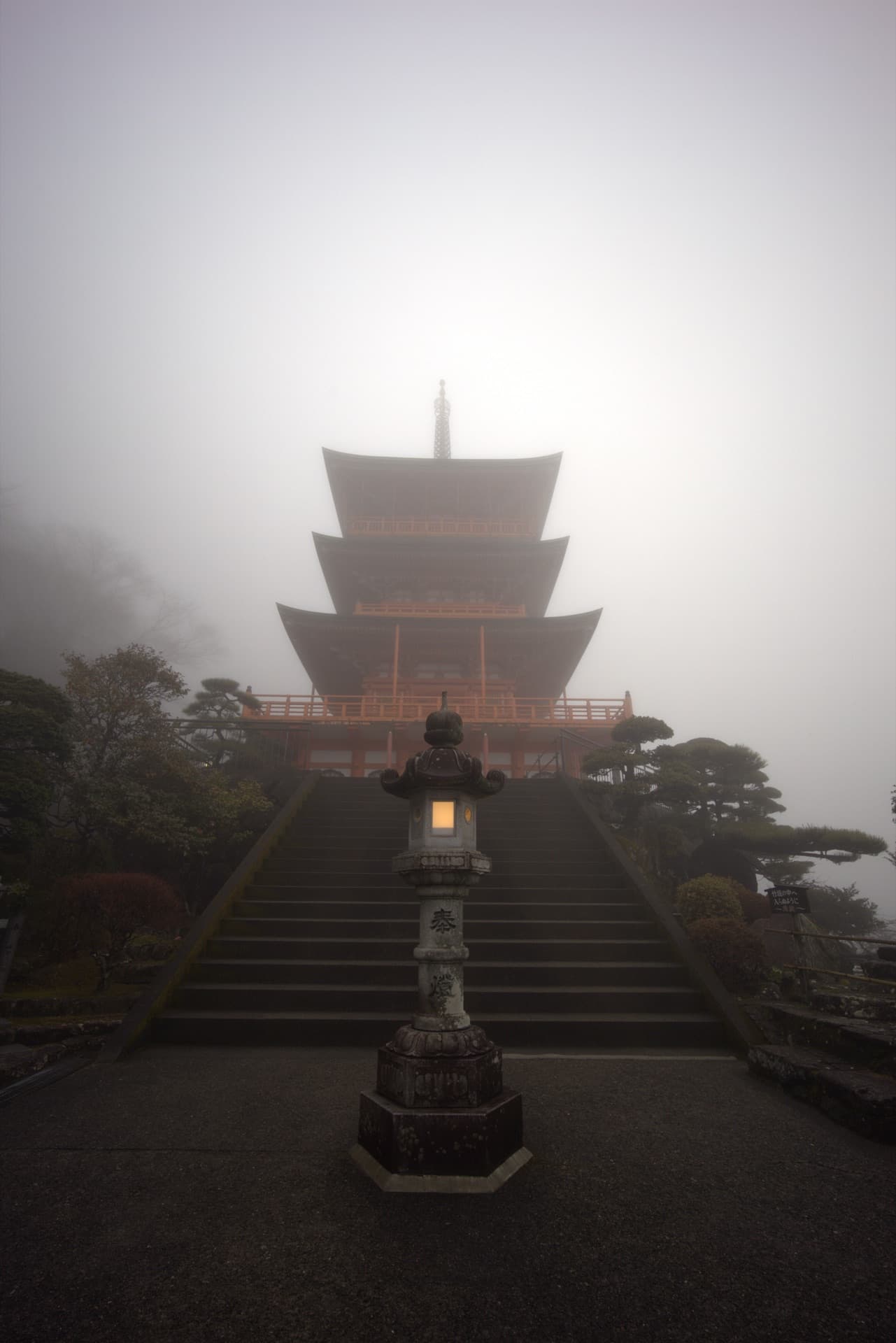
At the top of Mount Nachi's stone steps, a temple and a shrine stand side by side
When you climb the stone steps of Mount Nachi to the top, the vermilion shrine buildings and the temple halls, fragrant with aged wood, appear almost seamlessly connected. These are Kumano Nachi Taisha and Seiganto-ji. First-time visitors may feel a little puzzled, wondering, "Where exactly does the shrine end, and where does the temple begin?"
This very ambiguity is what makes Kumano, Kumano. In this article, we'll share some hints for how to "walk between" these two sacred sites.
An era when gods and buddhas were enshrined on the same mountain
For a long time in Kumano, a syncretic faith known as *shinbutsu-shūgō* — treating Shinto gods and Buddhist deities as one — flourished. Mount Nachi was no exception. Shrine halls and temple buildings stood together on a single mountain, and pilgrims are said to have offered prayers at both.
With the separation of Shinto and Buddhism during the Meiji era, shrines and temples were officially organized as distinct entities. Even so, the side-by-side layout here remains, and visitors can still move freely between the two precincts. As you walk, the sense that both are still "prayers of the same mountain," even after being separated, rises up through your feet.
Hints for walking between the two
Kumano Nachi Taisha: vermilion and the presence of the camphor tree
Nachi Taisha is the shrine enshrining the deities of Kumano. Within its precincts, where brilliant vermilion halls stand in a row, there is a great camphor tree said to have been planted by Taira no Shigemori. Just looking up at its spreading branches makes time slow down. We recommend pausing once in front of the main hall to settle your breath before moving on.
Seiganto-ji: wooden halls, a three-storied pagoda, and a distant view of the falls
Seiganto-ji is known as the first temple on the Saigoku Thirty-Three Kannon Pilgrimage. In contrast to the vermilion of the shrine, the halls' wooden surfaces have a calm, subdued tone, and the air feels slightly different even on the same mountain.
The highlight is the view that frames the three-storied pagoda and Nachi Falls in a single scene. When you glimpse the single white thread of the falls beyond the green of the trees, you understand — before reason catches up — why this place became a site of prayer.
Don't fix the order of your visit too strictly
There's no need to be too strict about the order of worship. It's enough to visit each site carefully, in whichever order feels right. That said, the following flow makes for an easy, walkable guide.
1. Climb the stone steps and first head to the main hall of Nachi Taisha
2. Next, admire the halls and three-storied pagoda at the neighboring Seiganto-ji
3. Find a spot overlooking the falls, sit down for a while, and take in the view slowly
4. If you have time and energy to spare, continue down to the base of the falls
At shrines, the basic etiquette is two bows, two claps, and one bow; at temples, it is to press your palms together in *gasshō*. But it would be a shame to be so caught up in form that the scenery slips past you. Quietly observe those around you, and offer your prayers at your own pace.
Footwear and mindset
Since Mount Nachi involves continuous stone steps and slopes, comfortable walking shoes are a reliable ally. Mountain weather changes easily, and the precincts wrapped in mist or rain have a stillness quite different from sunny days. Allow plenty of time, and on the steps, be considerate about yielding space to others as you climb.
In closing
Mount Nachi, where temple and shrine stand shoulder to shoulder, quietly teaches us that "faith does not fit into a single form." The next time you visit Nachi Falls, don't turn back after seeing only the waterfall — spend some time at the top of the mountain, moving between the two sacred sites. The same scenery should look just a little different.
Image: 那智山青岸渡寺 三重塔 (via (公社)和歌山県観光連盟)


