 LOCAL FIT KUMANOBack to list
What People Searching for 'Nachi Taisha hike' Really Want to Know
Search for Kumano Nachi Taisha in English and you'll quickly come across the phrase 'Nachi Taisha hike.' It seems to be used not only by international travelers, but also by people in Japan who are preparing to guide friends from overseas.
From a local point of view, a hike to Nachi Taisha is a little different from a full-on mountain climb. It's more of a 'pilgrimage walk,' following stone paths and stone steps as you draw closer to a place where the presence of the gods and the Buddha grows stronger. Sharing this sense in advance makes the trip far more rewarding.
A Quick Glossary: English and Japanese Side by Side
Local signs and websites mix English with romanized Japanese. Here are the main terms to know.
- Kumano Nachi Taisha: 熊野那智大社
- Seiganto-ji: 青岸渡寺 (the temple right next to the shrine)
- Nachi Falls / Nachi no Taki: 那智の滝
- Daimon-zaka: 大門坂 (the cobbled slope along the Kumano Kodo)
- Kumano Kodo: 熊野古道
- Sando: 参道 (the approach path leading to a shrine or temple)
'Taisha' means 'grand shrine,' a shrine of especially high standing. It's easy to be pulled in by the word 'hike' and start thinking only about mountain gear, but keeping in mind that your destination is a sacred site makes it easier to judge what to wear and how to behave.
The 'Hike' Itself: A Pilgrimage Path of Stone Paving and Stone Steps
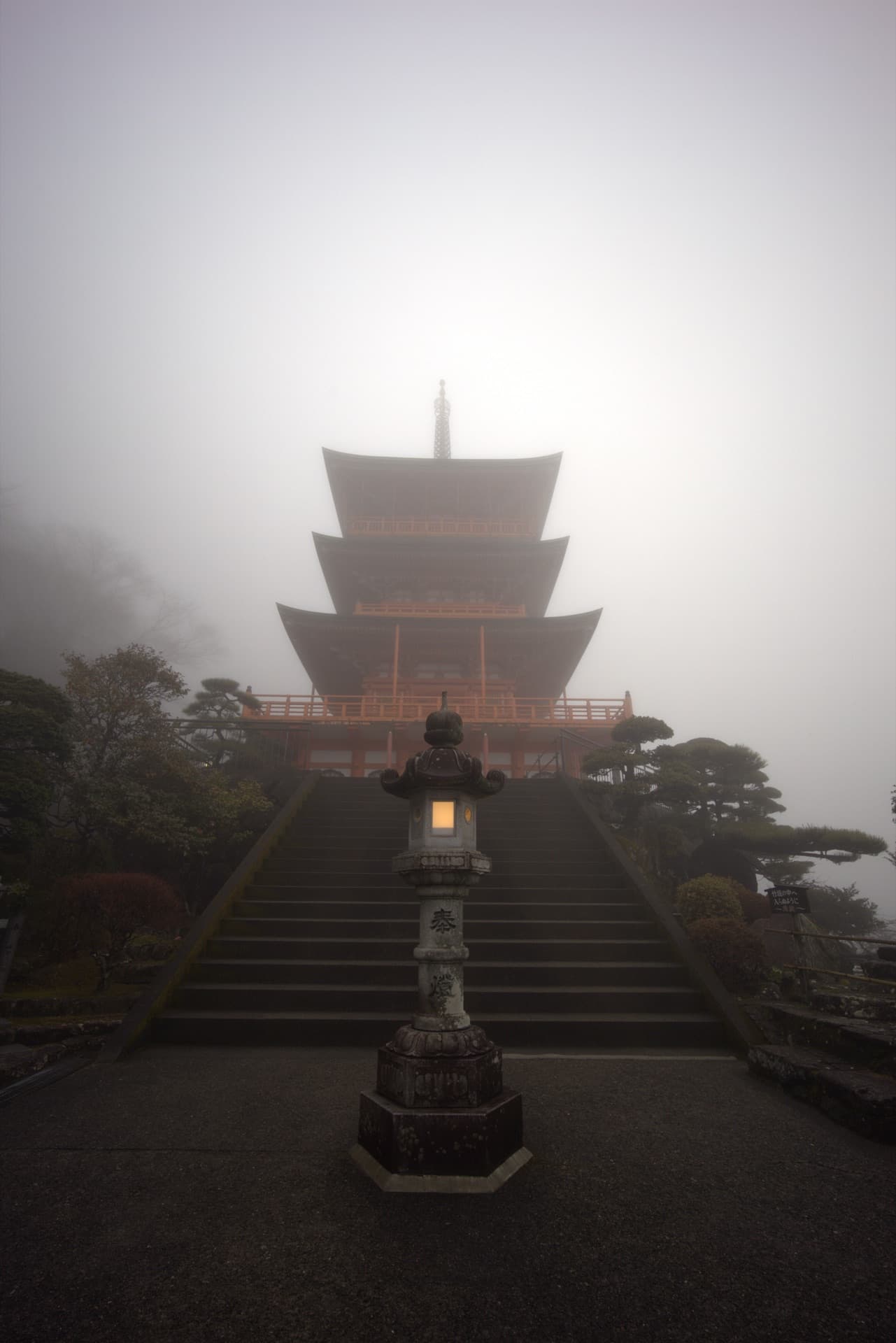
The charm of Mt. Nachi lies in the way the scenery gradually shifts, from old stone paving deep in the forest to precincts where the legacy of Shinto-Buddhist fusion still lingers. Moss-covered stones, groves of cedar, shafts of light now and then. The moment the vermilion shrine buildings and three-storied pagoda come into view at the end is a scene only those who have walked the path can savor.
How people plan the route varies: some walk up from Daimon-zaka, while others take the bus up and focus on the precincts. For details on times and walking tips for each section, we have already covered those in another article on this site. Here, let's focus on language and mindset.
Three Things to Share with Your Overseas Companions in Advance
1. The shrine and the temple stand side by side
At Mt. Nachi, the shrine (Taisha) and the temple (Seiganto-ji) sit next to each other. This pairing reflects a form of faith that has long been preserved in Kumano. If someone asks 'Why are there two?' you can simply say, 'Because both have been carefully kept as sacred places.' That tends to land well.
2. The approach path is both a 'way through' and a 'way of prayer'
A small bow before passing through a torii gate. Walking a little to the side, since the center of the path is said to be reserved for the gods. Sharing these small customs beforehand helps keep a calm atmosphere even when you stop for photos. Loud conversations, or spreading your bags out in the middle of the stone path, are best avoided.
3. Even with English signs, a little extra leeway is your best friend
Multilingual signage is increasing, but in the mountains the information doesn't always keep up. Before you set out, jot down your destinations in both romanized and Japanese script. It helps when asking at bus stops or shops. Check the weather and transport right before you go, and give yourself plenty of time.
A Few Small Preparations Before You Walk
- Stone paving gets slippery when wet, so choose shoes with sturdy soles
- Bring a small towel to wipe off sweat before and after visiting
- Carry a bit more water than you think you'll need. In sunny seasons, a hat is reassuring
- Stop before taking photos, and step aside for those behind you
Once the Words Click, Mt. Nachi Opens Up Further
I see the search term 'Nachi Taisha hike' as an expression of a quiet wish: to walk peacefully along a path toward sacred ground. Just by learning a few English and Japanese equivalents, and knowing a little about how this shrine and temple came to stand together, the same stone path takes on far more depth.
On your next trip to Kumano, let language be the bridge and walk Mt. Nachi together with your companions.
Image: 那智山青岸渡寺 三重塔 (via (公社)和歌山県観光連盟)


