 LOCAL FIT KUMANOBack to list
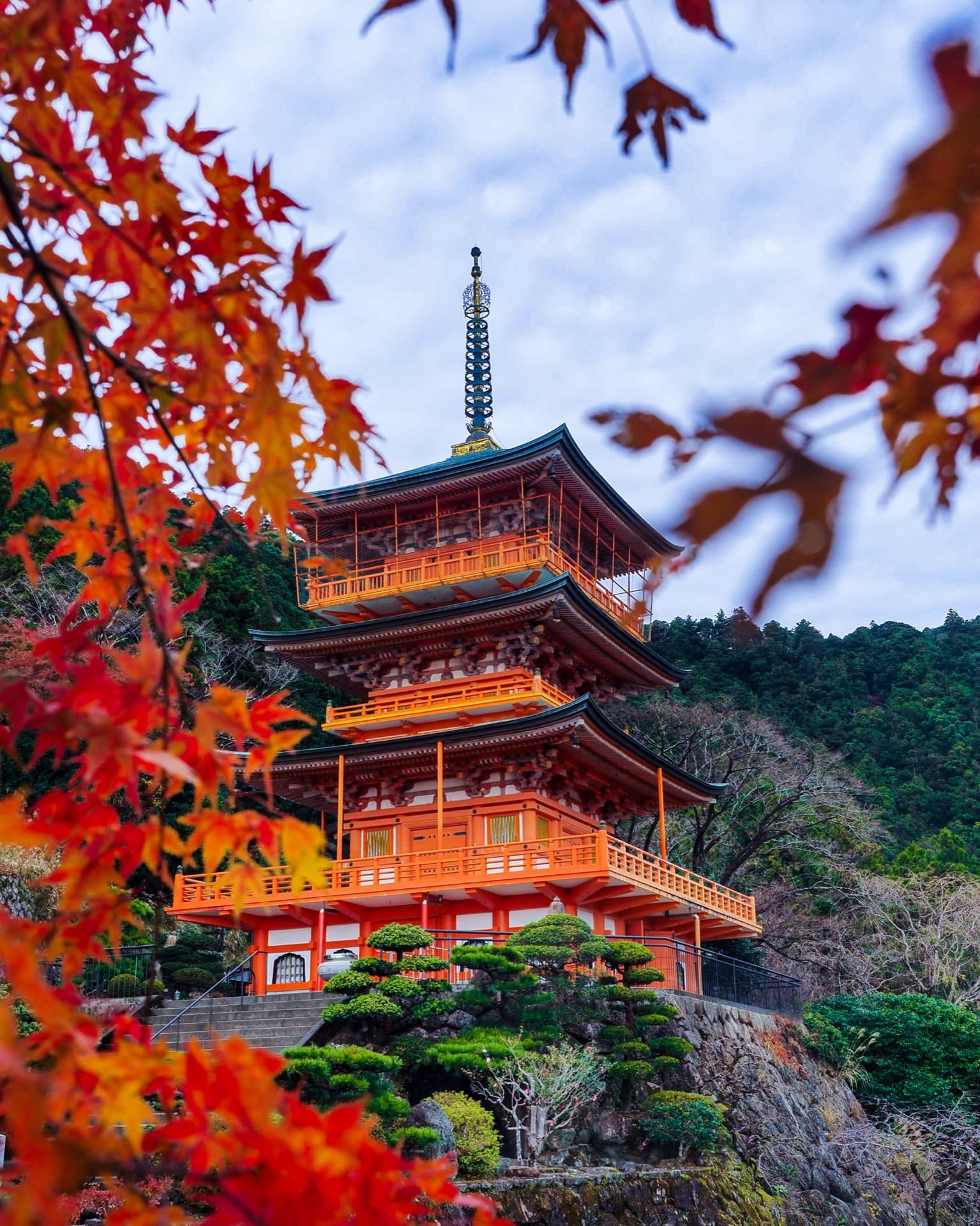
Nachi Falls Shows Different Faces: "Approaching, Framing, and Stepping Back"
In the valley of Mt. Nachi, the great waterfall tumbles down as a single white ribbon. Said to have one of the greatest single drops in Japan, the falls themselves are enshrined as the deity at Hiryu Shrine, an auxiliary shrine of Kumano Nachi Taisha — there is no main hall, because the waterfall itself is the object of worship.
Still, it would be a shame to simply arrive, take a photo, and leave. This waterfall reveals a completely different face depending on the distance from which you view it. Here, let's organize three distances for encountering the falls.
The First Distance | Looking Up from the Approach Path
After passing through the torii gate of Hiryu Shrine and descending the stone steps through the cedar grove, the sound of the falls gradually grows louder between the trees. Before you even see it, the sound and the cool air reach you first. This is the moment you feel closest to the sacred body of the deity.
Standing before the falls, tilt your head straight up and gaze from the point where the water begins its descent. You can watch the water as it glides down the rock face, unraveling into fine threads partway down.
Tips for Viewing Up Close
- The spray easily wets camera lenses and glasses, so bring something to wipe them with
- The stone steps become slippery after rain, so wear shoes with sturdy soles
- This is sacred ground, so keep your voice low. Leave time just to listen to the sound of the falls
The Second Distance | Framing It with the Three-Storied Pagoda
At Mt. Nachi, there is a view where the vermilion three-storied pagoda of Seiganto-ji Temple and the great waterfall fit into a single composition. The green mountain, the vermilion pagoda, and the white waterfall — it's that iconic shot you often see in photos of Kumano.
Think of this spot as a place to re-view the falls you just looked up at from below, this time as "part of the landscape." Sensing the depth of the valley between the pagoda and the falls, the history of Shinto and Buddhism coexisting on the same mountain naturally settles into understanding.
The Third Distance | Searching from Afar
On the road toward Mt. Nachi, if the weather cooperates, you may catch glimpses of a white streak among the mountains. Stopping at a spot with a good view to search for the distant waterfall is another way to enjoy it. From this far away, the falls transform from "something to go see" into "part of the mountain."
The Falls' Expression Depends on Weather and Water Volume
After heavy rain, the water volume swells and the falls roar with power. During stretches of fair weather, they appear crisp, slim, and clear. Neither is more "correct" — the water of that day is Nachi Falls of that day. If you have time to spare, try viewing it in order: up close, from before the pagoda, and from afar, pausing a little between each. You may be surprised at how different the same waterfall can feel.
In Closing
Before Nachi Falls was a "photo spot," it has long been an "object of prayer" to which people have joined their hands. Walk the three distances, and take home with you — slowly — the sound, the color, and the air.
*Visiting hours, fees, and traffic restrictions may change depending on the season. Please check official websites and local information before your visit.*
Image: 那智山青岸渡寺 三重塔 紅葉 (via (公社)和歌山県観光連盟)


