 LOCAL FIT KUMANOBack to list
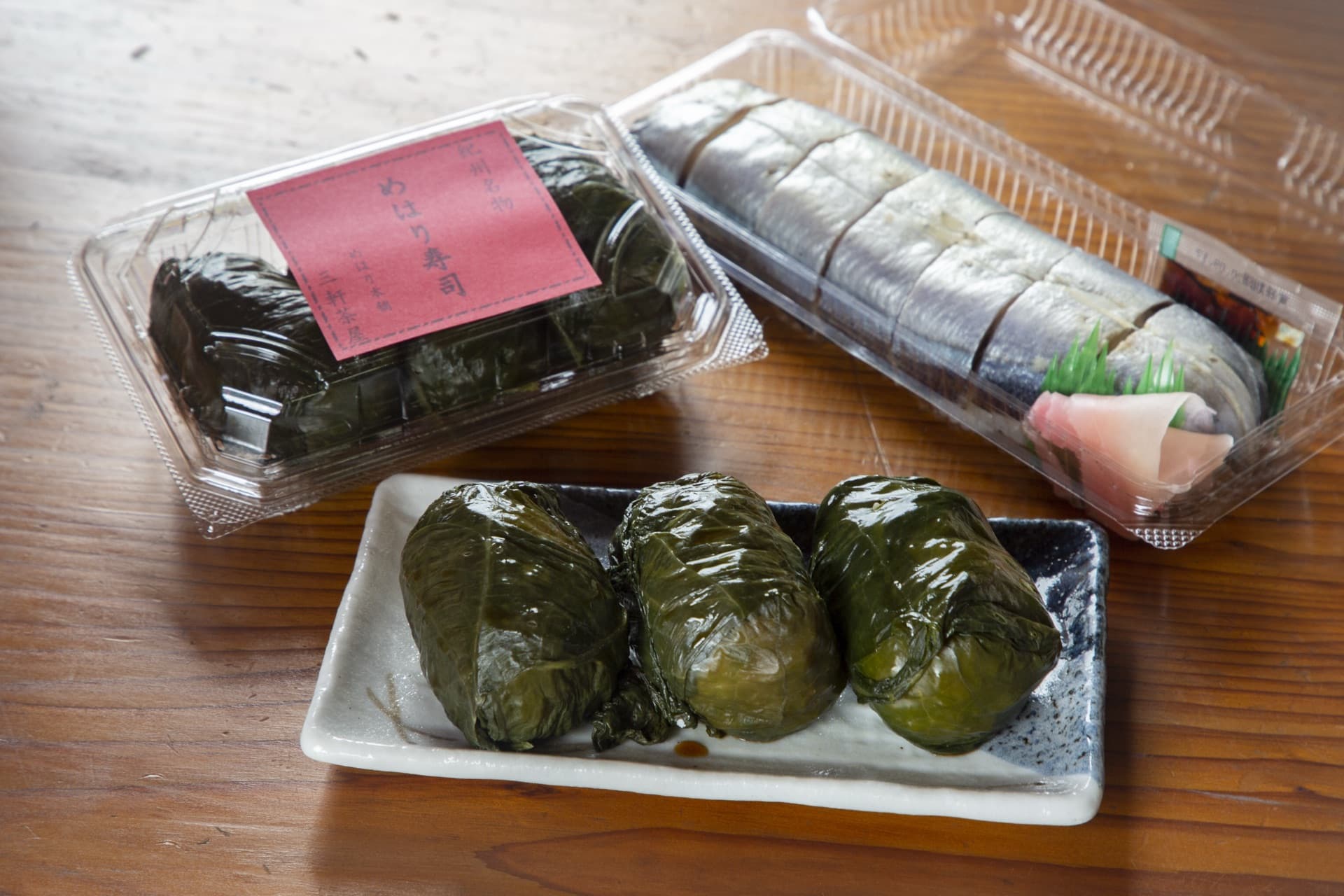
In Kumano, meals begin with "food you can carry"
Walking through Kumano, you are never far from mountains, rivers, or the sea. It's easy to picture people of the past setting out for the fields, the forest, or a mountain pass with food tied at their waist. One of the local dishes that has been passed down through this kind of daily life is mehari-zushi.
It's a humble rice ball, tightly wrapped in a leaf of pickled takana (mustard greens). Plain as it looks, it feels as if the air of Kumano's mountain valleys is packed right inside.
What is mehari-zushi?
In its basic form, it is rice wrapped in a salty takana leaf. Although the name contains "zushi" (sushi), it is not the vinegared-rice sushi you may be imagining — it is closer to a rice ball wrapped in a leaf.
The filling, seasoning, and size are said to vary slightly from region to region and household to household. Hearing people say, "At our house, mehari is made like this," is part of what makes it such a quintessential local dish.
Several theories about the name
Two stories are often told about the origin of "mehari":
- The rice balls are so large your eyes open wide (me o haru) at the sight.
- When you open your mouth wide to eat one, your eyes pop open as well.
Neither is an established fact — both are simply tales that have been handed down. Ask a local, and you may hear yet another explanation.
Why it suits mountain work and old-road walking
Rice wrapped in a leaf keeps your hands clean and is easy to carry. The salty, fragrant takana pairs well with meals on days when you're on the move. Hearing that it was eaten during breaks from forestry and farm work makes the nickname "mountain bento" feel just right.
For the same reasons, it also makes a great lunch on days when you're walking the Kumano Kodo. That said, when food travels with you, spoilage is a real concern. In summer, keep it cool, and as a rule, only take as much as you can finish, and eat it the same day.
Comparing it with sanma-zushi, another Kumano specialty
Along the coast facing the Kumano Sea — in Shingu and the Higashi-Kishu area — there is another local dish called sanma-zushi (Pacific saury sushi). It is a type of pressed sushi made with seafood, and it stands in striking contrast to mehari-zushi.
| Mehari-zushi | Sanma-zushi | |
|---|---|---|
| Mood | Mountain bento | Seaside treat |
| What wraps it | Takana leaf | Vinegar-seasoned fish over rice |
| When it fits | Hiking, lunch | Celebrations, hospitality |
Tasting the mountain-valley "mehari" and the seaside "sanma" side by side, you really feel how food culture shifts from place to place, even within Kumano. Which one you find on the menu depends on the shop and the season, so it's fun to go looking with the mindset that encountering either is a lucky find.
A few small tips for eating
- Try the first bite as is. Taste the aroma of the takana and the sweetness of the rice first.
- For larger ones, peel the wrapping back little by little as you eat to keep your hands clean.
- Having tea on hand softens the saltiness and makes it easier to enjoy.
A note for your trip
On a journey through the Kumano Sanzan shrines and the old pilgrimage routes, it's easy to focus on the scenery, shrines, and temples — but local food is one of the quickest ways to understand how people here live. As you take a bite of mehari-zushi, imagine travelers of the past sitting down on the same mountain path to do just the same.
Shops that serve it and the seasons it's available can vary, so it's a good idea to check with individual shops or local tourist information centers in advance.
Image: めはり寿司とさんま寿司 (via (公社)和歌山県観光連盟)


