 LOCAL FIT KUMANOBack to list
Kumano's 'Rice Ball' Wrapped in Green Leaves
As you walk through Kumano, you may come across what look like rice balls wrapped in green leaves at roadside stations, local eateries, and the entrances to the old pilgrimage paths. These are mehari-zushi. A familiar local specialty in the Kumano region, including Shingu and Hongu, they are made by wrapping rice in pickled takana (mustard greens) leaves.
Although written with the character for 'sushi,' they are not made with vinegared rice, nor do they have the showiness of nigiri-zushi. Their appearance is simple and rustic. Even so, they convey the texture of everyday life in Kumano beautifully.
The Name Comes from 'Opening Your Eyes Wide'
Several theories exist about the origin of the name. The best-known is that you have to open your eyes (me o miharu) and mouth wide to take a bite. Since they are a bit too large to eat in one mouthful, your eyes naturally open wide — hence the name, it is said.
There are other theories as well, and no single one is definitive. But all of them bring to mind the image of someone taking a big bite out of a hearty rice ball.
A Bento That Supported Mountain Workers and Travelers
Kumano is a land of deep mountains, where forestry, farming, and the long Kumano pilgrimage have shaped a way of life built on walking and physical work. Rice wrapped in takana leaves is said to have been loved as a bento that keeps your hands clean and is easy to carry.
The saltiness and gentle aroma of the leaves infuse the rice, and it tastes good even when cold — another part of its appeal. What goes inside differs by household or shop: some include fillings, others keep it simple, each with its own flavor.
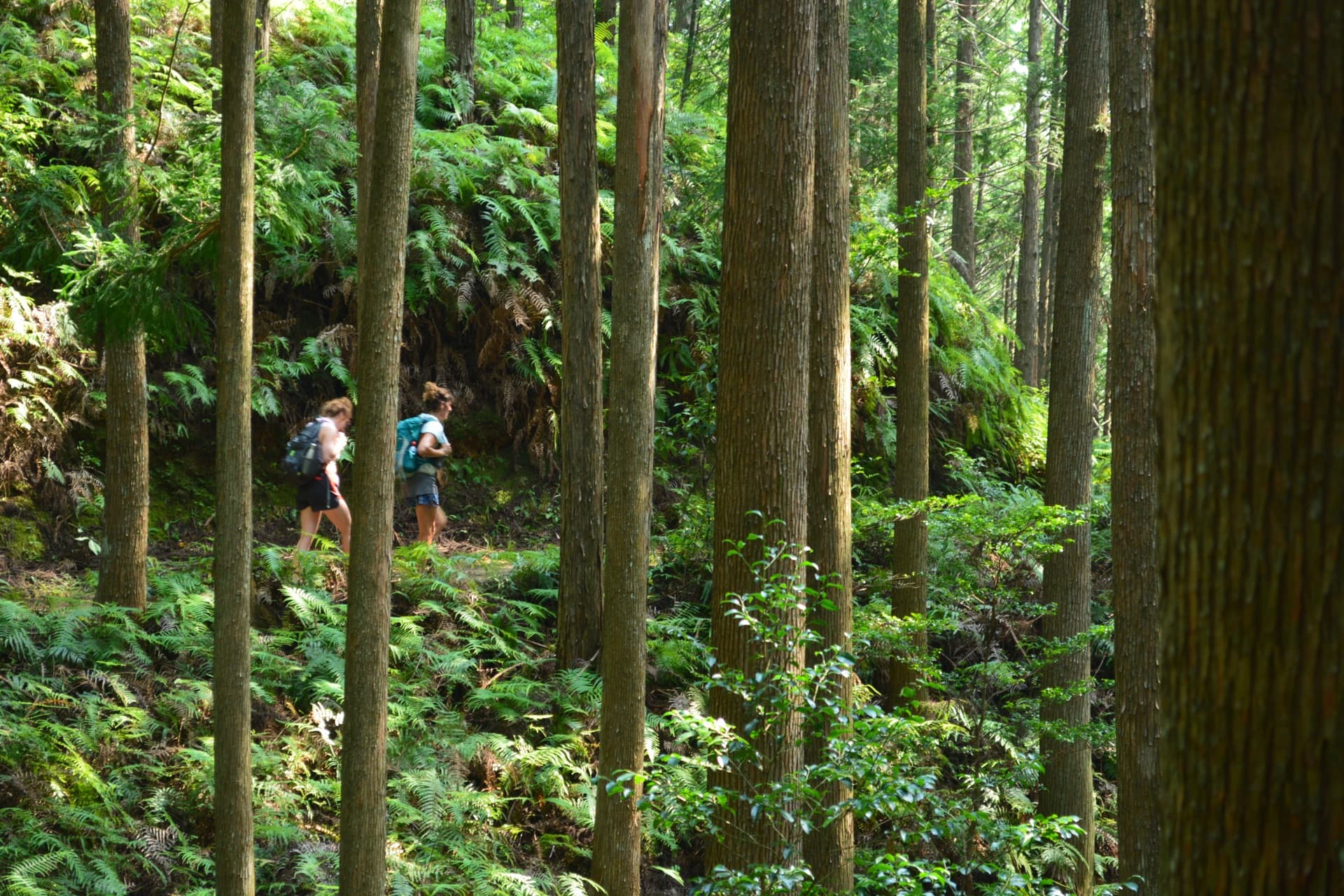
A Perfect Lunch for Walking the Kumano Kodo
Mehari-zushi pairs wonderfully with lunch on the old pilgrimage paths. Here's why:
- You can hold and eat it with your hands, making it easy to unwrap at a rest spot or on a stone step.
- The salty takana and rice are deeply satisfying to a body that has been walking.
- Wrapped in leaves, it's easy to carry inside a backpack.
When eating, we recommend peeling back the leaf a little and taking a hearty bite. Since they are on the larger side, it's also fun to share one each with your companions and compare the differences in flavor.
Tips for When You Find Them on Your Journey
- Each shop has its own flavor: Takana pickling methods, rice seasoning, and sizes all vary.
- Buy early: Popular items can sell out, so picking some up before entering the old road is reassuring.
- Be ready to take your trash home: It is good manners to carry wrappers and bags out with you on the old paths. A small plastic bag comes in handy.
Operating days and availability vary by shop and season. It's a good idea to check with individual shops or tourist information centers before visiting.
The Landscape of Kumano Captured in a Small Leaf
Mehari-zushi was not created as a tourist specialty. It is an 'everyday meal' that supported those who worked in the mountains and fields, and those who walked from distant places. Next time you walk in Kumano, try opening one of these green-wrapped bundles along the stone-paved path. Together with the mountain air, you should be able to taste the way of life of this land.
Image: 熊野古道中辺路 (via (公社)和歌山県観光連盟)


