 LOCAL FIT KUMANOBack to list
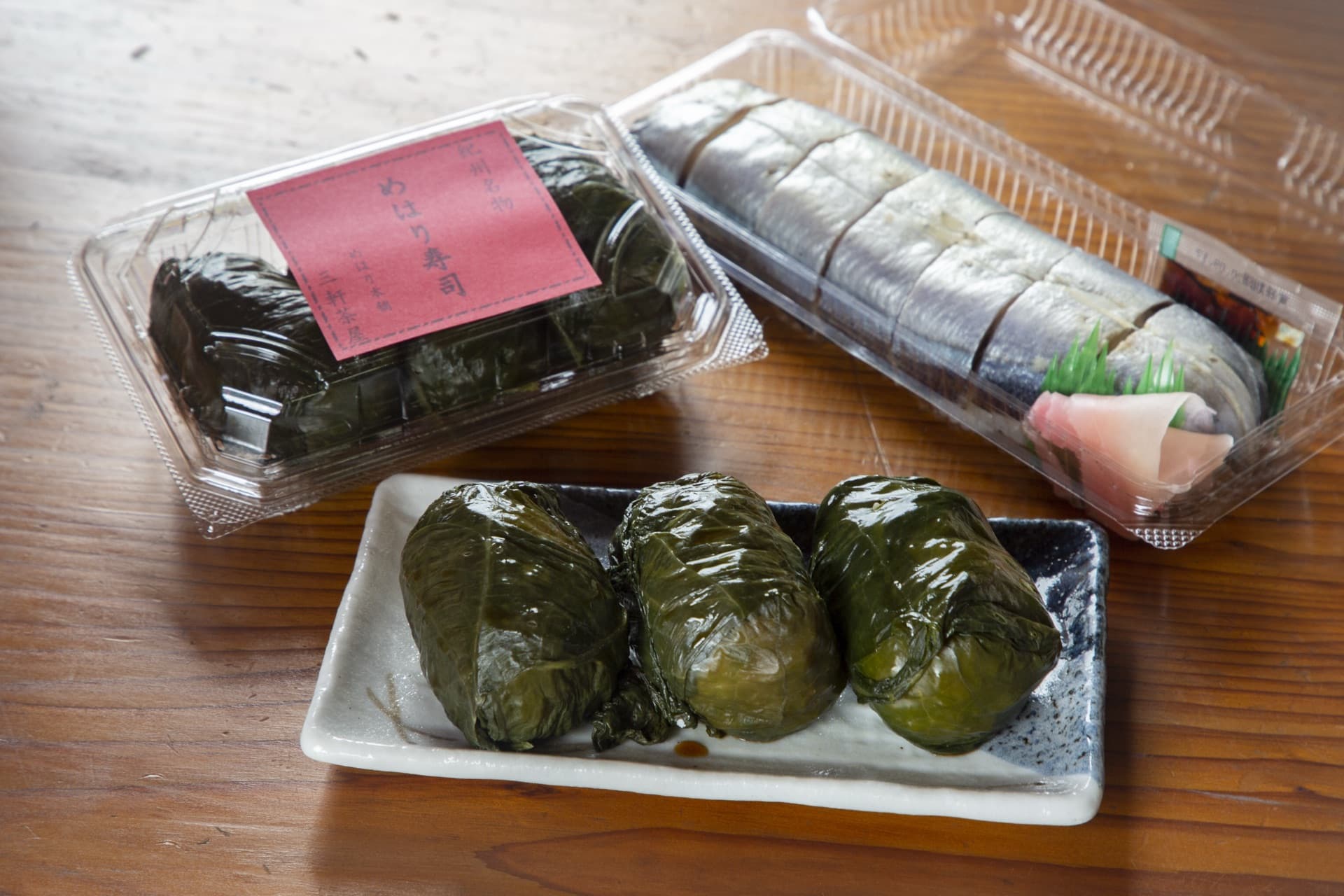
In Kumano, "Sushi" Isn't Just Nigiri
As you travel through Kumano, you'll come across local dishes with "sushi" in their names—but they're a bit different from the nigiri shaped by a chef at the counter. There's mehari-zushi, born of mountain life, and sanma-zushi, a coastal delicacy. Both have grown out of the rhythms of local life, and both are easy to try during your travels.
Here, we introduce the background and differences that make these dishes all the more enjoyable once you know them—from a local's perspective.
Mehari-zushi | A Mountain Lunch Wrapped in Takana Leaves
What Is It?
Mehari-zushi is a local dish made by wrapping rice in salt-pickled takana (mustard greens) leaves. It's usually made larger than an ordinary rice ball, and feels pleasantly heavy in the hand.
Several Theories Behind the Name
There are a few theories about the name's origin—some say it comes from being "so big you open your eyes wide (mehari)," others say "you open your eyes wide to eat it." Rather than pinning it down, it's part of the fun of travel to ask a local and hear them say, "well, there's this story too."
Flavor Highlights
- A pleasant saltiness from the takana leaves, with a hint of tanginess
- The rice inside is simple, releasing a natural sweetness as you chew
- Seasonings and wrapping styles vary subtly from shop to shop and home to home
It's said to have been loved as a quick lunch that could be eaten between stints of mountain or field work. Eating one along the Kumano Kodo lets you imagine the lives of those who came before, deepening the flavor.
Sanma-zushi | Whole-Fish Sushi from Seaside Towns
What Is It?
Sanma-zushi is a whole-fish sushi made by butterflying a pacific saury (sanma), curing it in vinegar, and placing it over shaped sushi rice. In the towns of Higashi-Kishu facing the Kumano Sea, it has been a familiar home and diner dish from autumn into winter.
Flavor Highlights
- A contrast between the rich, oily sanma and the tangy sushi rice
- Each household and shop has its own character in the vinegar, the curing, and the sweetness of the rice
- Served as a whole piece cut into sections, it's easy to share among several people
How it's made and when it's available vary by area and season. The surest way is to simply ask, "when do you usually have it?"
Three Key Differences to Know Before Your Taste Test
1. Background: Mehari-zushi comes from mountain life; sanma-zushi from life by the sea.
2. How to eat: Mehari-zushi is the casual pleasure of picking it up and taking a big bite, while sanma-zushi has the air of a feast, sliced and savored.
3. When to enjoy: Mehari-zushi suits a walking day's lunch or rest break, while sanma-zushi is perfect for dinner after a day's walk, or for a leisurely meal.
How to Work Them Into Your Trip
For mehari-zushi, it helps to ask your inn or a restaurant the day before whether they can prepare one as a boxed lunch—it makes the walk ahead all the more enjoyable. Availability and seasons differ by shop, so it's a good idea to confirm in advance. Sanma-zushi is best enjoyed in seaside towns like Shingu or Nachikatsuura. Savor it along with the atmosphere of these port towns.
In Summary
Even though both are called "Kumano sushi," the mountain and the sea offer completely different expressions. Each is packed with the wisdom of the people who have lived in this land. Somewhere during your journey through Kumano, do try both and compare. When you finish, the scenery you've walked through and the flavors you've tasted will come together as one.
Image: めはり寿司とさんま寿司 (via (公社)和歌山県観光連盟)


