LOCAL FIT KUMANOBack to list
"Rice Wrapped in a Leaf," Born of Kumano's Mountains
As you travel around Kumano, you'll often spot the words "mehari-zushi" at local eateries and souvenir shops.
Though the name includes "zushi" (sushi), it isn't the nigiri-style sushi topped with fish. It's more like a large rice ball, wrapped generously in salt-pickled takana (mustard greens) leaves. Kumano has a strong coastal image, but many of its flavors were born from life in the mountain valleys. Mehari-zushi is a leading example, and it comes up often when people talk about the mountain food culture of eastern Kishu, including areas like Shingu and Hongu.
Does the Name Really Come from "Eyes Widening"?
The best-known theory is that "when you open your mouth wide to eat it, your eyes widen (me wo miharu)." Other tales say it was "eaten during breaks from mountain work, to keep the eyes wide open and alert," or that "it was so delicious, it made the eyes widen in surprise."
Rather than deciding which story is true, I think the fact that multiple theories have survived is itself proof of how deeply this dish has been loved in everyday life.
A "Portable Meal" for Mountain and Field Work
Mehari-zushi is said to have been food that people carried with them when heading out to work in the mountains or fields.
- Wrapped in takana leaves, it keeps your hands from getting messy
- The saltiness of the leaves and the sweetness of the rice are just right for a body that's been sweating
- It's easy to eat even when cold
The basic ingredients are just rice and takana leaves. Some households mix seasonings into the rice or add fillings, and the flavor and size vary slightly by region and family. Comparing versions from different shops as you travel is one of the pleasures of mehari-zushi.
A Few Tips for Eating It
Start with the Aroma of the Leaves
When you unwrap it, the distinctive fragrance of pickled takana drifts up. For your first bite, try biting into the leaf and rice together. The crisp texture of the leaf and its gentle saltiness spread through your mouth.
Open Wide, Eat Slowly
Living up to the name, go ahead and take a big bite. That said, the rice can crumble easily, so it's easier to eat if you leave a bit of the wrapping on and hold it that way.
Pair It with Tea or Soup
Because the flavor is simple, it pairs wonderfully with hot tea or soup—perfect for warming your body after a mountain walk.
A Great Trail Snack for Days on the Kumano Kodo
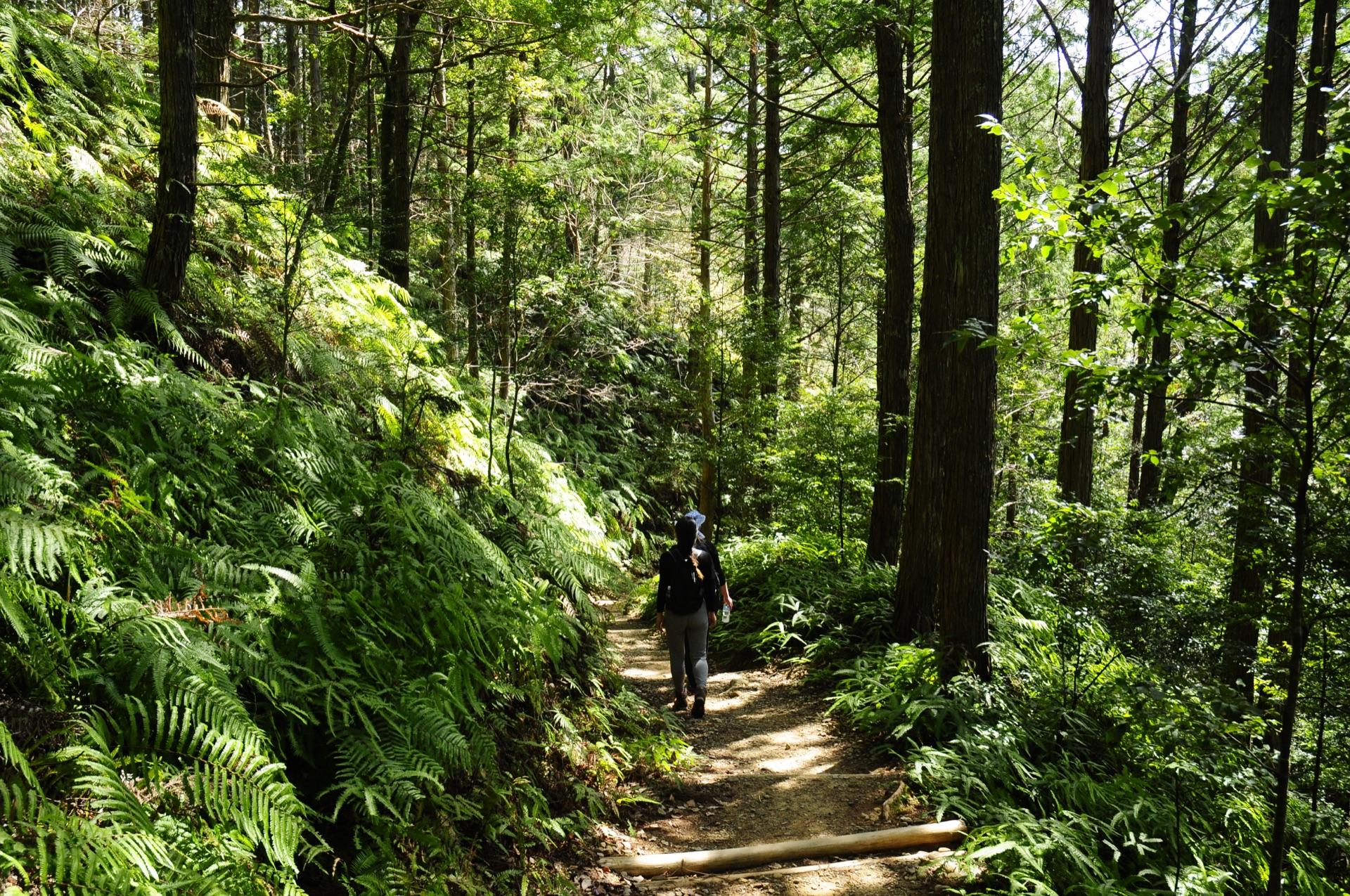
On days when you'll be walking stone-paved paths lined with cedar trees, it's reassuring to plan ahead where you'll have lunch. On such days, mehari-zushi makes an ideal companion.
It can be eaten by hand, and since the leaf wraps everything up, it's easy to unpack even at a roadside rest spot. Just be sure to take all your trash with you. In summer it spoils quickly, so keep it cool and eat it sooner rather than later.
Tips for Working It into Your Travel Plans
- Shops that carry mehari-zushi vary by area and season. Checking in advance will save you worry
- If you want to eat it on a day you're hiking the old trails, confirm availability and prepare before you set out
- It can sell out, so one strategy is to drop by outside of peak lunch hours
In Closing | A Small Parcel Holding Mountain Life
Mehari-zushi may look modest, but it's a food packed with the life and wisdom of Kumano's mountains. The seafood here is wonderful, of course—but please turn your attention to the flavors of Kumano's mountains as well.
If, when you sink your teeth into one with a big bite, you find yourself thinking, "Ah, my eyes really did widen," that may be the signal that you've truly met the taste of this land.
Image: 熊野古道中辺路 (via (公社)和歌山県観光連盟)