 LOCAL FIT KUMANOBack to list
Mehari-zushi: A Taste Born from Kumano's Mountain Life
As you travel around Kumano, you will spot the name "mehari-zushi" on menus at roadside stations and small eateries.
It looks like a round, oversized rice ball wrapped in takana (mustard green) leaves. Although it carries the name "sushi," it is quite different from Edomae sushi with vinegared rice and fish on top. For the people of Kumano, it has long been something closer to an everyday packed lunch.
Does the Name Come from "Opening Your Eyes Wide"?
The most common explanation is that it is "so big your eyes open wide (me o haru)." When you take a bite of this huge rice ball, your eyes naturally widen — so the story goes.
Another theory says it was "eaten while keeping a wide-eyed watch during breaks from mountain work." The origin does not seem to be settled on just one explanation, but all of them conjure up images of people working in the mountains.
The Takana Leaf: A Clever Lunchbox Idea
The star of mehari-zushi is the salted or lightly pickled takana leaf.
- Wrapping the rice in a leaf keeps your hands clean and lets you eat with one hand
- The saltiness of the takana seasons the meal perfectly for sweaty mountain work or long walks
- The leaf itself acts as the wrapping paper, making it easy to carry around
In the deep mountains of Kumano, people made do with the ingredients at hand — quickly, and in a way that kept them full. That kind of wisdom feels packed into this simple shape.
Why It's Perfect for Lunch on the Kumano Kodo
On a day of walking the old pilgrimage trails, a lunch you can eat without sitting down and waiting is a real help. In that sense, mehari-zushi is an ideal traveler's lunch.
Tips for Carrying It
- It's quite large, so one is usually enough to feel full. On days with long walking distances, you might choose smaller ones
- Wrap it loosely in plastic wrap or a bag so the takana leaves don't loosen and fall apart
- In summer it spoils easily, so keep it cool and eat it sooner rather than later
- Juices can seep out, so keep it separate from other items in your backpack
Part of the fun is finding a spot to sit along the stone-paved path or near an Oji shrine and unwrapping it there. Just be sure to take all your trash with you.
Small Pleasures of Tasting Around
Mehari-zushi is said to vary subtly from shop to shop and home to home — in how the takana is pickled and how the rice is seasoned. You may also come across versions mixed with sesame or shirasu (baby sardines).
Searching out these subtle differences under the same name could become a small pleasure for anyone who visits Kumano more than once. It is best enjoyed in a simple pairing with miso soup or tea.
In Closing
Mehari-zushi is not a flashy specialty created for tourists. It is a humble, hearty dish born from the daily life of people who worked the mountains.
Try picking one up for breakfast before setting off on the Kumano Kodo, or during a lunch break at a roadside station in the hills. The scent of takana the moment you unwrap it will bring back the air of Kumano's mountains.
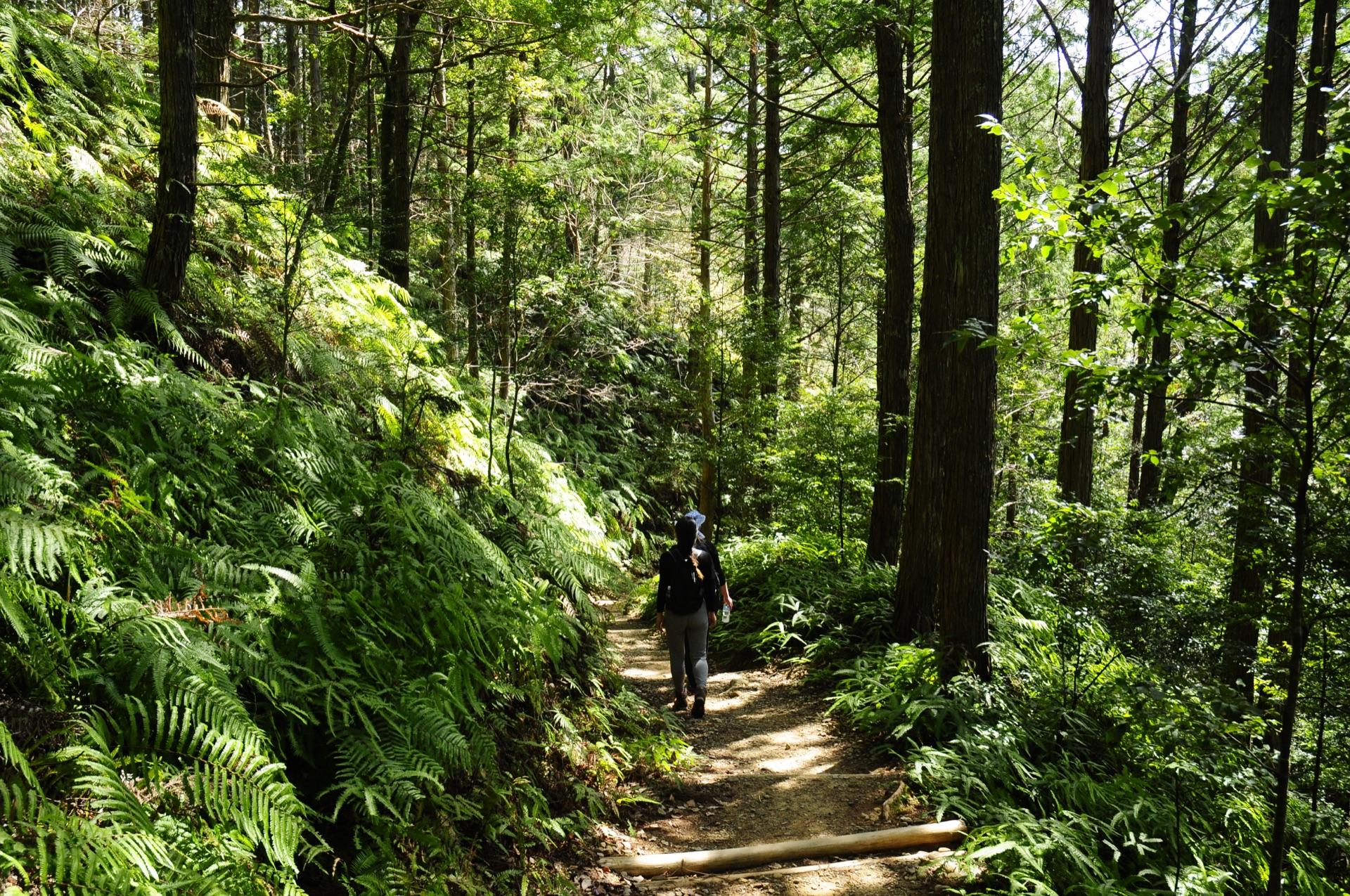
Image: 熊野古道中辺路 (via (公社)和歌山県観光連盟)


