 LOCAL FIT KUMANOBack to list
Lunch in Kumano: "A Rice Ball Wrapped in a Leaf"
Walking around Kumano Hongu or Shingu, you'll often spot the words "mehari-zushi" at local eateries and souvenir shops. Although the name includes "sushi," it's completely different from nigiri sushi with fish on vinegared rice. It's a large rice ball wrapped entirely in salt-pickled takana (mustard green) leaves — a simple, rustic local flavor nurtured in the mountains of Kumano.
Does the Name Come from "Eyes Wide Open"?
There are several theories about the origin of the name "mehari." The most commonly told story is that when you eat the large rice ball, you open your mouth so wide that your eyes open wide too (*me o haru* — to open one's eyes wide). Another theory says the shape of rice wrapped in takana leaves looks as if the leaves are "stretched taut" (*me o haru*). Both are local folk tales that have been passed down over generations, and the fact that no single answer is definitive is part of what makes them enjoyable, folklore-style.
A Bento Born from Mountain Life
For people heading out to work in the mountains or fields, lunch needed to be easy to carry and taste good even when cold. Takana leaves absorb moisture from the rice while adding just the right amount of saltiness and fragrance. It's also convenient that you can hold and eat it by the leaf without getting your hands dirty. You could say mehari-zushi is a bento packed with the wisdom of daily life in Kumano.
What Does It Taste Like? Tips for Enjoying It
When you unwrap the takana leaf, rice appears inside. Sometimes the rice is plain white; other times, chopped pickled takana is mixed in. Each home or shop has its own subtle variations.
- Taste the leaf's aroma and saltiness first: For the first bite, try biting into the leaf and rice together.
- Enjoy the simplicity: Even without flashy fillings, the sweetness of the rice and the flavor of the takana unfold as you chew.
- Pair it with soup or tea: A warm soup on the side will relax both body and mind.
Pickled takana comes in a range of flavors, from spicy to mellow. If it's your first time and you're worried about not liking the flavor, starting with a smaller size is a safe bet.
As Trail Food on the Kumano Kodo
When walking ancient routes like the Nakahechi, deciding what to eat for lunch or as trail food is surprisingly tricky. Mehari-zushi is easy to hold in one hand and great for a break along the way. However, depending on the season and temperature, it can spoil easily, so it's best to keep carry time short and eat it as soon as you're hungry. Always take your trash home with you.
To Encounter It on Your Journey
Mehari-zushi is less of a tourist "specialty" and more of an everyday food close to life in Kumano. That's exactly why, if you spot one on your travels, you should try one. There's a sense that your own feet are drawing a little closer to the taste enjoyed by those who walked the mountain trails. Availability and how it's served differ by shop, so checking each shop's latest information before visiting will put you at ease.
Summary
- Mehari-zushi is a Kumano regional dish of rice wrapped in takana leaves
- One theory for the name's origin is "eating with a mouth so wide that your eyes open wide"
- Born as a bento for mountain work, it carries the wisdom of daily life
- It's well-suited for lunch on the ancient trails, but keep carry time short
On your journey through Kumano, be sure to enjoy the moment of "unwrapping the leaf" as well.
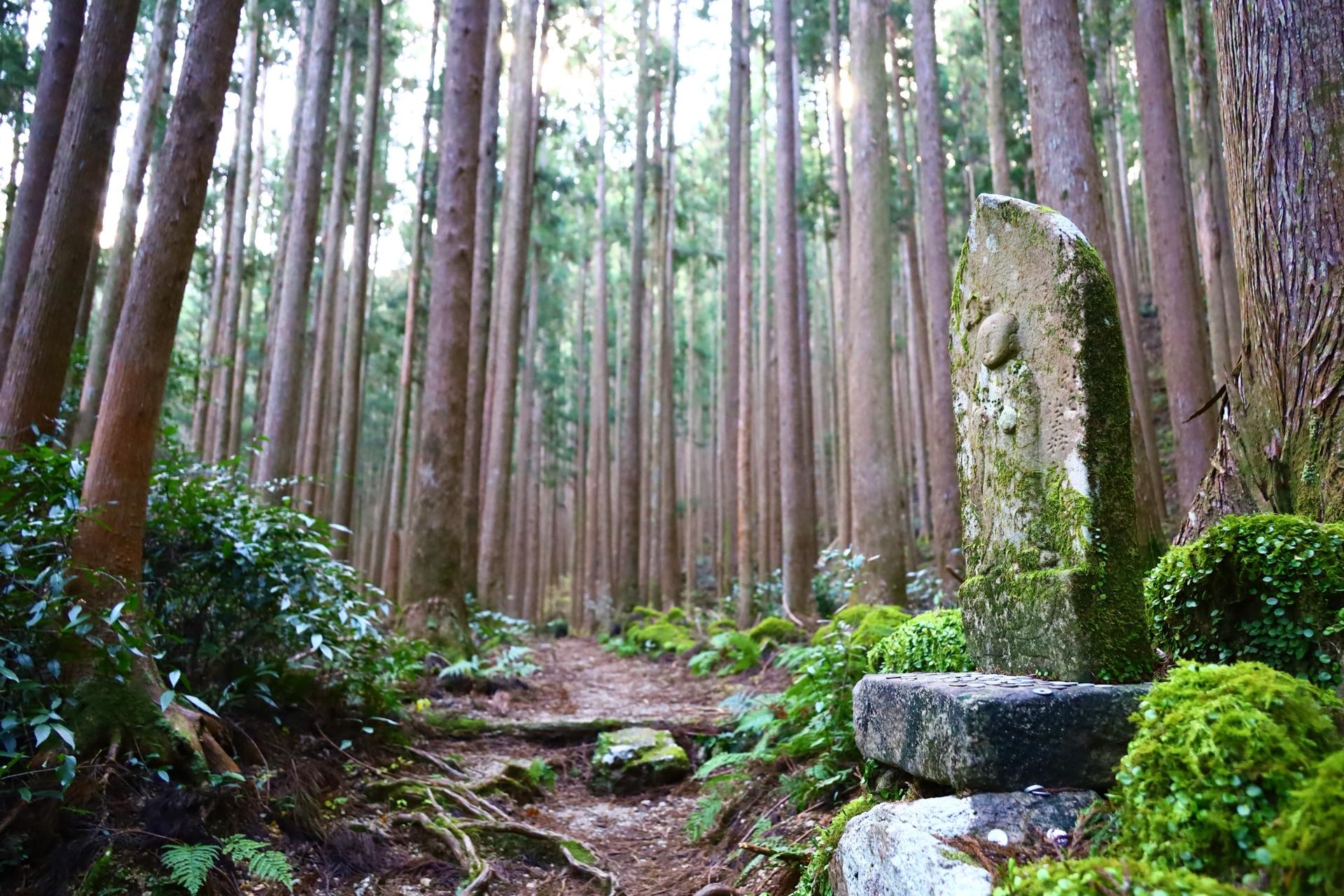
Image: 熊野古道中辺路 大雲取越 (via (公社)和歌山県観光連盟)


