 LOCAL FIT KUMANOBack to list
Kumano's Travel Cuisine Begins with 'Fuel for Those on Foot'
Kumano's local dishes are less about extravagance and more about "practical flavors that sustain people on the move." Easy to eat during a break from mountain work or along the ancient pilgrimage trails. Delicious even when cool. That kind of everyday wisdom still lives on in the region's food today.
In this article, we focus on mehari-zushi, one of Kumano's most iconic humble dishes, and introduce other "modest but unforgettable" local foods from around the region.
What Is Mehari-zushi?
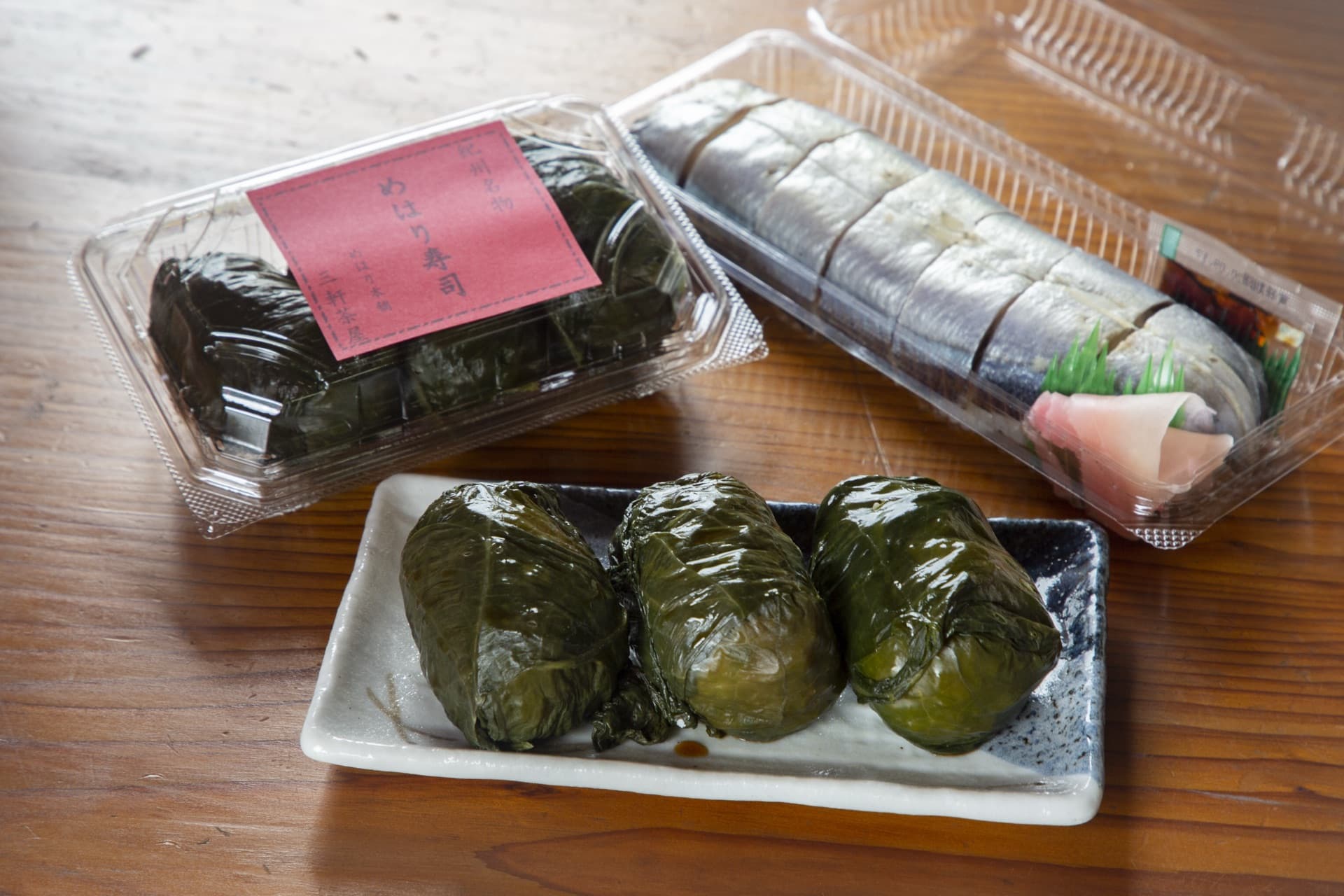
Mehari-zushi is a large rice ball wrapped in salt-pickled takana (mustard greens) leaves. Despite the name "sushi," it's quite different from the raw-fish nigiri most people picture. The saltiness and fragrance of the pickled takana bring out the flavor of the rice beautifully.
At a glance, it's a simple green-wrapped bundle. Pick one up and you'll feel its satisfying heft in your hand.
Several Theories Behind the Name
The most commonly told story is that you have to "open your eyes wide (me o miharu) because your mouth has to open so wide to take a bite." Another version says it's named for how your eyes widen at how delicious it is. Since there's no single definitive explanation, it's fun to treat these theories as conversation starters during your travels.
Why It Pairs So Well with Walking the Ancient Trails
Because it's wrapped in a leaf, your hands stay clean and it's easy to carry. The saltiness of the takana is also welcome to a body that has worked up a sweat on the trail. The Kumano Kodo winds through mountainous terrain, and travelers here have long needed "portable, filling food that's easy to handle." It's easy to imagine how mehari-zushi took root in this land, shaped by the rhythm of daily life and the nature of the roads.
Other Humble Kumano Flavors Worth Knowing
Sanma-zushi
In Higashi-Kishu, including Shingu, whole-fish sushi made with sanma (Pacific saury) is another beloved local specialty. The vinegar-cured fish balances beautifully with the rice. It makes sense when you think of it as seafood from the waters off the Kumano Sea, transformed into sushi through the wisdom of preservation and portability.
Chagayu
In the Kishu region, chagayu—a light rice porridge cooked with tea—is another dish remembered as part of the old food culture. It's gentle on the stomach in the morning and feels just right for settling your system mid-trip. Every household has its own version, which is very much the nature of local cuisine.
How to Enjoy It on Your Trip
- Eat it as fuel before a walk, or as a quiet "breather" after finishing one
- Ask shopkeepers or your innkeeper about how it's eaten locally and about regional naming differences
- Availability and seasons vary by shop, so check the latest information before you go
Kumano's food isn't about flashy specialties—it's "what the people who walked these paths have always eaten." Slipping one humble flavor in between sightseeing stops adds real depth to your travel memories. Next time you head to Kumano, why not add mehari-zushi to your lunch shortlist?
Image: めはり寿司とさんま寿司 (via (公社)和歌山県観光連盟)


