 LOCAL FIT KUMANOBack to list
A Humble Kumano Meal Wrapped in Green Leaves
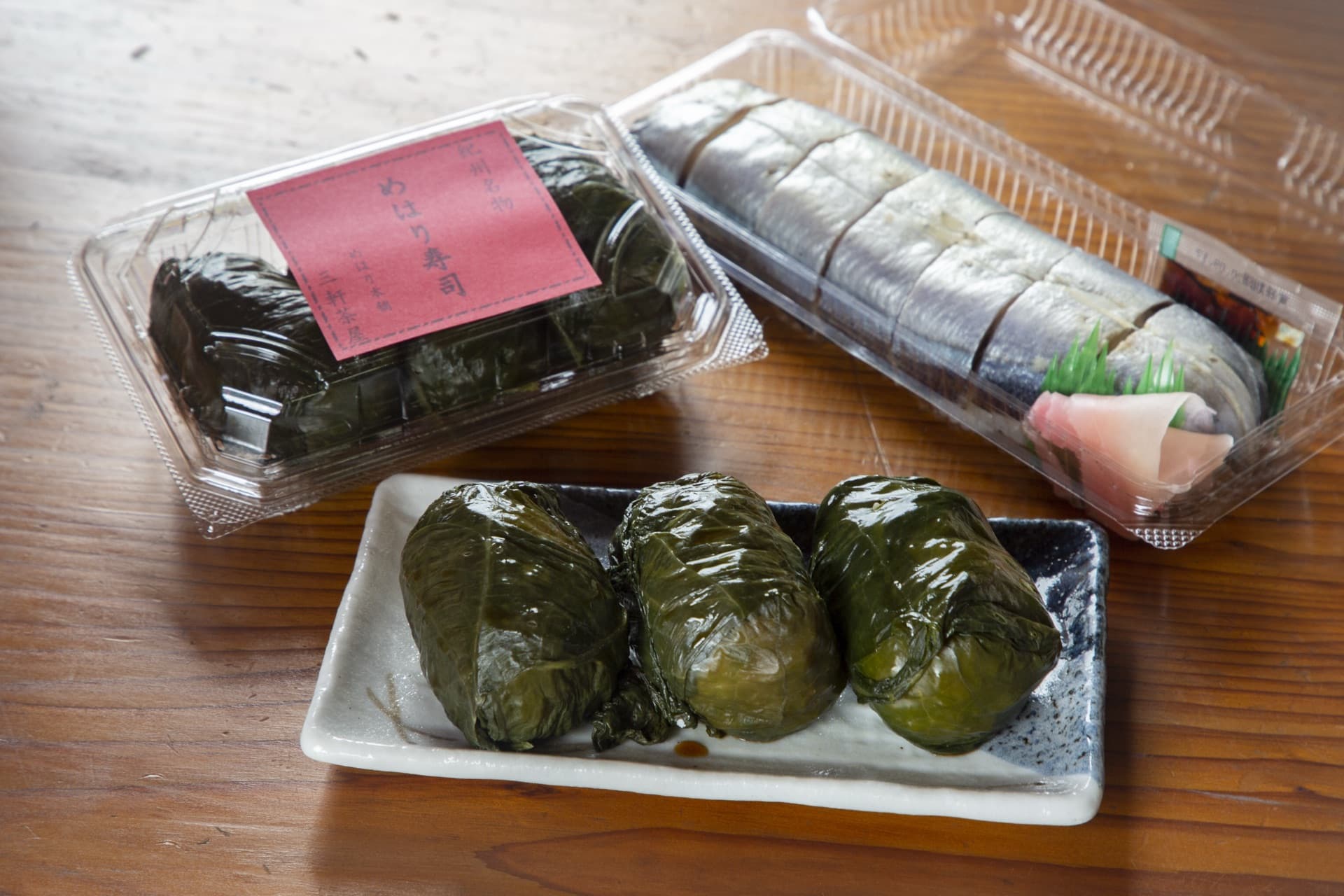
As you travel through Kumano, you may spot large rice balls wrapped in deep green leaves at roadside stations, local eateries, and souvenir corners. This is mehari-zushi, a regional specialty that has long been enjoyed in Kumano's mountain villages.
Although it carries the name "sushi," it is quite different from the colorful sushi topped with raw fish. Instead, it is a simple, portable food in which rice is tightly wrapped in a salty pickled takana (mustard greens) leaf.
Does the Name Mean "Eye-Opening"?
Several theories are told about the origin of the name.
- Because you open your eyes wide (*me wo haru*) when you open your mouth wide to eat it
- Because your eyes widen in delight at how delicious it tastes
None of these is definitive, and even locally the stories are shared with a casual "I've heard it said that way." Precisely because things are a little unclear, imagining which theory might be true while you eat can become part of the fun.
A Flavor Born of Mountain Life
While Kumano is often associated with the sea, deep mountains stretch across its inland areas. For those who worked in these mountains, a bento that tasted good even when cold, didn't dirty the hands or chopsticks, and was easy to carry was essential.
Takana leaves lend the rice a pleasant saltiness and aroma. They also serve as the container itself. The seasoning is left entirely to the pickled takana—a subtractive simplicity—and the more you chew, the more the natural sweetness of the rice comes through.
A Good Match for Walking the Kumano Kodo
Mehari-zushi seems made for lunch along the old pilgrimage routes.
- Wrapped in a leaf, it's easy to handle inside a backpack
- Its saltiness is welcome after working up a sweat on the trail
- It suits a bench at an oji shrine or rest stop, eaten while gazing at the scenery
Each shop differs in size, how the takana is pickled, and what fillings are tucked inside, so tasting around is part of the pleasure. Availability and hours can change from day to day, however, so if you have a particular place in mind, it's safest to check with local information in advance.
Set Alongside the Coastal Treat, Sanma-zushi
Within the same Kumano region, areas facing the Kumano-nada sea such as Shingu are known for sanma-zushi, a regional dish made with Pacific saury.
The mountain's mehari-zushi and the sea's sanma-zushi. Both bear the name "sushi," yet their forms differ according to local life and ingredients. Tasting them both during a journey from mountain to coast lets your palate feel the sheer breadth of the land called Kumano.
A Few Tips for Eating on the Go
- Wet wipes for cleaning your hands are handy to have
- Take your leftover leaves and wrappers with you
- In hot weather, keep the time you carry it short
In Closing
Kumano isn't only shrines, temples, old pilgrimage routes, waterfalls, and hot springs. The wisdom of mountain workers lives on in a single rice ball, carrying the history of this land. On your next trip to Kumano, savor the moment you gently open those green leaves.
Image: めはり寿司とさんま寿司 (via (公社)和歌山県観光連盟)


