 LOCAL FIT KUMANOBack to list
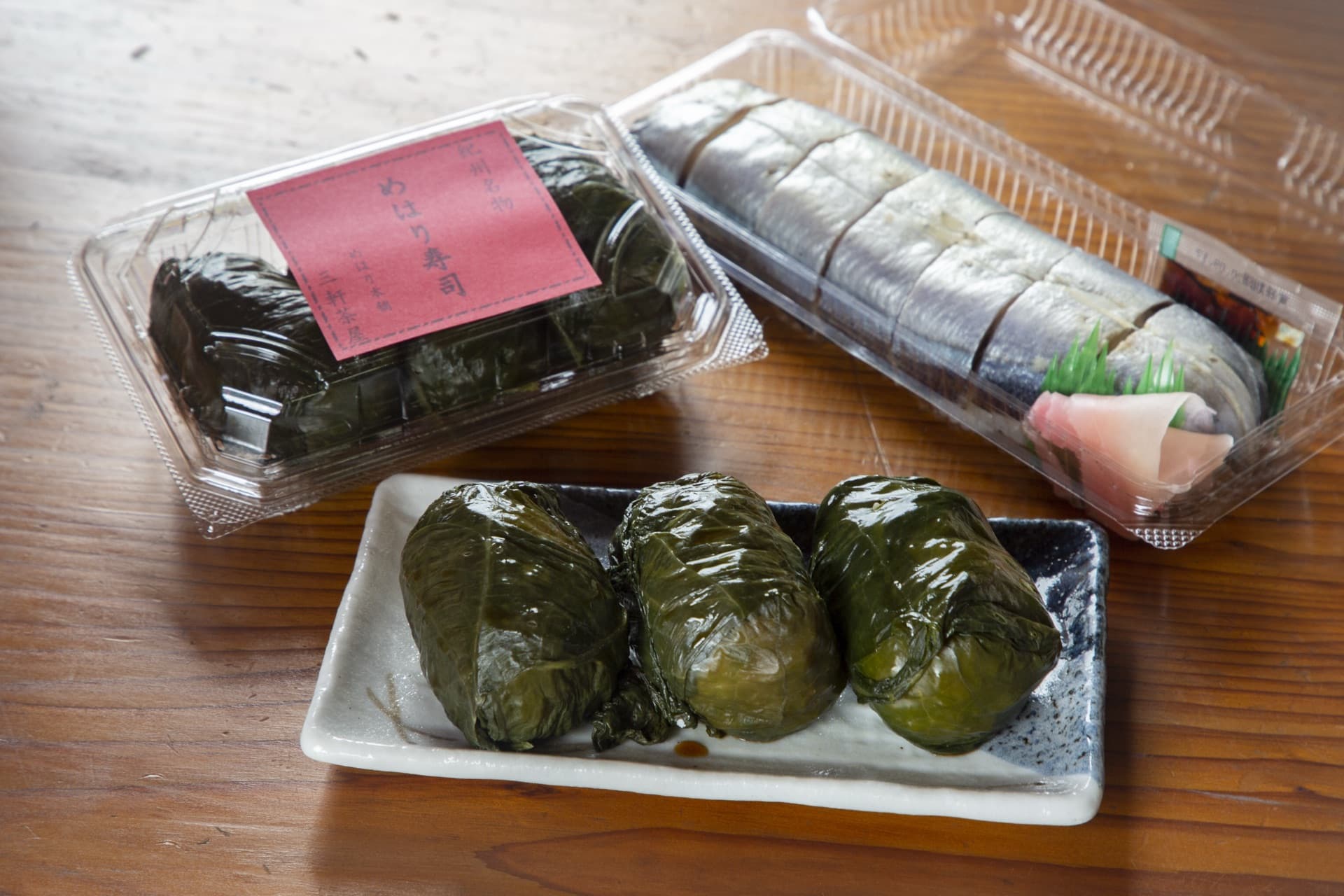
Kumano's Local Cuisine Is Wonderfully Portable
As you walk through Kumano, apart from the bustle of the tourist spots, you'll encounter foods that let you feel the rhythm of local life. A prime example is mehari-zushi, long loved in the Shingu and Hongu areas.
This humble dish is a hand-sized ball of rice wrapped tightly in salted or lightly pickled takana (mustard green) leaves. It has long been treasured as a lunch for those working in the mountains or along the rivers—and for pilgrims walking the Kumano Kodo—because it can be picked up and eaten straight from the hand.
Does the Name Come from 'Widening the Eyes'?
Several theories surround the name 'mehari-zushi': some say it comes from how you have to open your mouth so wide that your eyes widen (mehari) to take a bite, while others say it's because it's so delicious your eyes grow wide. The origin has many versions, and it's charming how even locals will say, 'In my family, we heard it this way.'
Although it's called sushi, it isn't necessarily made with vinegared rice. The saltiness of the takana, a subtle tang, and the gentle sweetness of the rice come together in an unpretentious flavor. Some families mix barley or sesame into the rice, or tuck a filling inside—each household has its own slight variation.
Tips for Eating
- The classic way is to pick it up by the takana leaf and bite right in
- They're on the larger side, so one really fills you up
- If you're taking them as trail food along the Kodo, it's safest to finish them the same day
Sanma-zushi, Made with Pacific Saury from the Kumano Sea
Another beloved specialty of the Higashi-Kishu region (the coast along the Kumano Sea) is sanma-zushi. Pacific saury is butterflied, cured in vinegar, laid over vinegared rice, pressed into a stick shape, and then sliced to serve.
Sanma is a fish that comes into season from autumn through winter, and around Shingu it has long been known as a dish served at celebrations, festivals, and family tables. Each shop and household has its own slightly different approach to the vinegar balance and preparation of the saury, so comparing them is part of the fun.
A Land Where 'Mountain Flavors' and 'Sea Flavors' Sit Side by Side
Mehari-zushi is a lunch from the mountains; sanma-zushi is a gift from the sea. The fact that these two dishes coexist as local specialties of the same region reflects how Kumano lies close to both mountain and ocean.
As you follow the river down from Kumano Hongu to Shingu, the scenery—and the food—gradually change their expression. Noticing those shifts through local cuisine makes for a wonderful way to travel.
Travel Notes
- It's a good idea to check in advance which shops carry these items and when they're available
- On days you'll be walking the Kodo, small pieces of plastic wrap and hand wipes come in handy
- Locals say it's proper to eat the takana leaf together with the rice, leaving nothing behind
After a long walk on the Kumano Kodo, the saltiness of the takana soaks into your tired body—an experience sure to stay with you long after the trip. Between sightseeing stops, do reach out and try these local flavors.
Image: めはり寿司とさんま寿司 (via (公社)和歌山県観光連盟)


