 LOCAL FIT KUMANOBack to list
"Food You Eat with Your Hands" on a Kumano Journey
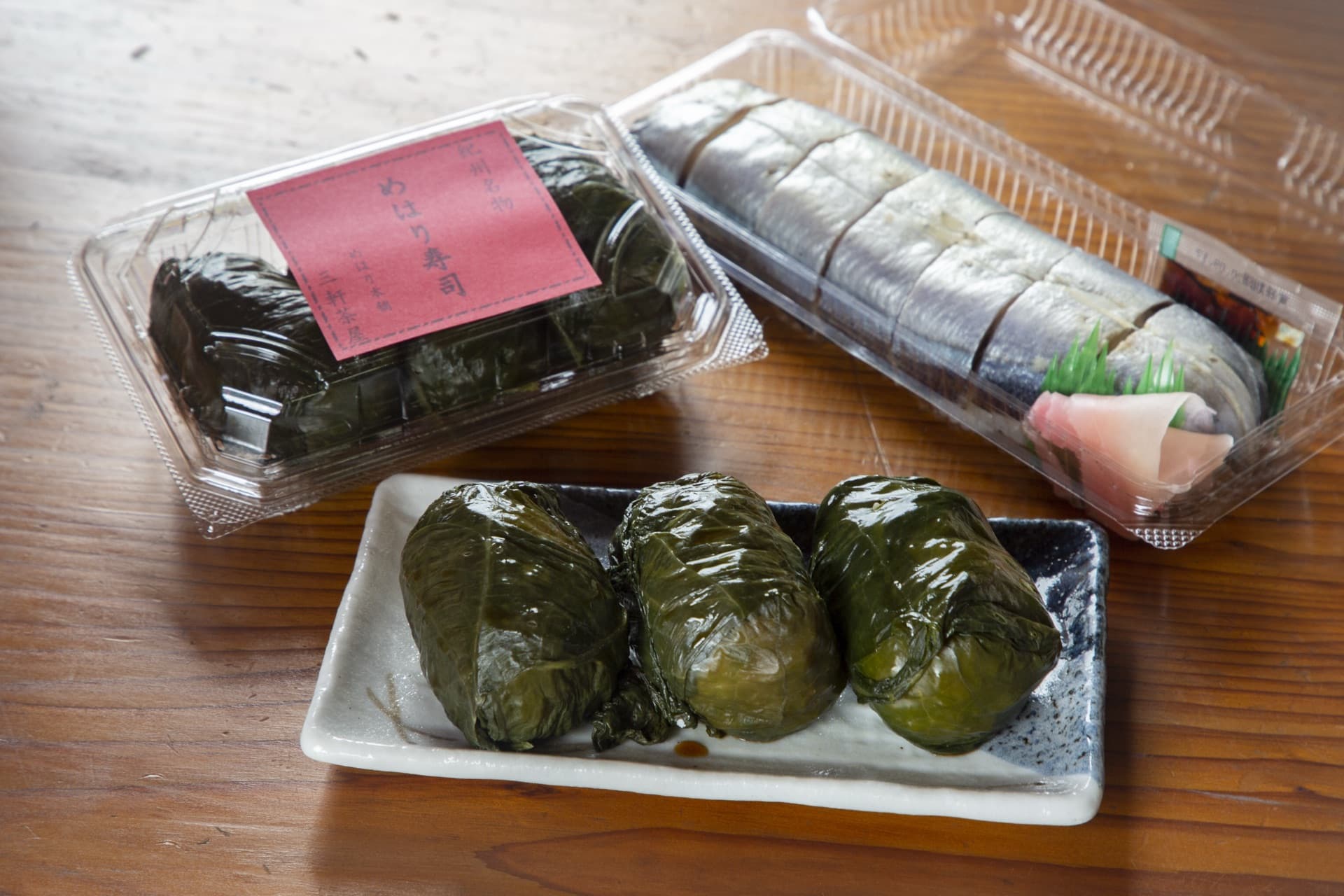
Walking around Kumano, apart from the usual tourist gourmet fare, you encounter humble flavors that have grown out of everyday life. Two that stand out are mehari-zushi and sanma-zushi. Both have the easygoing charm of something you can pick up and bite into—perfect as a companion on a Kumano Kodo walk or as a quick bite while exploring town.
Let's take a look at these two side by side: one a taste of the mountains, the other of the sea.
Mehari-zushi | A Mountain Worker's Lunch Wrapped in Takana Leaves
Mehari-zushi is a local dish in which rice, shaped like a large rice ball, is wrapped in salty pickled takana (mustard greens) leaves. It's said to have been enjoyed as a packed lunch by people heading out for mountain work or farm work in the hills of Kumano.
There are several theories about the name. The best-known is that you "open your eyes wide (me-haru) and open your mouth big" to eat it. Another says the spiciness and saltiness of the takana wake you up wide-eyed. None can be confirmed, but the quirky name itself often sparks conversation.
Little Pleasures When You Eat It
- Enjoy the crisp texture of the takana leaves and their subtle saltiness
- The most "authentic" way to eat it is to unwrap it and bite in with your hands
- If eating it on a rest break along the old road, it's reassuring to have a hand towel ready for drips or crumbs
Each shop and household varies in how the rice is seasoned, what fillings are added, and the size of the ball. Comparing them, you'll find that even under the same name, each has its own subtle character.
Sanma-zushi | A Celebratory Sea Flavor Reflecting Autumn and Winter on the Kumano Sea
The other dish is sanma-zushi, beloved in areas along the Kumano Sea, including Shingu. It's a stick-shaped sushi made by filleting Pacific saury (sanma), curing it in vinegar, and shaping it together with vinegared rice.
In the lands facing the Kumano Sea, saury is a familiar fish. Homemade sanma-zushi often appears on the table at local events and celebrations. Each household has its own touch with the vinegar balance and curing of the fish—part of the charm is that every family has "our own flavor."
Points to Savor
- Enjoy the balance between the umami of the saury and the refreshing tang of the vinegared rice
- Because it uses a seasonal, oil-rich fish, the flavor can change with the time of year
- If buying it while strolling around town, it's best to eat it soon after purchase
What Comes into View When You Read the Two Together
Mehari-zushi is a portable meal for mountain workers, while sanma-zushi is a flavor of seaside life and celebration. Both are dishes that center on rice and make easy, natural use of local ingredients—quintessentially Kumano in the wisdom they hold.
For lunch on a day walking the Kumano Kodo, or for a little snack stroll through Shingu—tucking these local foods in between sightseeing spots brings your journey much closer to the rhythm of everyday local life.
A Word Before You Head Out
The shops that carry these items and the seasons they are sold can change. Popular items may sell out early, so if there's a shop that catches your interest, it's a good idea to check the latest information before you go.
Walk the mountain paths, feel the sea breeze, and pick up something to eat with your hands. Try building a day in Kumano around its flavors.
Image: めはり寿司とさんま寿司 (via (公社)和歌山県観光連盟)


