 LOCAL FIT KUMANOBack to list
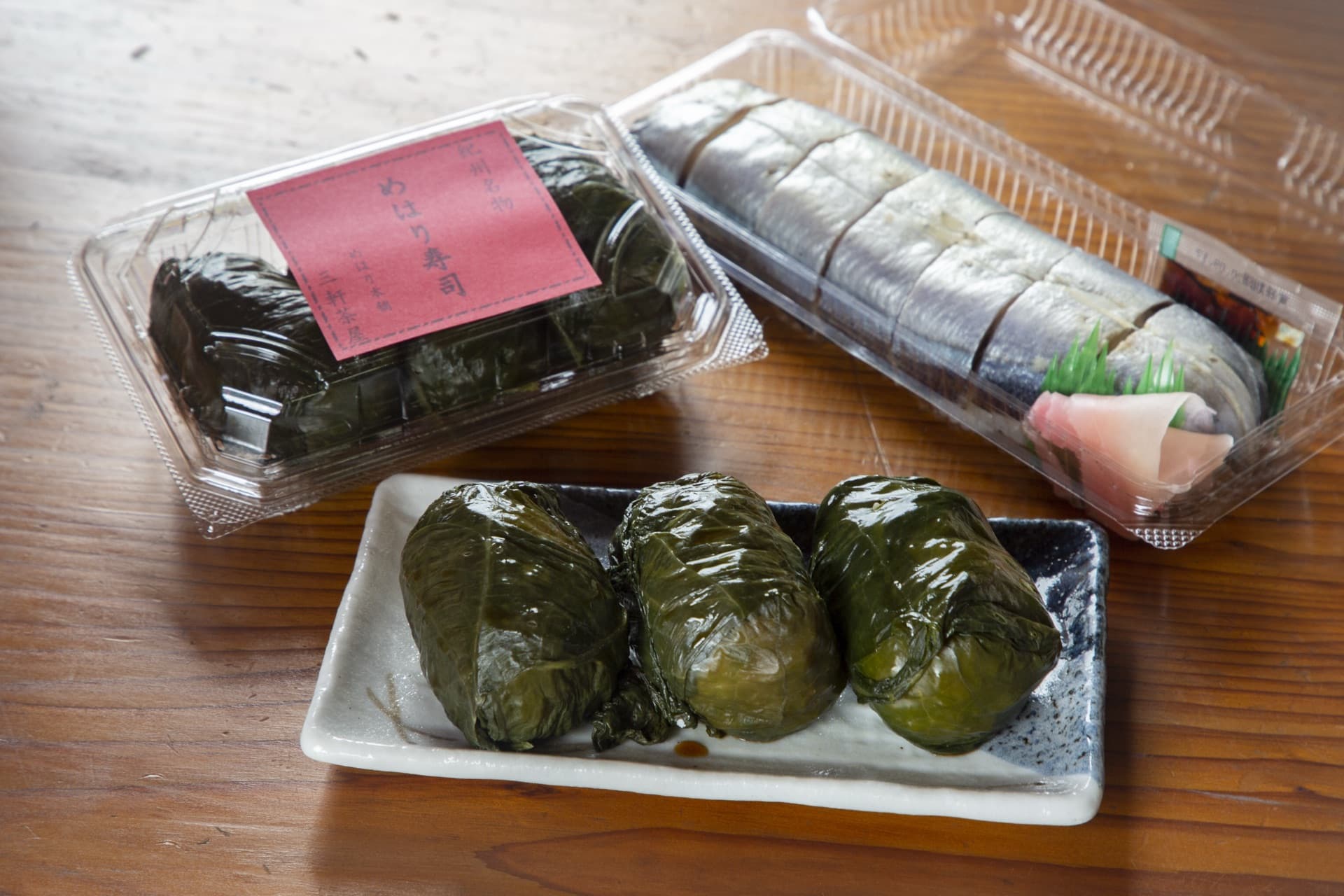
Kumano's "Onigiri" — Flavors for Those Who Walk
When walking through Kumano, two dishes inevitably come up in conversations about travel meals: mehari-zushi and sanma-zushi. Both are local specialties born from the wisdom of people living close to the mountains and the sea. Rather than being dishes dressed up for tourists, they feel closer to everyday home cooking or something eaten during a break from work. They are also a perfect fit for a lunch while walking the Kumano Kodo.
Mehari-zushi: A Large Rice Ball Wrapped in Takana Leaves
Mehari-zushi is a simple sushi made by wrapping rice in salt-pickled takana (mustard greens) leaves. One theory behind the name is that "you open your eyes wide (me wo haru) because you have to open your mouth so wide to eat it," though several other theories exist. It is said to have long been loved as a portable meal that was easy to eat during breaks from mountain work or farming.
Tips for Enjoying It
- The gentle saltiness and aroma of the takana bring out the natural sweetness of the rice.
- Since they are often quite large, don't force them into one bite — nibble gradually.
- After working up a sweat on the trail, the salty flavor feels especially welcome.
Sanma-zushi: A Winter Flavor from the Kumano-nada Coast
Sanma-zushi is a type of pressed sushi (sugata-zushi) made by placing vinegar-cured Pacific saury on top of vinegared rice. It is a well-known local dish throughout Shingu and the Higashi-Kishu region. The richness of the saury combines with the tang of the vinegared rice, giving each bite a clear, distinct flavor. Since recipes and seasonings are said to vary from household to household, comparing the character of each place you encounter it is part of the fun.
When You're Most Likely to Find It
Saury is a fish enjoyed from autumn through winter. However, availability varies by shop and season. If you're interested, it's a good idea to check the latest information with local tourist offices before your trip.
Thinking About It as Trail Bento
Decide When to Eat First
For both dishes, deciding "when to eat" in advance greatly increases your satisfaction. Find a rest point on your map and make it your lunch spot — this also helps set a comfortable walking rhythm.
Notes on Carrying
- Use cooling measures to prevent spoilage (ice packs, storing in shade).
- In hot weather, the rule of thumb is to eat them as early as possible.
- Always take wrappers and trash back with you.
A Small Suggestion for Tasting Both
If you have time to spare, try splitting them up: mehari-zushi on the trail on day one, and sanma-zushi savored slowly at a town eatery or inn on day two. You'll taste Kumano's two sides — a mountain bento and a seaside feast — with your own palate.
Summary
Mehari-zushi and sanma-zushi feel like edible expressions of everyday life in Kumano. Like its scenery, shrines, and temples, they're sure to leave a lasting impression on your journey. Knowing just a little about the origin of their names before you set out will change how you feel when you take that first bite.
Image: めはり寿司とさんま寿司 (via (公社)和歌山県観光連盟)


