 LOCAL FIT KUMANOBack to list
Kumano's Everyday Meals Reflect Both Mountain and Sea
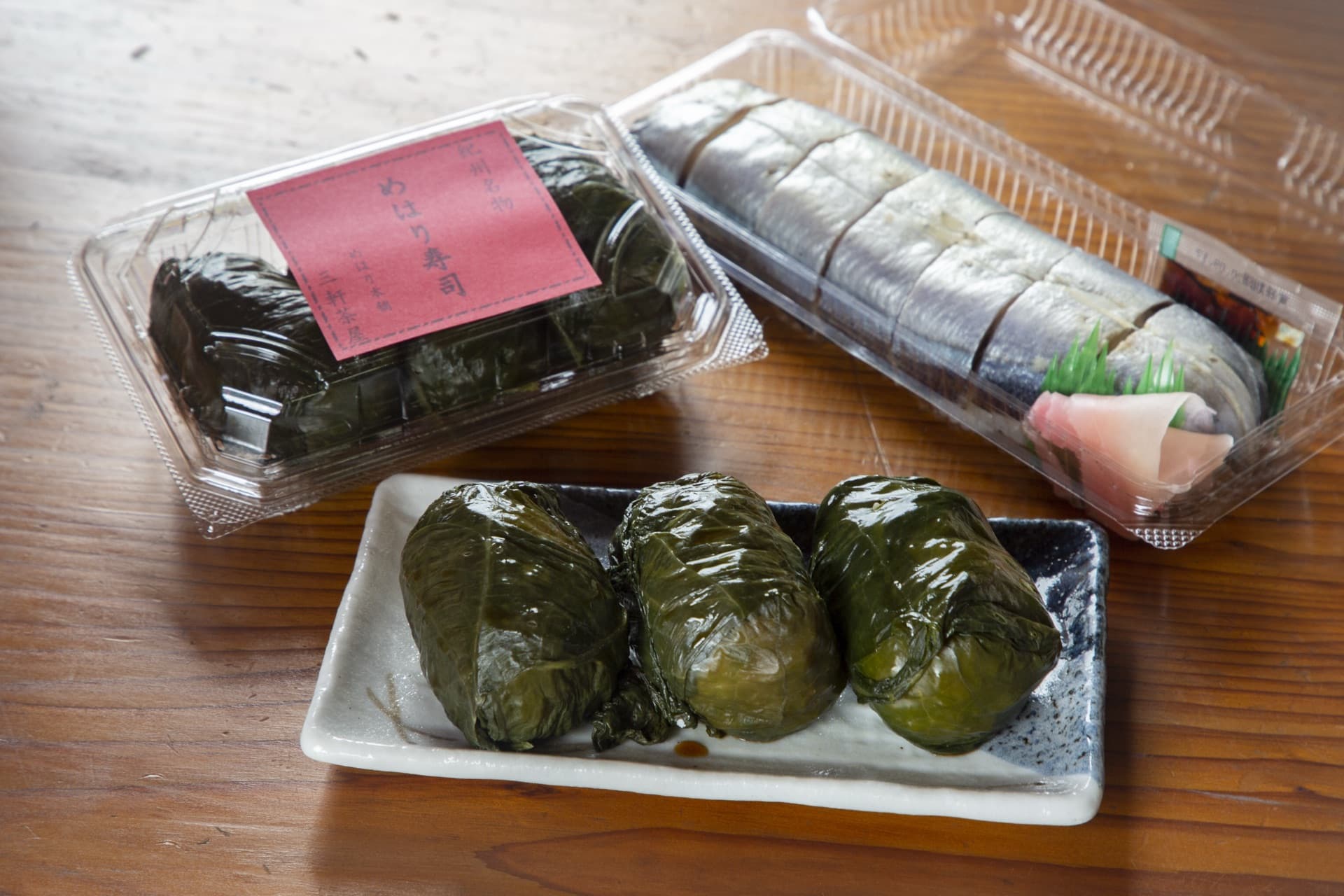
As you walk through Kumano, you'll see deep cedar forests right in front of you, and move just a little further and the blue of the Kumano-nada Sea opens up before you. This closeness is clearly reflected in the food culture, too. The best examples are mehari-zushi, born from life in the mountains, and sanma-zushi, which makes the most of the sea's bounty.
Neither was created for tourists. Both were originally humble foods eaten at home or at work. That's exactly why, when you taste them on your journey, you feel as if you've quietly brushed against the everyday life of this land.
Mehari-zushi | A Mountain Worker's Lunch Wrapped in Takana
Does the Name Mean 'Eyes Wide Open'?
Mehari-zushi is a local dish of rice wrapped in salt-pickled takana (mustard greens) leaves, something like a large rice ball. There are various theories about the name, but the most commonly told one is that you have to "open your eyes (and mouth) wide" to eat it. The rice balls are big, and just one is enough to fill you up.
A Good Companion for Walking the Old Roads
The takana leaves also serve as a "natural wrapper," keeping the rice from sticking to your hands and making it easy to carry. It makes sense that this was the lunch of choice for people working in the mountains. The gentle saltiness and refreshing flavor seep into a tired body after a long walk. It's a fine choice for lunch on a day spent walking the Kumano Kodo — consider picking some up in advance.
Sanma-zushi | Pressed Sushi Born of the Autumn Kumano-nada Sea
Sanma-zushi is a local pressed sushi made by butterflying Pacific saury, curing it in vinegar, and pressing it together with sushi rice. It's beloved in areas along the Kumano-nada coast such as Shingu and Nachikatsuura, and from autumn into winter, when the saury takes on rich fat, is a season locals especially look forward to.
Every Household Has Its Own Flavor
The preparation and seasoning are said to vary subtly by region and household. The strength of the vinegar, the sweetness of the rice, the degree to which the saury is cured. Taste a few side by side and you'll find that, even under the same name, each has its own character — part of the fun.
How to Enjoy It on Your Trip
- Before or after the old roads: Mehari-zushi is perfect for fueling up before a walk or for a mid-rest meal.
- In a seaside town: Sanma-zushi is more memorable when you savor it while picturing the scenery of the Kumano-nada Sea.
- Try them side by side: The "wrapped rice" of the mountains and the "pressed sushi" of the sea. Trying both on the same trip becomes an experience of tasting Kumano's very landscape.
Where and when they're served, and in what quantity, can change, so it's reassuring to check with each shop or a tourist information center for the latest details before you visit.
In Closing
Mehari-zushi is the wisdom of the mountains; sanma-zushi is the blessing of the sea. Both are everyday meals that the people of Kumano have nurtured through daily life. In between visits to famous sights, do pick up these local sushi and let your body remember the taste of this land. Your trip will become one where memories of flavor layer themselves onto memories of scenery.
Image: めはり寿司とさんま寿司 (via (公社)和歌山県観光連盟)


