 LOCAL FIT KUMANOBack to list
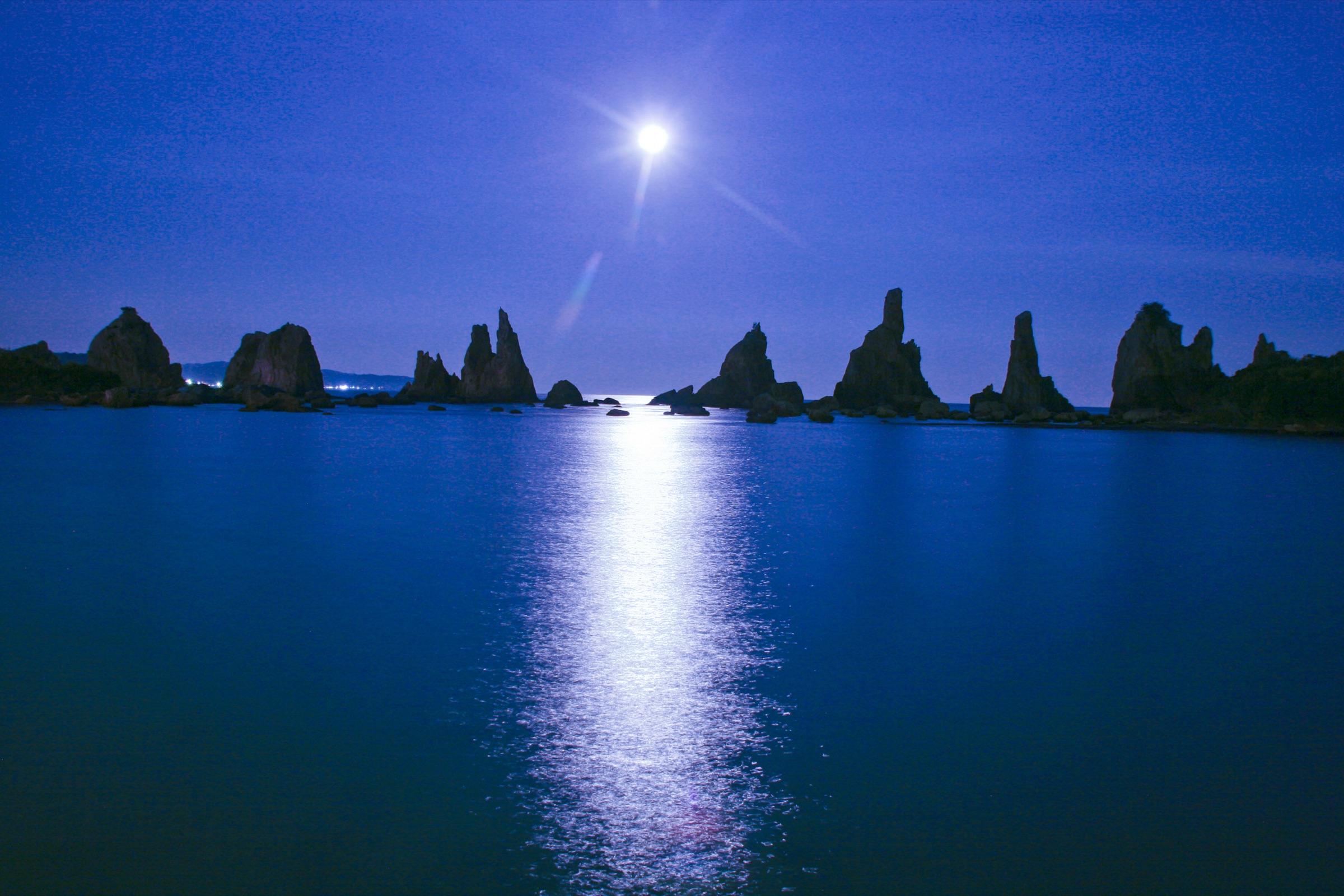
A Mysterious Row of Rocks Stretching Out to Sea
Among the many sights of Kumano, Hashigui-iwa in Kushimoto stands apart. In contrast to the quiet cedar groves of the old pilgrimage trails or the stillness of shrine halls, here a line of massive rocks extends straight out into the sea.
From the shore toward Oshima Island offshore, rock pillars of various sizes stand in a row, like the remains of a bridge whose piles were driven by a giant. That's exactly where the name comes from (hashi = bridge, kui = pile), and the site is protected as a nationally designated Place of Scenic Beauty and Natural Monument.
The Legend of Kobo Daishi and the Amanojaku
Local lore tells this story. Kobo Daishi once declared, "I shall build a bridge all the way to Oshima," and ended up in a contest with an amanojaku (a mischievous demon). The Daishi worked through the night, driving pile after pile. The amanojaku, hoping to interfere, mimicked the crow of a rooster. Thinking dawn had broken, the Daishi stopped his work — and the bridge was left unfinished.
Once you know the legend, the row of rocks really does begin to look like an "unfinished bridge." It's an easy story to share with children, and makes a great talking point for family trips.
Time Your Visit by "Morning" and "Tide"
Around Sunrise
What makes Hashigui-iwa so striking is the silhouette of the rocks against the sunrise climbing from across the sea. As the sky begins to lighten, the rocks' outlines emerge, and the sea surface gradually takes on color. The seaside before dawn is colder than you'd expect, so regardless of the season, bringing an extra layer to throw on is a smart move.
Around Low Tide
When the tide goes out, you can sometimes walk right up to the base of the rocks. Tide pools, seaweed, shells, and small sea creatures appear at your feet — a different kind of enjoyment from simply viewing the rocks from a distance. Keep in mind that tide times change daily. Check a tide table before heading out, and walk within a comfortable range based on the actual conditions.
Footwear and Footing on the Rocks
- Shoes: Sneakers with non-slip soles that can handle getting wet are best. Sandals can be dangerous on sharp or slippery rocks.
- Waves: Even when the sea looks calm, a large wave can arrive suddenly. Don't turn your back to the sea, and avoid getting too close to the water's edge.
- Rising tide: As the tide starts coming in, your path back may narrow. Allow plenty of time and head back early.
- Small children: Hold hands while walking, or simply enjoy the view from the shore — that alone is plenty.
How to Build It into Your Morning
After watching the sunrise, we recommend heading back to your lodging for breakfast and a relaxed start to the rest of the day. Kushimoto is a town that offers Cape Shionomisaki — the southernmost point of Honshu — along with other beautiful coastal scenery. Think of Hashigui-iwa as the "gateway to the Nanki coast": enjoy the shoreline in the morning, then head north toward Kumano in the afternoon to savor both the old trails and the sea in one day.
Kumano often conjures images of mountains, but the southern tip of the Kii Peninsula shows another face — one woven from waves and rocks. Watching that line of rocks in the morning light will surely become one of the most memorable scenes of your trip.
Summary
- Hashigui-iwa is a row of rocks tied to the legend of Kobo Daishi and the amanojaku.
- Being mindful of morning light and low tide completely changes how the scenery looks.
- The rocks are slippery, and waves require caution. Give yourself room in both time and footing.
Image: 橋杭岩 (via (公社)和歌山県観光連盟)


