 LOCAL FIT KUMANOBack to list
'Kumano, Land of Rebirth' Is Easier to Understand Through Stories
Kumano is called the 'Land of Rebirth.' But the phrase alone feels a bit vague, doesn't it?
So in this article, rather than textbook explanations, we'll unravel the image of 'rebirth' through the stories passed down in Kumano. The mechanisms of faith and the history are covered in other articles, so here we'll begin with the tales — a kind of preparatory reading note.
The Presence of 'Death' and 'Rebirth' That Lingers in Kumano
The 'Land of Yomi' in Mythology
Since ancient times, Kumano has been thought of as a place close to the realm of the dead. In mythology, Kumano is told of as the place where the goddess Izanami — who gave birth to the land — was buried after her death. In Kumano City stands Hananoiwaya Shrine, which is associated with this legend.
It is a simple yet powerful sacred site where a massive rock cliff itself serves as the object of worship. Many visitors sense something uniquely 'Kumano' in the way the presence of the 'land of death' overlaps with scenery of deep mountains and sea.
Mountains and Sea Alike Are 'Boundaries' Between This World and the Next
The depths of the mountains were long considered places connecting to the Pure Land. There was also faith in an ideal world lying beyond the sea, so in Kumano, a sense of 'boundary' dwells in both the mountains and the sea. The idea of dying here once and being born anew is said to have grown out of such a landscape.
The Tale of Oguri Hangan | The Noble Who Was Reborn at Yunomine
The story that conveys 'rebirth' most clearly is the tale of Oguri Hangan and Princess Terute.
A Rough Outline
The tale has been passed down in many versions, and details differ, but the gist is as follows:
- The noble Oguri is poisoned and loses his life, but is sent back from hell
- His appearance is utterly changed, and he can no longer even walk
- He is placed on an earthen cart bearing the inscription 'Pulling this cart is an act of memorial service,' and many hands pull him toward Kumano
- Princess Terute also pulls the cart, and in time, at the waters of Yunomine, Oguri regains his original form
The key point is that he is carried to Kumano not by one person's strength, but through the hands of many people joining together. The tale has been told as a symbol of Kumano's broad embrace — a place that accepted the sick, the disabled, and those of low status alike.
Visiting Yunomine After Learning the Story
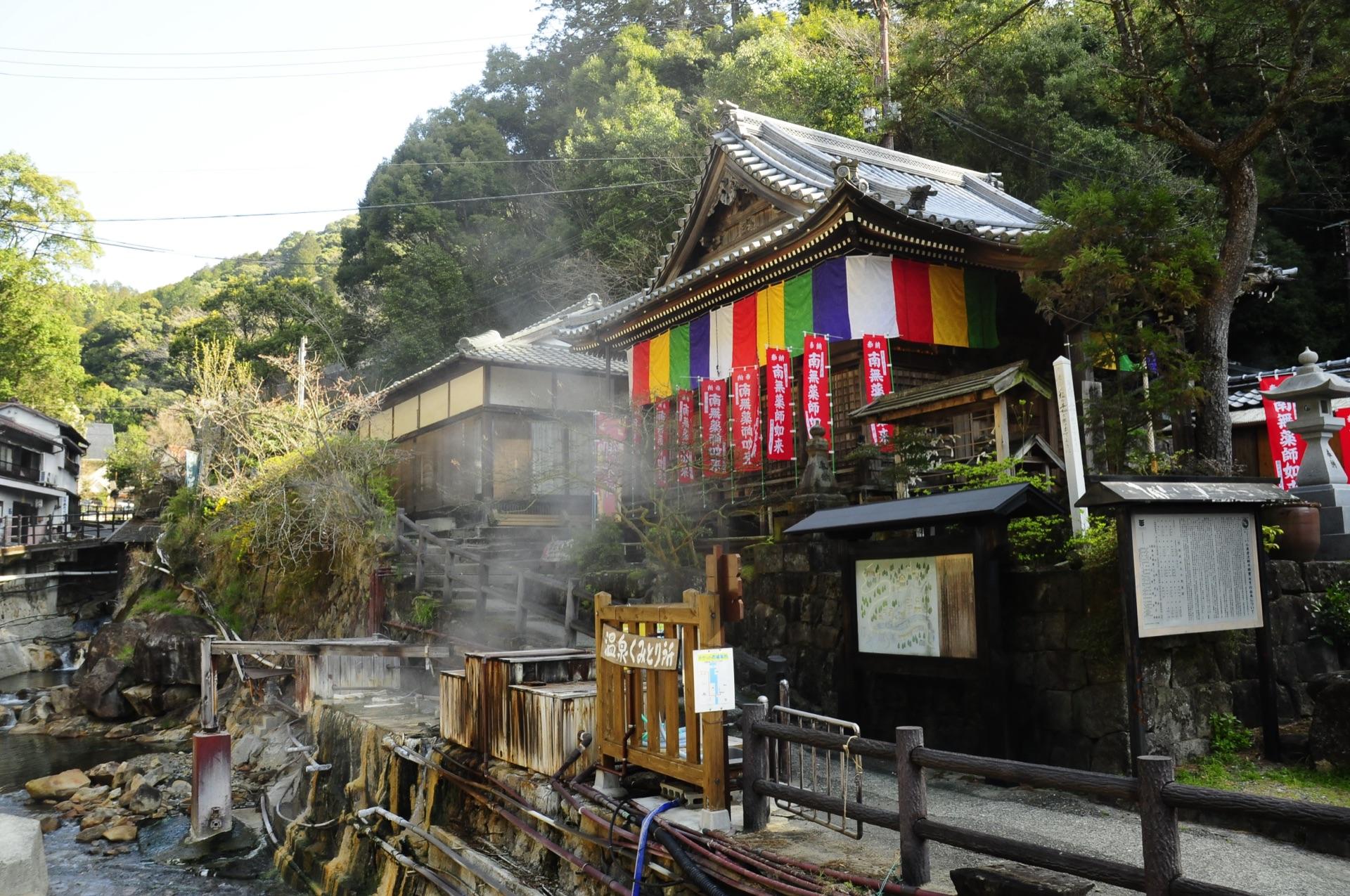
The waters of Yunomine Onsen were also a place where pilgrims to Kumano purified their bodies. If you walk through the hot spring town with Oguri's story in mind, the steam-filled streets will look a little different.
Whether you soak in the waters or simply watch the rising steam, you should find it easier to grasp the sensation of 'setting down your fatigue and setting off again.'
What 'Rebirth' Means for Us Today
For people long ago, rebirth was an urgent matter — recovery from illness or sin. For today's traveler, you can think of it more lightly.
- Breathing in the quiet air on an old pilgrimage trail in the morning
- Soaking in the hot waters and letting the tension leave your body
- Standing before a great tree, rock, or waterfall and just letting your mind drift for a while
Such moments can become triggers for a change of heart. Whether or not you hold any particular faith, if you can feel 'I came here and became a little more well,' that is a perfectly fine way to enjoy Kumano.
Decide on Just One Thing Before Your Trip
If you try to visit everything greedily, you may return exhausted rather than 'reborn.'
1. Places where you encounter the stories (Yunomine, Hananoiwaya Shrine, etc.)
2. Places where you move your body (a short section of the old pilgrimage trail)
3. Time when you do nothing
Of these three, we recommend narrowing your plan down to just one or two. For the opening status of each site and the schedule of events, it's reassuring to check official information before you depart.
'Kumano, Land of Rebirth' becomes a little more familiar — even without any special spiritual practice — simply by walking while knowing the stories. Before your trip, do take a moment to recall the tale of Oguri and Terute.
Image: 湯の峰温泉 (via (公社)和歌山県観光連盟)


