 LOCAL FIT KUMANOBack to list
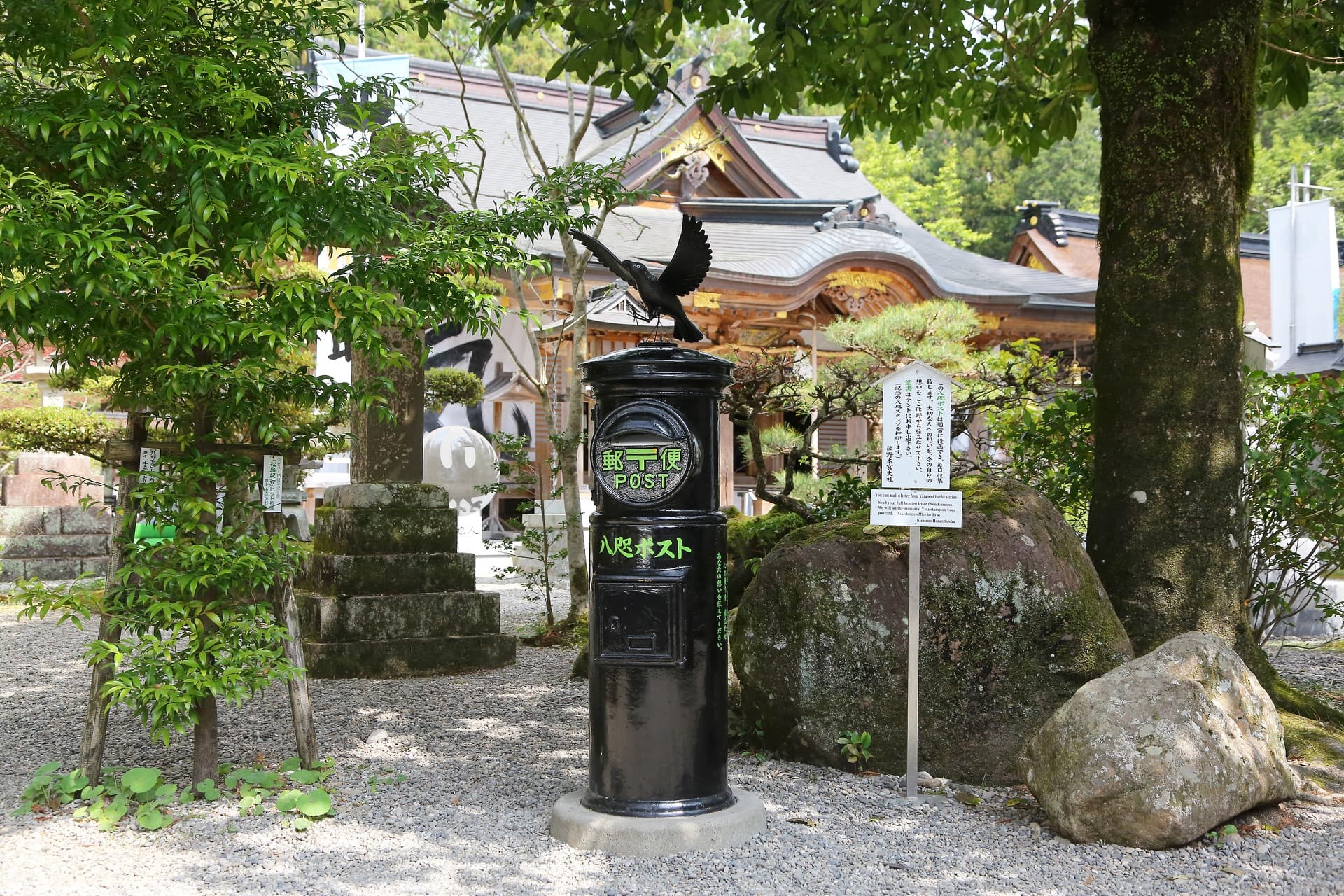
Why You Keep Spotting a Crow Motif While Walking in Kumano
As you climb the stone steps of Kumano Hongu Taisha, you'll notice a striking black bird appearing on the banners lining the approach, on charms and souvenirs, and in the decorative details around the shrine buildings. A crow with three legs — that's the Yatagarasu.
In this article, we'll cover the basics of Yatagarasu's origins and introduce a way to enjoy Kumano by "walking while searching." Rather than rushing through famous spots, using a single motif as your clue can subtly change how the landscape looks.
What Kind of Being Is the Yatagarasu?
A Messenger Said to Have Guided Emperor Jimmu
Yatagarasu is a bird that appears in Japan's ancient chronicles, the *Kojiki* and *Nihon Shoki*. When Emperor Jimmu's party, heading toward Yamato, lost their way in the rugged mountains of Kii, Yatagarasu is said to have been sent from the heavens to lead them. When you take in the deep, forested scenery of Kumano, the story of a "guiding bird" feels perfectly fitting.
Several Theories About the Three Legs
There are several theories about why Yatagarasu has three legs, including that they represent heaven, earth, and humankind. Rather than settling on one interpretation, approaching it with a casual "so that's what people say" attitude is perhaps the best way to engage with this bird.
Tips for Searching for Yatagarasu in Kumano
Hongu: Slowly Look Up Along the Approach and Around the Shrine
Kumano Hongu Taisha is known as a place with an especially deep connection to Yatagarasu. As you climb the stone steps, don't just watch your feet — look at the flags, decorations, and the designs on the charms and offerings. If you want to take photos, walking early in the morning when it's less crowded lets you search in peace.
Nachi and Shingu: The "Presence of the Bird" at Each of the Three Shrines
The Kumano Sanzan consists of three shrines: Hongu, Hayatama, and Nachi. Each has its own history and atmosphere, so comparing how Yatagarasu appears at each is one of the pleasures of the journey. It's fine if you don't find it. While searching, you'll start noticing other things too — the lines of the roofs, the colors of the trees.
The Old Trails: Listen for the Voices of Real Crows
As you walk the Kumano Kodo, you'll sometimes hear a crow calling somewhere in the cedar groves. Of course, that's not the Yatagarasu. But hearing that call in the forest makes you wonder, "Is this how those who were led through here felt?" — and the old story feels a little closer.
Encountering the Three-Legged Bird in Unexpected Places
Yatagarasu is also known as the symbol of the Japan Football Association. It's fascinating that a story from Kumano extends all the way into the modern world of sports. After your trip, catching a glimpse of the Japan national team's emblem and thinking, "Ah, that's the Kumano crow," makes a lovely afterglow to your travels.
Things to Prepare Before You Walk
- Comfortable walking shoes: There are stone steps around Hongu, so non-slip shoes are reassuring
- Shrine etiquette: Take photos in spots that won't disturb other visitors, and follow the posted rules
- Plenty of time: A "searching" journey tends to stretch out. Leave extra time for your return transportation
- Weather preparation: Mountain weather changes quickly, so a light rain jacket is reassuring
In Closing: A Journey of Being Guided
Yatagarasu is "the bird that guides those who are lost." For those of us visiting Kumano, perhaps embracing unexpected detours and letting go of strict plans is the way of travel most suited to this land.
When you spot the three-legged figure, pause for a moment and take a deep breath. That small habit can give your Kumano journey a much richer flavor.
*Opening hours and details about charms and offerings may change, so please check official information before your visit.*
Image: 熊野本宮大社 (via (公社)和歌山県観光連盟)


