 LOCAL FIT KUMANOBack to list
Can You Visit the Three Kumano Grand Shrines in a Day? First, Understand the Distances
If you're searching for "Kumano Sanzan day trip," the first thing you probably want to know is whether it's realistic to visit all three shrines in one day. The honest answer from a local point of view: it's not impossible if you move efficiently by car, but you won't have much breathing room.
The Three Kumano Grand Shrines (Kumano Sanzan) refers collectively to Kumano Hongu Taisha (Hongu-cho, Tanabe City) nestled in the mountains, Kumano Hayatama Taisha (Shingu City) near the mouth of the Kumano River, and Kumano Nachi Taisha (Nachikatsuura Town) on a mountainside overlooking the waterfall and the sea. The three shrines are spread widely across the southeastern Kii Peninsula, and even between neighboring shrines, you should plan on about an hour of driving. The mountain roads with many curves take longer than they appear on a map.
How Your Starting Point Changes Your Day-Trip Plan
Starting from the Shingu or Nachikatsuura Area
Hayatama Taisha and Nachi Taisha are close to each other, making this the easiest base among the three shrines. Since reaching Hongu requires driving through mountain roads, allow a bit more time for that stretch.
Starting from the Shirahama or Tanabe Area
The natural flow is to start at Hongu, then follow the Kumano River to Shingu, and continue to Nachi. If you plan to visit all three in a day, assume you'll need an early morning start.
Starting from Osaka, Nagoya, or Farther Away
A day trip from a distant city consumes a lot of time just in transit. Since your actual time on site will be limited, consider not insisting on all three shrines — visiting two shrines carefully is an option that often leads to a more satisfying trip.
How to Decide the Order of Your Visits
There's no fixed order — choose whatever flows naturally for your route.
- Hongu → Hayatama → Nachi: A flow descending from mountains to river to sea. Ending with Nachi Falls makes for a fitting finale.
- Nachi → Hayatama → Hongu: Starting from the coast and heading into the mountains. Since the return leg goes through mountainous terrain, be cautious about driving after sunset.
In either case, finish your mountain driving before dark for safety. Check the seasonal sunset times in advance.
Tips for Allocating Your Time
Each shrine has its own character, so you don't need to spend equal time at each.
- Kumano Hongu Taisha: With stone steps to climb and the option to visit Oyunohara (the original shrine site), it's worth setting aside a bit more time here.
- Kumano Hayatama Taisha: Located in town, it's a relatively compact visit — a good "breather" between the longer stops.
- Kumano Nachi Taisha: Combined with Seiganto-ji Temple and Nachi Falls, this tends to take the most time. Placing it last and leaving extra time for it is a good approach.
Taking lunch somewhere around Shingu or Nachikatsuura helps keep your route smooth.
What to Bring and Mindset for a Successful Day Trip
- Comfortable walking shoes: The stone steps and approach paths at the shrines involve more walking than you'd expect.
- Rain gear and layered clothing: Weather and temperature can vary quickly between the mountains and the coast.
- Phone charger and offline maps: Signal can be unreliable in mountain areas.
- Goshuin stamp book: Reception hours may change, so it's wise to check each shrine's information in advance.
"Really Feel It" Over "See It All"
Kumano is a place where the travel time itself is part of the journey. Rather than rushing through all three shrines just to snap photos, taking a moment to pause at each one is what will truly leave a Kumano impression on your heart.
If a day trip feels like it will be too hurried, deciding "two shrines this time, the third one next time" is a very Kumano way to enjoy the journey. Leaving yourself a reason to return isn't a bad thing at all.
According to your time and energy, try building the Kumano Sanzan day-trip plan that fits you best.
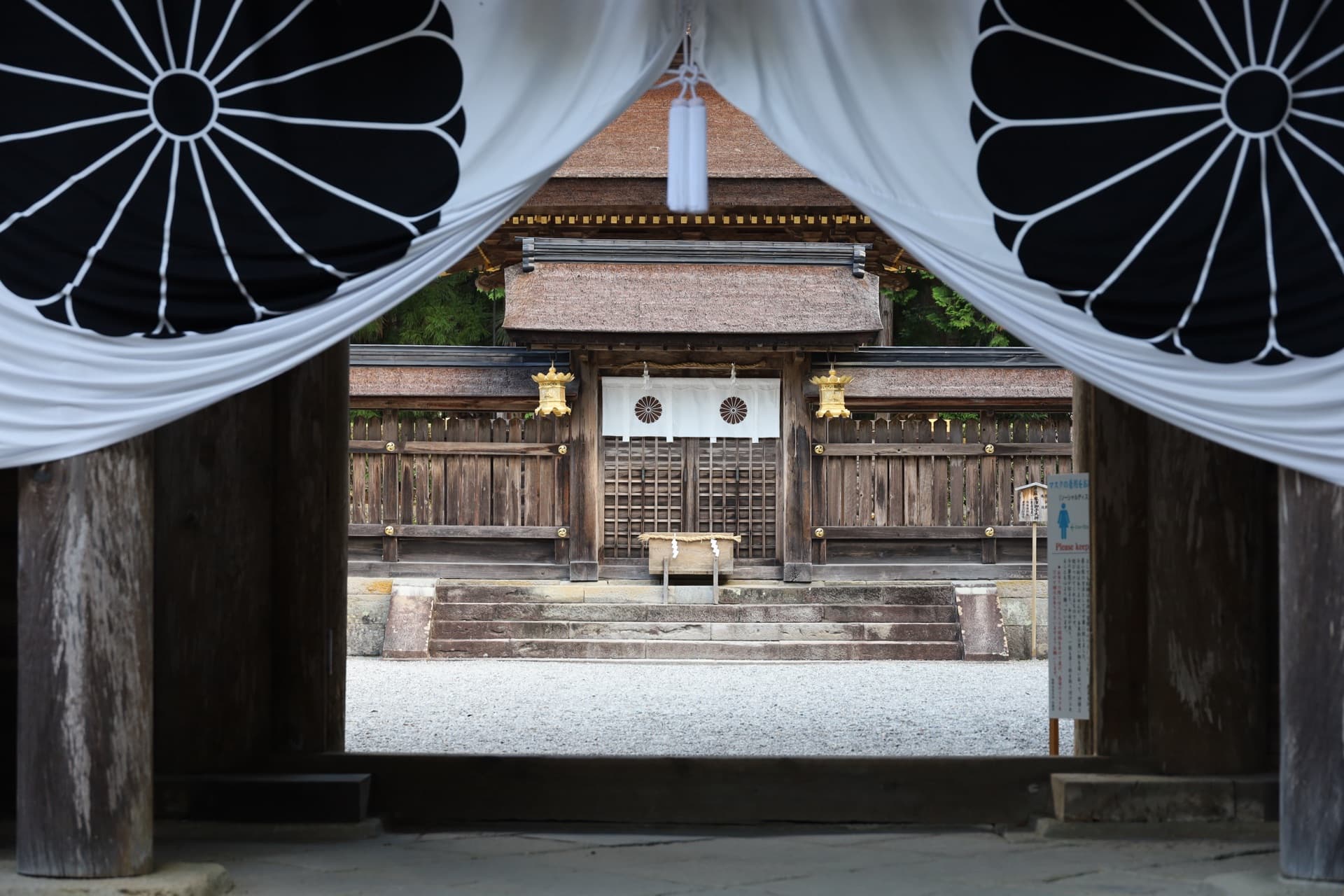
Image: 熊野本宮大社 (via (公社)和歌山県観光連盟)


