 LOCAL FIT KUMANOBack to list
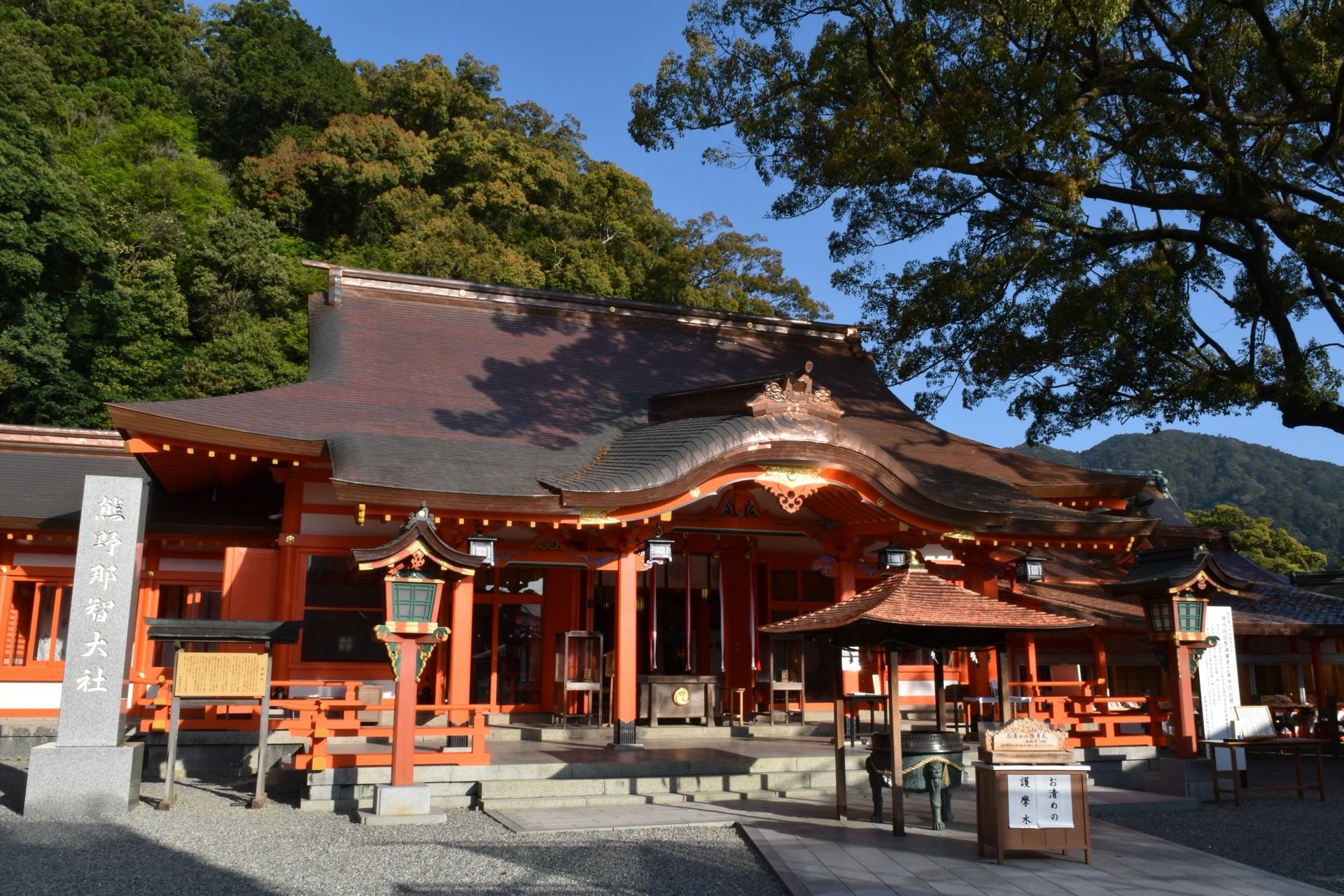
"In what order should I collect the goshuin of the Kumano Sanzan?" Many travelers wonder about this while preparing their trip. In fact, this question of "order" carries two meanings: the order within a single shrine, and the order across the three shrines. Here, we'll organize the mindset for walking Kumano with a goshuin book in hand.
Think of the Order in "Two Senses"
Within One Shrine: "Pray First, Receive the Seal After"
A goshuin is received as proof of your visit. The proper order is to purify yourself at the temizu basin, pay your respects at the worship and main halls, and then head to the reception window. Rather than lining up at the window the moment you arrive, greet the deity first. This small step alone changes the weight of that single page left in your book.
At the window, open your book in advance to the page you'd like written on, and hand it over quietly. Since reception locations and hours can change, please check the signage on the grounds or ask at the shrine office.
Across the Three Shrines: "The Order You Travel" = "The Order in Your Book"
There is said to be no fixed order for visiting the three shrines — Kumano Hongu Taisha, Kumano Hayatama Taisha, and Kumano Nachi Taisha. Feel free to decide the order based on your accommodation and transportation. That said, pages in your goshuin book will stack in the order you visit. "Enter from Shingu and finish at Nachi," or "Start at Hongu and move on to Hayatama" — what's interesting is that the shape of your journey remains as a single book. For planning your route, please also see our separate article on "The Order for Visiting the Kumano Sanzan."
How to Use a Single Book
Leave a Little Extra Space on the Pages
Some shrines offer multiple types of goshuin, and while you're hesitating, you may run out of pages. Decide before you set out whether to use a two-page spread per shrine or pack them one page at a time, and you won't be caught off guard. In case you receive a pre-written slip to be tucked in, it's reassuring to have adhesive mounting sheets or a pouch to hold them.
Some People Keep Separate Books for Shrines and Temples
At Nachisan, Seiganto-ji — the first temple of the Saigoku Thirty-Three Kannon Pilgrimage — stands next to Kumano Nachi Taisha, and the legacy of the fusion of Shinto and Buddhism still lingers today. Some people keep separate books for shrines and temples; others combine them into one. If you're unsure, the surest approach is to ask at the window, "May I have this written in this book?"
A Brief Note on Each of the Three Shrines
- Kumano Hongu Taisha: Pay your respects at the shrine buildings nestled among the mountains, and extend your walk to Oyunohara, the former shrine grounds, to truly sense the atmosphere of Kumano.
- Kumano Hayatama Taisha: Located in the town of Shingu, it's easy to reach from the station. It's also appealing for how easily it combines with other sights in Shingu.
- Kumano Nachi Taisha: Situated beside Nachi Falls and Seiganto-ji, the flow of worship here is especially rich. Since there are many stone steps and slopes, allow some ease for your footing.
The seals and calligraphy styles each shrine uses have their own character. Comparing the subtle differences on site is part of the fun.
Tips for the Day
1. Keep your writing tools and small change in an easy-to-reach place
2. Head to the window after finishing your prayers, and wait quietly if there's a line
3. Refrain from taking photos or chatting while the calligrapher is at work
4. Once you receive it, check the page on the spot and offer your thanks
Until the ink dries, it's reassuring to leave the page open for a while rather than closing the book.
In Closing
The order for goshuin at the Kumano Sanzan can be fully grasped through just two points: the etiquette of "pray first, receive the seal after," and the pleasure that "the order you traveled remains in a single book." Rather than rushing to collect them, quietly layer into your book the time you spent joining your hands at each shrine. May it become a wonderfully Kumano-like record of your journey.
Image: 熊野那智大社 (via (公社)和歌山県観光連盟)


