 LOCAL FIT KUMANOBack to list
Who a Kumano Sanzan Bus Tour Suits
Hongu, Hayatama, and Nachi — though all part of the same 'Kumano' — are actually quite far apart from one another. Hongu nestles in the mountains, Shingu lies near the sea, and Nachisan overlooks both a waterfall and the ocean. Each has its own distinct character.
If you try to travel between them by public transport, you'll need to think about bus frequencies and connections. That's where a bus tour comes in handy. Since someone else handles the driving and the timetables, this option works especially well for:
- Those who aren't confident driving, or would rather not drive
- First-time visitors to Kumano who want to get an overview
- Groups of family or friends who want to travel together at ease
On the other hand, a bus tour means 'traveling on a fixed schedule.' Knowing what to look for in the itinerary before you book can make a real difference in how satisfied you feel.
Three Things to Check in the Itinerary
1. Departure Point and Time on the Bus
Whether the tour departs from somewhere far like Osaka or Nagoya, or starts after you've already entered the Kii Peninsula, makes a big difference — even for tours advertised as the same 'three-shrine pilgrimage.' Tours leaving from distant cities naturally spend more time on the road, which tends to shorten the stay at each shrine. Checking the departure point, meeting place, and expected return time in advance helps you plan your energy for the day.
2. Do You Actually Visit All Three Shrines, or Just Pass By?
Even when a tour is billed as a 'three-shrine pilgrimage,' one of the shrines may only be viewed from the bus window or visited briefly. Check which shrines you'll actually enter and which offer free time. If you'd like to receive goshuin (shrine seals), make sure the itinerary allows enough time at the reception counter.
3. How Much Walking, and Where the Stone Steps and Slopes Are
The Kumano Sanzan are memorable places — and much of that memory comes with stone steps and slopes. At Hongu, steps lead up the approach; at Nachisan, stone paths and stairways await. Even when the bus gets you close, you'll still walk within the precincts. If you have concerns about your knees or legs, it's reassuring to ask the travel agency in advance about walking distances and the degree of steps involved.
Making the Most of Short Free Time
Free time on a bus tour is usually not very long. Rather than trying to do everything, deciding 'just one thing at this place' in advance will take a lot of the rush out of your visit.
- Hongu: After paying your respects, if there's time, head toward Oyunohara, the former shrine site. The wide sky and enormous torii gate leave a strong impression even in a short visit.
- Hayatama: Take your time to soak in the atmosphere of the grounds and the colors of the shrine buildings. You'll feel the open, airy character unique to a sacred place near the sea.
- Nachi: View the waterfall, pay your respects at the shrine and temple — choose 'today it's this' and move with intention.
To make sure you get back to the meeting point a little before the departure time, it helps to not only check your phone's clock but also take a photo of where the bus is parked.
Tips on What to Bring and What to Wear
- Comfortable walking shoes: Stone paths and steps get slippery in the rain. Sneakers with good grip are a safe bet.
- Rain gear and a light layer: Mountain weather changes quickly, and a layer also helps against the bus air conditioning.
- Coins and a goshuin book: Prepare these ahead so you aren't flustered at the reception counter.
- Drinks and a light snack: Lunch timing can shift on some days, so having a little something helps.
- Motion sickness medicine: With winding mountain roads, it's reassuring to have on hand if you're prone to motion sickness.
In Summary: Use the Bus Tour as a 'Gateway'
A Kumano Sanzan bus tour is a great way to grasp the big picture of this vast region in a single day. When choosing one, rather than focusing on price or marketing copy, try reading the itinerary for the departure point, how each shrine is treated, the walking involved, and the length of free time.
And if you find a place that captures your heart, consider coming back for an overnight stay next time, at a more leisurely pace. Use the bus tour as your 'gateway to Kumano' and discover the spots you'll want to return to on your own terms. That's the kind of journey this can be.
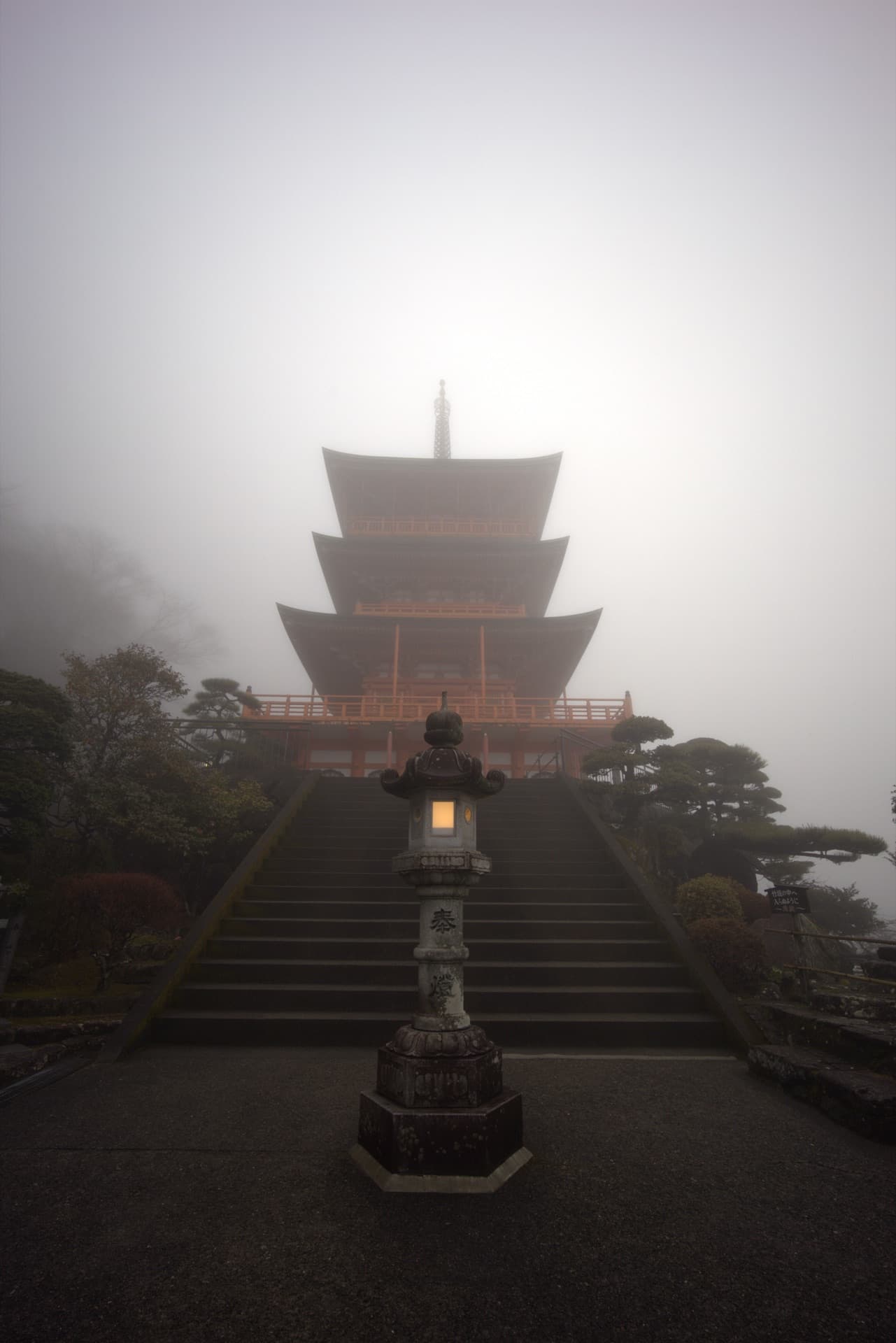
Image: 那智山青岸渡寺 三重塔 (via (公社)和歌山県観光連盟)


