 LOCAL FIT KUMANOBack to list
In Kumano, Search for Cherry Blossoms by "Order" Rather Than "Place"
Search for "Kumano cherry blossom spots" and you'll typically find a list of place names. But spring in Kumano—deep in the southern Kii Peninsula, close to mountains, sea, and rivers—shifts in timing depending on elevation and the direction a valley faces. Locally, rather than pinning your hopes on a single famous spot, it's easier to actually catch the blossoms if you know which cherries bloom in what order and choose accordingly.
Spring in Kumano Begins with Kumano-zakura
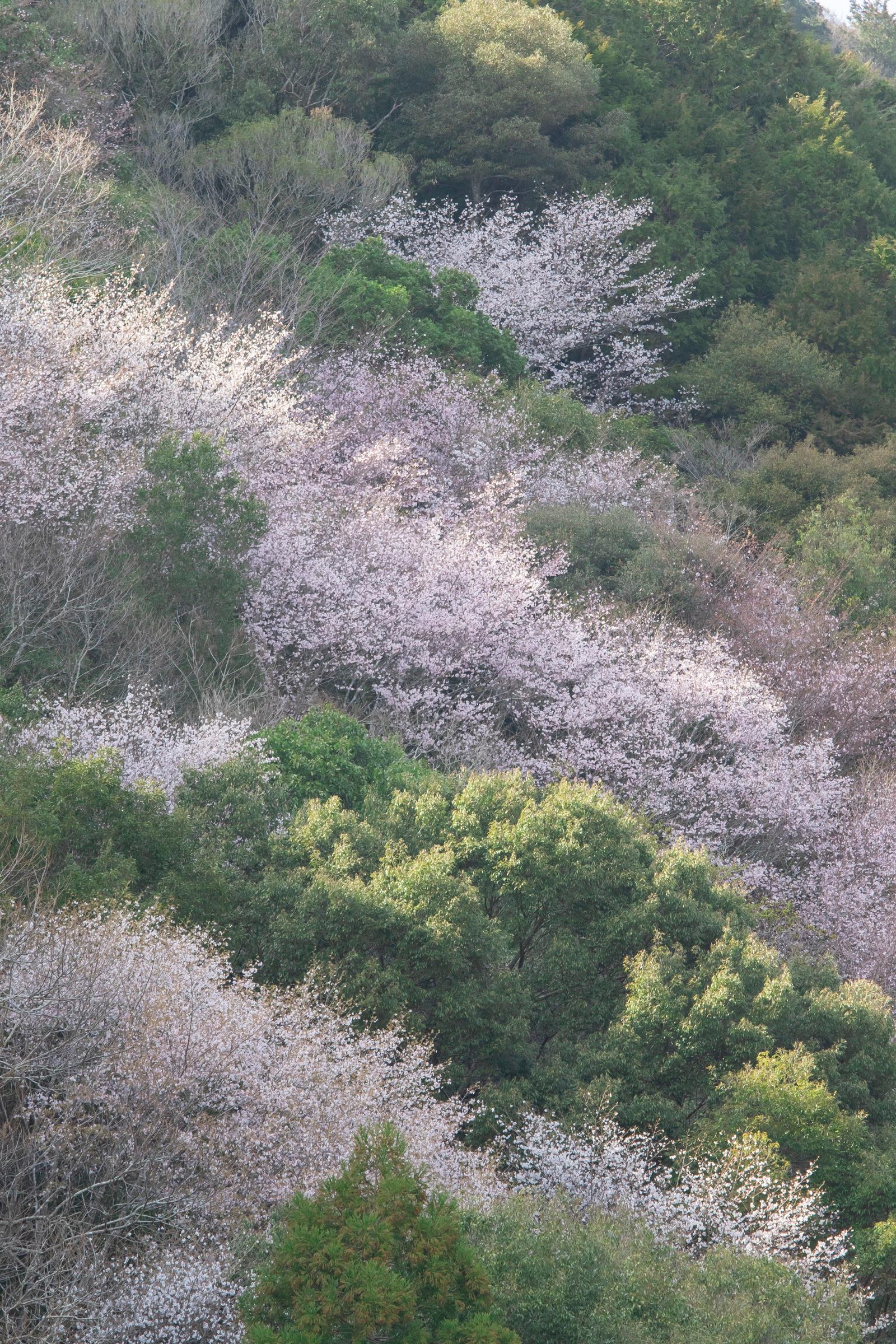
The Kumano region is home to Kumano-zakura, a wild cherry recognized as a new species in 2018. A member of the mountain cherry family, it blooms earlier than Somei-yoshino, putting out pale flowers while traces of winter still linger.
- Blossoms are white to pale pink, with a rustic character rather than showiness
- You'll often encounter them on mountain slopes or along forest roads where human hands haven't reached too far
- Rather than expecting the dramatic rows you'd see with Somei-yoshino, enjoy the pleasure of spotting a single tree deep in the mountains
Bloom timing varies by year and location. Before heading out, it's reassuring to check the latest information from the local municipality or tourism association.
Think of Cherry Blossom Spots in Three Types
1. Hunting for Mountain Cherries: Along the Kumano Kodo and Forest Roads
In the forests along the old trails, you'll sometimes find a lone mountain cherry floating in the dark green of cedar and cypress. Pausing to look up near a stone-paved path or an ōji (a small shrine along the old trail) is one of the quintessential Kumano hanami experiences.
That said, if you're heading into the mountains for the blossoms, walking—not viewing—becomes the main event. Even in cherry season, prepare for proper footwear and the early sunset.
2. Enjoying Town Cherries: Castle Ruins, Parks, and Riversides
In towns like Shingu, Nachikatsuura, and Tanabe, there are parks and riversides where you can enjoy cherry blossoms. In Shingu, for example, the area around the Tankaku Castle ruins—within walking distance of the station—sometimes draws attention in spring. Town cherries have the advantage of short walking distances and pairing easily with meals or hot springs.
3. River and Village Cherries: As a Detour from the Car Window or a Roadside Station
Along roads following clear streams like the Kumano River, Kozagawa River, and Tonda River, cherry blossoms often catch your eye from the car window or during a break at a roadside station. This kind of hanami suits "encountering in passing" more than "going to see." Leave some slack in your schedule, and you'll notice an unexpected tree.
Combine Hanami with Shrine Visits and Old Trail Walks
Spring in Kumano is more satisfying when cherry blossoms aren't your only goal.
1. Morning: Visit Kumano Hongu Taisha, Nachisan, or Hayatama Taisha, or walk the old trails first
2. Lunch: Enjoy local food like mehari-zushi or fresh fish at a town or roadside station
3. Afternoon: Pick just one or two spots where cherries look promising, based on current bloom conditions
4. Evening: Relax in a hot spring and head to your lodging before sunset
The trick is to build an itinerary that still works even if the cherries aren't blooming as much as hoped.
Things to Keep in Mind in Spring Kumano
- Morning and evening chill: Mountain valleys cool rapidly once the sun dips, so bring a jacket that's easy to layer
- Judging the bloom: Check news and local guides just before you go, and don't set expectations too high
- View wild cherries gently: Don't break mountain branches or trample around the roots
- Rainy days: Wet stone paths are slippery, and they're even more so once petals have fallen
Summary
Finding Kumano's cherry blossom spots is less about "what's famous" and more about "when and at what elevation the cherries bloom." Feel the gateway to spring with the early-blooming Kumano-zakura, then enjoy the season progressing to town cherries and the mountain cherries along the old trails. Loosely connect them with shrine visits, hot springs, and local flavors, and even a day with fewer blossoms will still feel like a quintessential Kumano spring.
Image: クマノザクラ (via (公社)和歌山県観光連盟)


