 LOCAL FIT KUMANOBack to list
Kumano Has a 'Pilgrimage Route That Travels by River'
When people hear 'Kumano Kodo,' many picture stone-paved mountain paths lined with cedar trees. But the World Heritage site 'Sacred Sites and Pilgrimage Routes in the Kii Mountain Range' includes not only mountain trails but also the Kumano River as one of its pilgrimage routes.
Winding along the borders of Nara, Wakayama, and Mie prefectures before emptying into the Pacific Ocean, the Kumano River was itself a road for people long ago. As you walk through Kumano, there are moments when your view suddenly opens up and a great river appears. At such moments, try to remember: 'People used to travel across these waters.'
The Kumano Pilgrimage by Boat
After completing their worship at Kumano Hongu Taisha, pilgrims are said to have boarded river boats and traveled down the Kumano River to Kumano Hayatama Taisha in Shingu, near the river mouth. For bodies worn out from long mountain walks, the gentle sway of the boat must have felt wonderful.
From Hongu, where one meets the mountain deities, down the river to Hayatama near the sea, and onward to Nachi Falls — the flow that connects the Kumano Sanzan carries hints of a water journey 'from the mountains to the river, and then to the sea.' Rather than viewing the three shrines as separate sightseeing spots, seeing them as sacred sites linked by a single flow of water changes the way your journey feels.
Scenery to Take In Along the Riverside
A Wide Riverbed and a Gentle Flow
The Kumano River is broad, and the contrast between the white stones of the riverbed and the green mountain ranges is striking. On sunny days, the water's surface reflects the color of the sky, and after rain, the river itself may change color. That the same spot can look so different from day to day is something unique to a great river.
Oyunohara and the Memory of the River
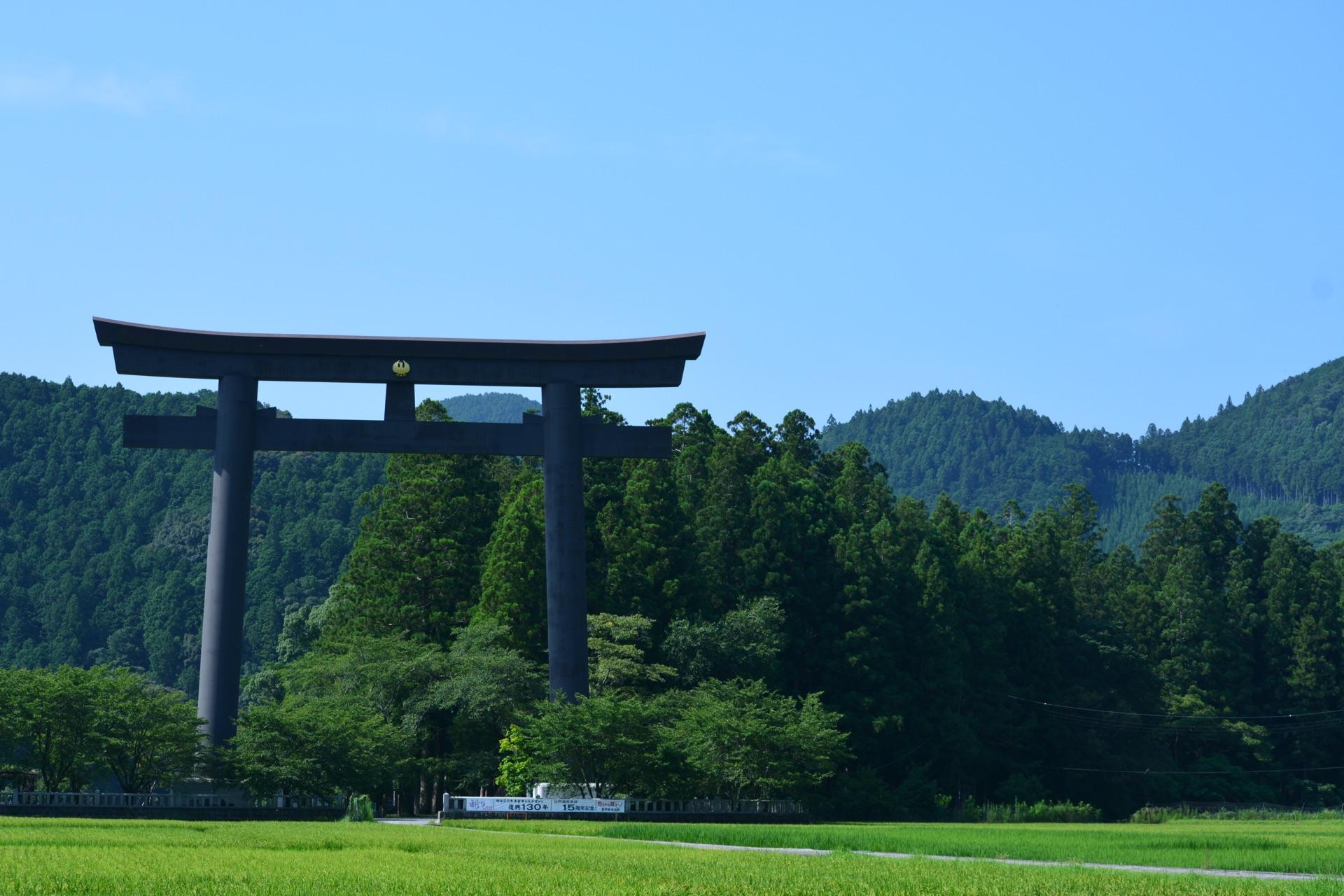
Oyunohara in Hongu once stood on a sandbar in the middle of the Kumano River. Knowing that this sacred place existed together with the river, looking up at the great torii gate gives a more immediate sense of what it means to have a place of prayer standing by the water.
Meeting the Town of Shingu Downstream
As the river nears its end, the view opens up all at once to reveal the town of Shingu. In this town where the scents of river and sea mingle, a visit to Hayatama Taisha lets you taste, just a little, the feeling of being 'a pilgrim who arrived by boat.'
Tips for Enjoying the River Journey
- Boat rides and river tours depend on the season and water levels. If you're considering one, check the latest information before setting out.
- Footing along the riverside can be unstable. Stones on the riverbed become slippery when wet, so it's safest not to get too close to the water's edge.
- Water levels rise after rain. Kumano is a land of frequent rainfall. Check the weather and the river's condition, and switch to an unforced plan when needed.
- Views from a car window or a bridge are enough. Even just pausing briefly on a bridge between walking days lets you feel the river route.
In Closing
A journey in Kumano is not only about walking mountain paths. When you turn your eyes to the river, you can begin to imagine the speed at which people once traveled, and even the scenery they viewed from aboard a boat. Next time you visit Kumano, along with the sound of your footsteps on stone paths, try listening quietly to the sound of the flowing river as well.
Image: 大斎原 (via (公社)和歌山県観光連盟)


