 LOCAL FIT KUMANOBack to list
The Paths of Kumano Are Not Only Mountain Trails
When people hear 'Kumano Kodo,' many picture moss-covered stone paths and groves of cedar. But the World Heritage 'Sacred Sites and Pilgrimage Routes in the Kii Mountain Range' includes, alongside mountain trails, a river itself designated as a pilgrimage route. The Kumano River is the prime example.
From the area around Kumano Hongu Taisha down to Shingu at the river mouth, travelers of old didn't only walk the mountain trails—they also boarded boats and drifted downstream. It's a journey where you rest your feet while the scenery flows past.
The 'Water Road' Connecting Hongu and Shingu
Among the three Kumano grand shrines (Kumano Sanzan), Hongu and Hayatama (Shingu) are linked by the Kumano River. From Hongu upstream to Shingu downstream. Keeping this layout in mind, you begin to see that the three shrines are not separate points, but lined up along a single current.
The 'shin' (new) in Shingu is often explained as referring to a shrine newly enshrined in relation to its original seat at Kamikura Shrine. When you look at the map imagining Shingu as the destination reached by floating downriver, the stories layered into local place names start to come alive.
How to Enjoy the Time Drifting Down by River Boat
Even today, you can experience the Kumano River by boarding a traditional river boat. Here are a few points worth knowing before you go—they'll change how the scenery looks.
1. A Low Line of Sight Makes the Mountains Look Taller
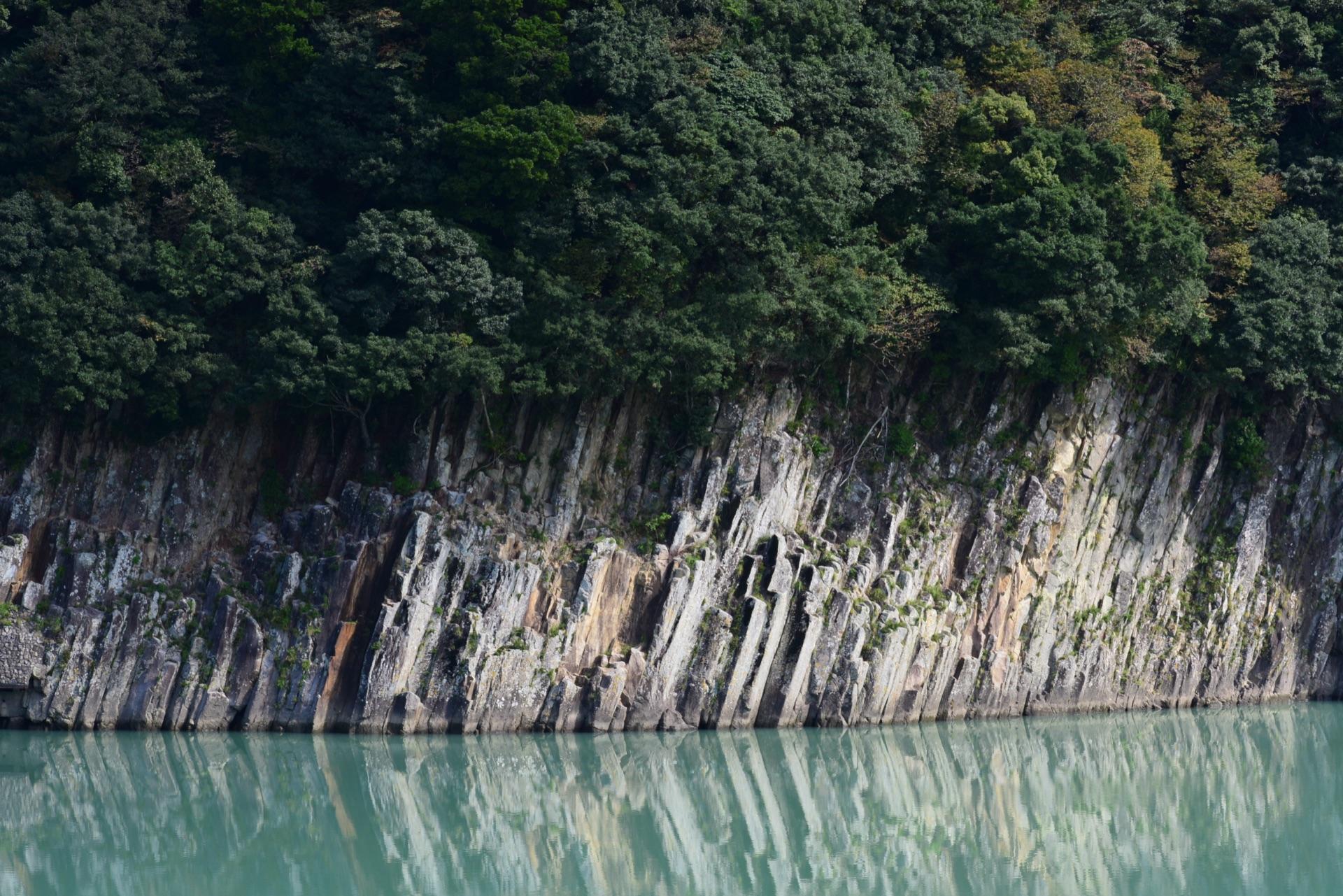
Looking up at the ridges from a seat close to the water has a very different impact from walking the Kodo. The forests on either bank press in, and as you give yourself to the current, you truly feel that 'this has been a human path since ancient times.'
2. Listen to the Sounds
Between the hum of the engine and the sound of the wind, you'll hear the rush of the shallows and the calls of birds. While listening to the guide's explanations, try to set aside a little quiet time just to listen to the river itself.
3. Compare the Colors of the Water
The color of the Kumano River changes with the weather and seasons. There's the clear greenish tint on sunny days, and the muddied flow after rain—both are the river's true faces.
A Pre-Boarding Checklist
- Check operation status in advance. River boats are affected by weather and water levels. Always confirm the latest operating status and reservation requirements through official sources.
- Dress in one extra layer. The water is windier than land, and the perceived temperature drops. Even in summer, a light outer layer brings peace of mind.
- Don't forget sun protection. A hat, sunscreen, and sunglasses make the ride much more comfortable.
- Pack light. A waterproof bag means you won't panic over splashes or sudden rain.
- Secure your camera and phone. Use a strap, and avoid awkward poses for photos on a rocking boat.
Step Down to the Riverbank and Feel the River Road
Even on days you don't board a boat, simply gazing at the Kumano River from a bridge or the riverbank changes your mood. Standing on the broad bank, you can't help but think of the river's power—reshaping itself with every heavy rain—and the wisdom of the people who have lived alongside it.
Remembering that Hongu's Oyunohara once stood on a sandbar in the middle of the river, it becomes naturally clear that this is a sacred place deeply bound to water.
Combine a Day of Walking with a Day of Drifting
After walking the old mountain trails for a day, head to the river road the next. This kind of combination is quintessentially Kumano. While resting your feet, you can taste the same sacred route from a different angle. Please try, at least once, the travel pace of 'moving with the flow'—something easily missed in hurried sightseeing.
A Kumano journey crosses mountains, descends rivers, and reaches the sea. When you can feel those connections, a pilgrimage to the three shrines becomes a far more three-dimensional journey.
Image: 熊野川 (via (公社)和歌山県観光連盟)


