 LOCAL FIT KUMANOBack to list
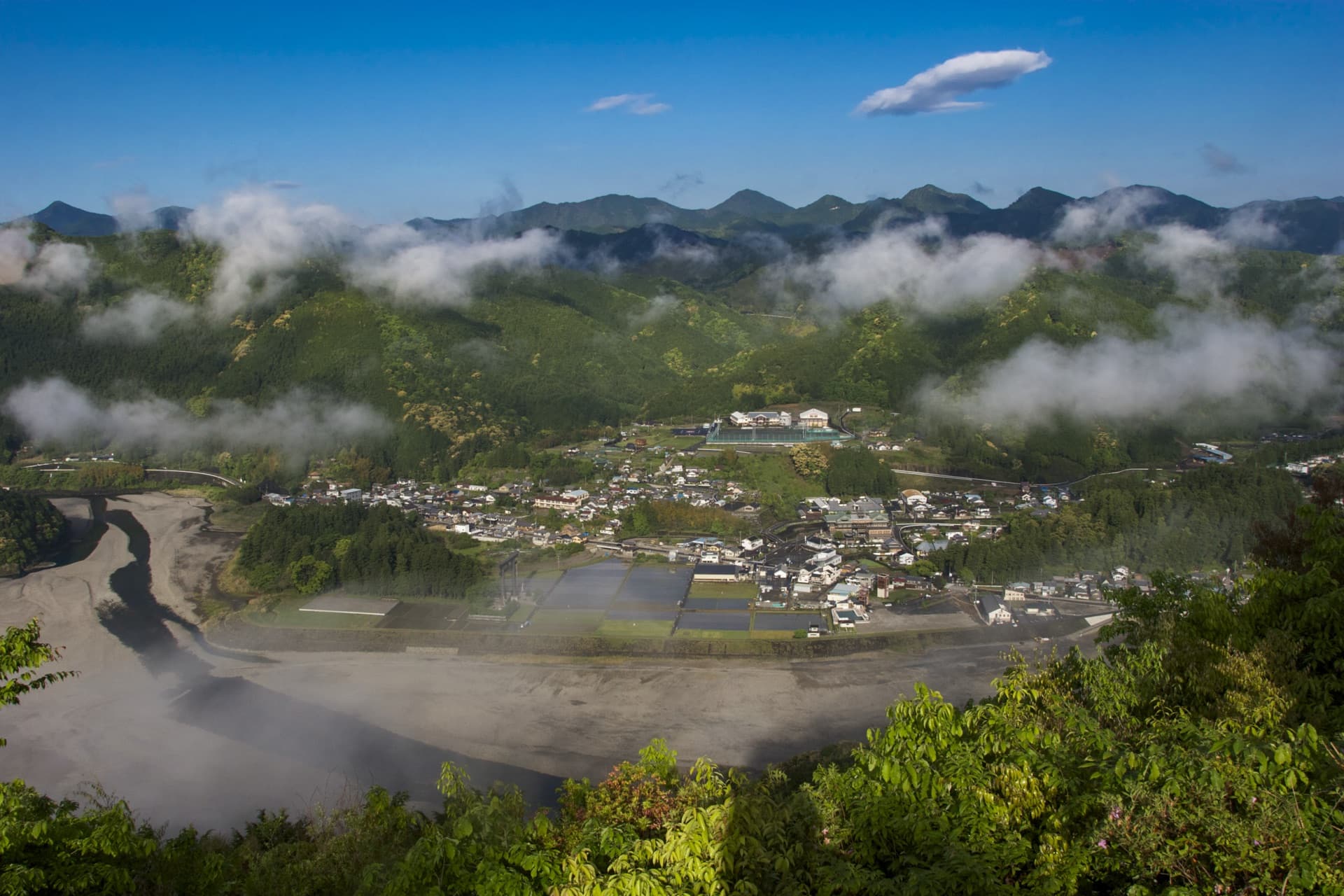
Kumano Has a "River Kodo," Too
When people think of the Kumano Kodo, cobblestone paths and towering cedar groves usually come to mind. But the World Heritage site "Sacred Sites and Pilgrimage Routes in the Kii Mountain Range" actually includes sections where the river itself is registered as a pilgrimage route. These are the Kumano River and its tributaries, the Otonashi River and the Ōtō River.
The Kumano River flows across the borders of Nara, Wakayama, and Mie prefectures, emptying into the Kumano Sea at Shingu. Connecting Hongu, deep in the mountains, with Shingu near the coast, it's like the spine of the Kumano region.
The Idea of a Pilgrimage by Boat
It's said that pilgrims of old, after paying their respects at Kumano Hongu Taisha, sometimes boarded boats and floated downriver to Kumano Hayatama Taisha in Shingu. It was a way to rest their legs as they traveled, and the journey from Hongu to Shingu—"from the mountains to the sea"—makes for a beautifully composed narrative linking the three Kumano Grand Shrines.
If the walking Kodo is a journey of "climbing and praying," the river route is a journey of "arriving by surrendering to the current." Even on the same pilgrimage, the feeling is quite different.
Things to Know Before Boarding a River Boat
Enjoy the Color and Sound of the Water
The Kumano River changes its expression dramatically with the weather and with rainfall upstream. Some days the water runs a clear, greenish hue; after rain, it may turn muddy. Both are faces of a river carrying water down from the Kumano mountains. On the boat, let your attention drift slowly to the sound of the oar, the rocks and smooth stones along the banks, and the green of the mountains on either side.
Always Check Before You Go
River boat operations depend on water levels, weather, and season, and schedules or services can change. Reservation methods and departure times may vary, so be sure to confirm directly with the operator in advance. Especially the day after rain, it's reassuring to call and check conditions on the day itself.
What to Wear and Bring
The air by the water is cooler—and the sun stronger—than you might expect.
- A layer you can throw on, and a hat
- Non-slip shoes
- A bag for anything that shouldn't get wet
- A waterproof case or strap for your smartphone
While on board, don't lean out too far, and simply follow the staff's guidance.
Finishing the Journey at the Shingu Estuary
At the end of your river journey, head down toward the estuary in Shingu, where you can feel the river that flowed through the mountains open out into the sea. Combined with a visit to Kumano Hayatama Taisha and a look at the Kumano River from a hilltop in town, the route "from Hongu to Shingu" starts to appear as a single continuous line.
A Word from a Local
The river route feels especially fresh to those who have already walked the Kumano Kodo. A day of sweating on foot and a day of catching the breeze on a boat—include both in your trip, and you'll feel in your body that Kumano is "a land where mountain, river, and sea flow as one." If you have the time, do try viewing Kumano from the water at least once.
*Operating status, fares, and times may change. Please check with the operator or the local tourism association for the latest information.*
Image: 熊野川 (via (公社)和歌山県観光連盟)


