 LOCAL FIT KUMANOBack to list
Rain in Kumano Isn't "Bad Weather"—It's Part of the Show
Seeing rain in the forecast the day before a trip can be a letdown. But Kumano sits on the southern side of the Kii Peninsula, a region that has always been rainy. The deep forests, abundant rivers, and hot springs scattered throughout have all been nurtured by this very rain.
If sweeping views on sunny days show one face of Kumano, rainy days reveal its true identity as a "land of water." Here, let's reorganize your backup plans around the idea of places where water takes the lead.
Three Scenes That Come Alive in the Rain
1. Waterfalls: When the Volume Rises, the Sound Changes
Famous waterfalls like Nachi Falls are said to grow even more powerful after rain. Many visitors find the sound of the water resonates deep in the chest, more than on clear days.
Approach paths and viewing spots become wet and slippery, so there's no need to rush. On some days, a hooded rain jacket is easier than an umbrella because it keeps both hands free.
2. Moss and Stone Paths: A Close Look at Damp, Deep Green
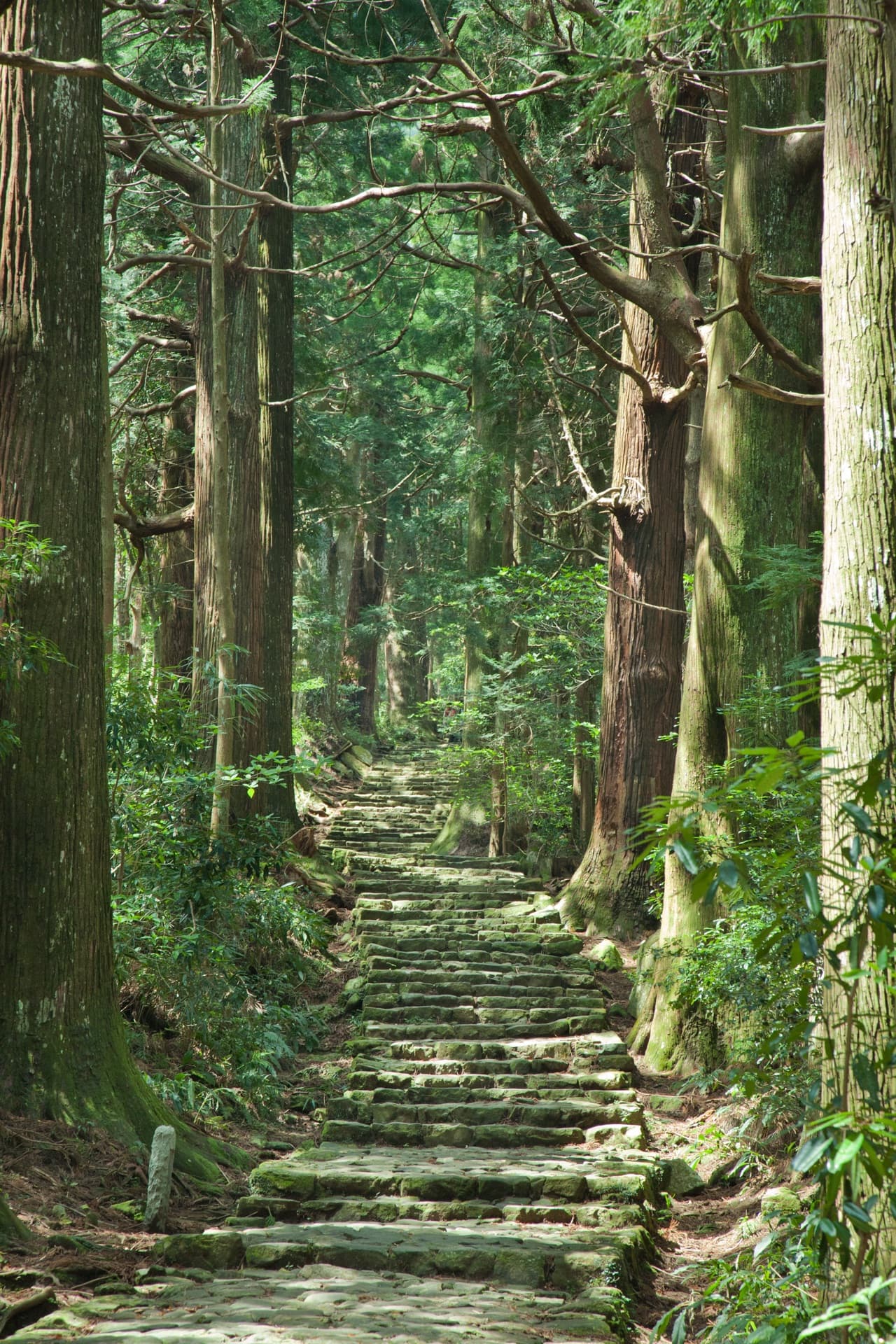
The stone pavements and cedar groves of the Kumano Kodo take on a deeper shade of moss green when wet with rain, making this a favorite time for photographers.
- Choose a shorter section, and go with the mindset of "taking it in" rather than "walking it all"
- Stones are slippery, so take smaller steps—especially slowly on the downhills
- Waterproof shoes with grooved soles give you peace of mind
That said, on days of heavy rain or strong wind, it's just as important to decide not to go in at all.
3. Hot Springs: The Joy of Soaking While the Rain Falls
Kumano is home to a cluster of historic hot springs, including Yunomine, Kawayu, and Watarase. Soaking in a bath on a rainy day melts away the chill, and the moment when steam rises to mingle with the sound of rain is truly special.
If you limit walking to the morning and spend the afternoon slowly enjoying hot springs and meals—a kind of "half-day walk"—the weather is less likely to throw you off.
How to Plan a Rainy Day: Three Tips
1. Keep outdoor stops "short and singular": Pick just one—a waterfall, a stone path, or a shrine—and leave room around it
2. Have one indoor detour: Mark museums, souvenir shops, or cafés on your map so you can enjoy sheltering from the rain
3. Allow extra time for travel: Road conditions and bus or train schedules can change easily, so don't overpack your plans
Don't Forget to Check for Safety
Rain in Kumano can sometimes fall hard. River levels rise, landslides occur, and roads close—conditions change by the hour. Before you leave and again on the morning of your trip, check weather information and the latest updates from local governments and transportation providers.
Choosing "not to go today" is a perfectly valid travel decision. Spending the day at your lodging with a cup of tea, gazing out at the rain and forest through the window, can itself be a quintessentially Kumano kind of time.
In Closing
A trip to Kumano isn't only for sunny days. Rain-soaked greenery, swelling water sounds, and the warmth of rising steam are scenes you can only meet on rainy days. Open your umbrella and enjoy a slightly slower journey.
Image: 熊野古道中辺路 大門坂 (via (公社)和歌山県観光連盟)


