 LOCAL FIT KUMANOBack to list
Before buying Kumano souvenirs, picture what's already in your bag
When traveling through Kumano, souvenir shopping tends to slip to the back of your mind. You walk the old trails, soak in the hot springs, and before you know it, your train or bus home is almost ready to leave. Rather than rushing to pick something out at the end of your trip, it's much easier if you first think about how much empty space is left in your return bag.
Rather than detailing specific shops or products, this article organizes the mindset for choosing Kumano-style souvenirs into four perspectives.
Perspective 1 | Lightness: On a walking trip, "the weight you carry home" is part of the journey
On days you walk the old trails, the weight of your backpack directly translates to fatigue. For bottled goods or large boxed items, one option is to ship them from your inn on the last day. But if you're carrying them home by hand, thin and lightweight items are your best friends.
Light and easy-to-give candidates
- Small, individually wrapped sweets like black candies (some are named after the black stones of Nachi)
- Tenugui hand towels and other small cloth items
- Dried foods or snacks divided into small packets
Perspective 2 | Shelf life: Buy at the end of your trip, or at the beginning?
If you're heading south from Shirahama or Tanabe into Kumano, buying early in the trip means more luggage to carry. On the other hand, for fresh items or things with a short shelf life, the basic rule is to choose somewhere you can shop on the day you head home. Kishu is famous as a plum-growing region, and umeboshi (pickled plums) and other plum products are classic choices—but it's a good idea to check expiration dates and storage instructions when you buy.
Perspective 3 | Durability: Because you'll be transferring between buses and trains
Getting around Kumano often involves switching between trains and buses, and your bag is bound to get jostled along the way. For fragile ceramics or glass bottles, it's worth asking the shop staff about packing, or tucking them in beside clothing for cushioning—a little ingenuity goes a long way.
In that regard, small items with the warmth of wood, or goods inspired by Kishu charcoal, are relatively easy to transport. Actual stock varies by shop, so if you come across something that catches your eye, do pick it up and take a look.
Perspective 4 | Who you're giving it to: Add "a story from the trip"
What makes Kumano souvenirs memorable isn't so much the item itself as the story of the trip that comes with it. For example:
- For family: seasonal citrus or fruit-based treats (what you'll find changes with the season)
- For coworkers: individually wrapped sweets that are easy to share
- For yourself: a small cloth or wooden piece that reminds you of the trails you walked
Just adding a line like, "I found this black candy near the mountains of Nachi," lets the scenery of your journey travel with the gift.
Finally: Shop when you have time to spare
Opening days and stock vary by season and day of the week. If there's a shop you have in mind, it's reassuring to check the official information in advance. More than anything, set aside some "shopping time" a little before your departure. Souvenirs chosen at a leisurely pace—rather than in a hurry—tend to carry more of the trip with them when you open them back home.
May the walker's bag be light, but the heart a little heavy (in the best sense). We hope this helps round off your Kumano journey.
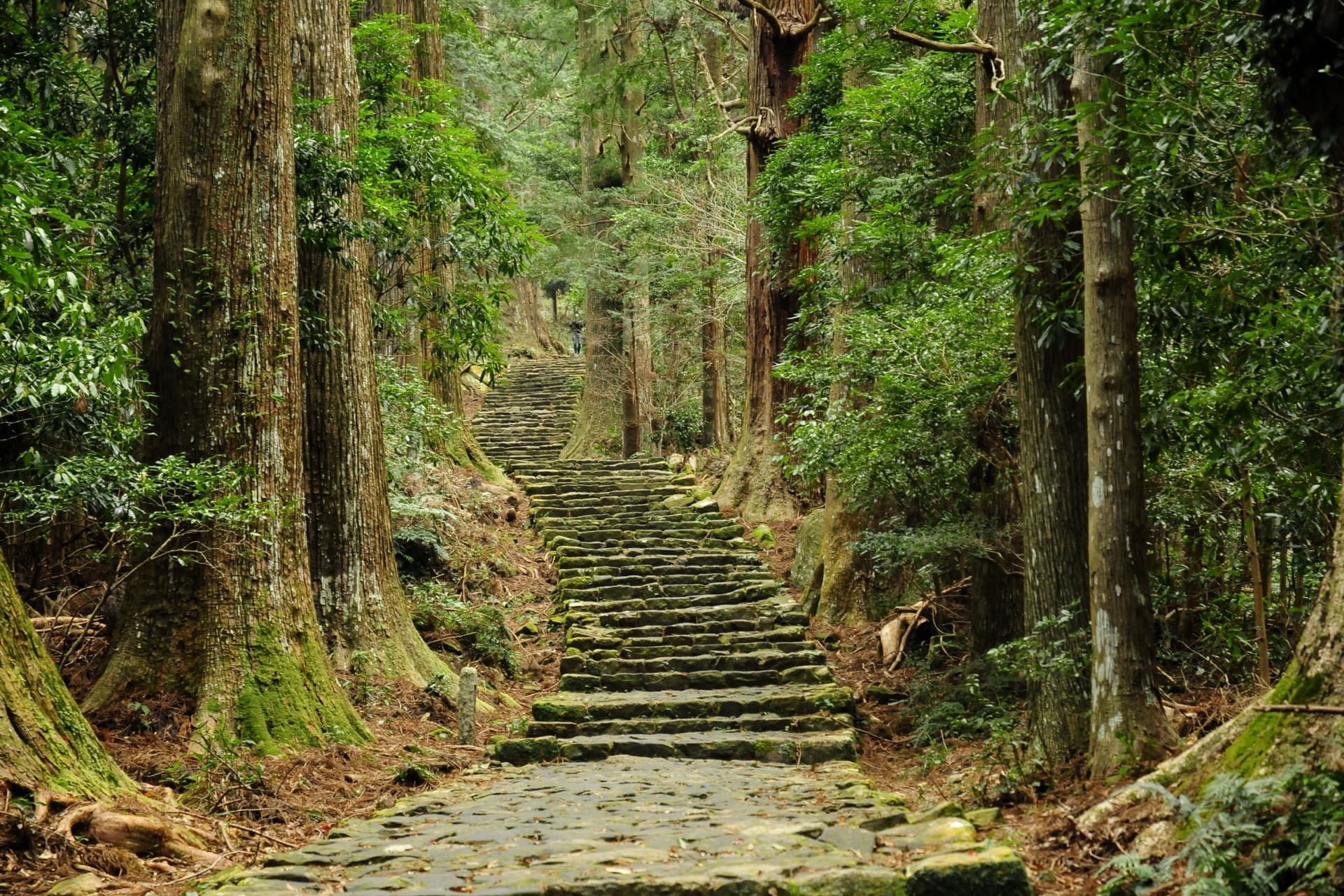
Image: 熊野古道中辺路 大門坂 (via (公社)和歌山県観光連盟)


