 LOCAL FIT KUMANOBack to list
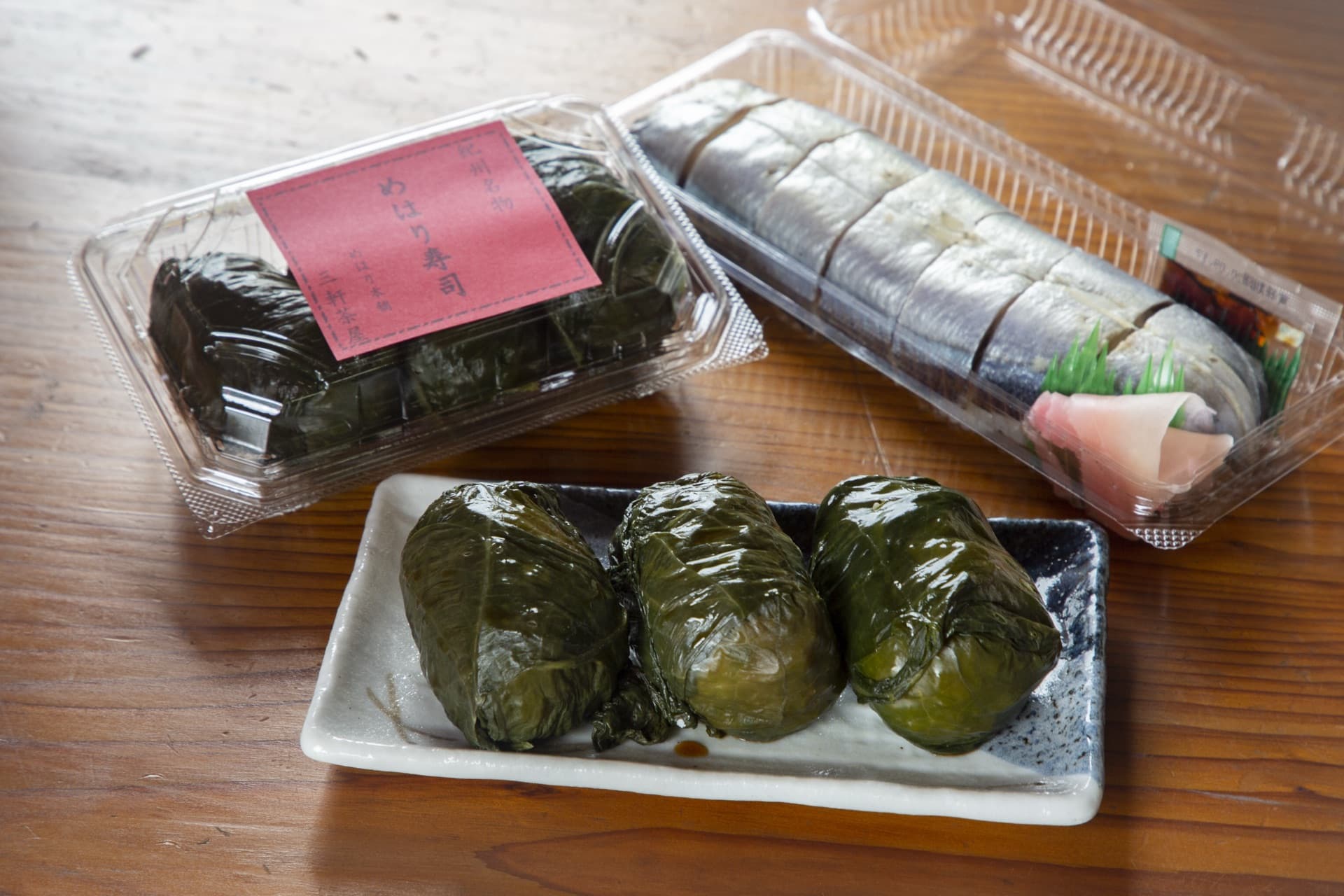
What Kind of Food is Mehari-zushi?
As you travel through Kumano, you may come across the name "mehari-zushi." It is a local dish in which rice is wrapped in the salty, pickled leaves of takana (a type of mustard green). Although the word "sushi" is attached to its name, it is not the kind of hand-pressed sushi topped with raw fish—it looks much more like a humble rice ball (onigiri).
The moist texture of the takana leaf, a gentle saltiness, and the natural sweetness of the rice come together in a mildly seasoned dish that many travelers describe as comforting.
The Origin of the Name: "Several Theories Exist"
Several theories are told about the origin of the name. Two of the best-known are:
- When you take a big bite of the large rice ball, you open your eyes wide (*me wo haru*) in surprise at its size
- Eating it feels so refreshing that your eyes seem to snap open
No single theory can be declared the correct one. Using these stories as a conversation starter with shop staff or innkeepers is part of the fun.
Why It Suits Lunch While Walking the Old Road
Mehari-zushi is said to have long been a favorite bento for people working in the mountains and fields. That same character makes it an excellent companion for travelers walking the Kumano Kodo.
Easy to Eat with One Hand
Since the takana leaf serves as the wrapper, your hands stay relatively clean, and you can sit down beside a stone path or at a rest area and eat right away. Not needing large plates or chopsticks is a welcome plus on a day of walking.
Gentle Saltiness That's Kind to a Tired Body
After sweating along the trail, a mild touch of saltiness feels especially welcome. That said, the flavor, size, and fillings vary by shop and household. If anything concerns you, feel free to ask when you purchase.
Tips and Things to Keep in Mind
1. Check About Lunch "the Day Before" or "in the Morning"
In mountain areas, places to eat lunch can be limited. It's a good idea to check opening hours and whether reservations are needed in advance with your innkeeper or local information centers. This applies not only to mehari-zushi but to walking the old road in general.
2. Choose Where You Eat
Take breaks on benches or in open spaces, and be careful not to block other walkers. Always take your trash with you. Don't forget to gather up the takana leaf wrappers and put them in your bag too.
3. Be Careful Carrying It in Hot Weather
Rice-based foods spoil more easily when carried for long periods on hot days. As a rule, eat it as soon as possible after purchase. Since shelf life varies by product and situation, when in doubt, check with the shop.
A Small Pleasure That Lingers in Travel Memories
Lunch on the old road doesn't need to be lavish. Sitting beneath dappled sunlight, catching the scent of takana, and slowly savoring each bite of rice—that single moment gently brings back the memory of your day on the trail.
When you visit Kumano, try turning your attention not only to famous sights but also to the "everyday meals" rooted in the land. Mehari-zushi is a perfect first step into that world.
Image: めはり寿司とさんま寿司 (via (公社)和歌山県観光連盟)


