 LOCAL FIT KUMANOBack to list
For Lunch in Kumano, Sushi Is a Great Option
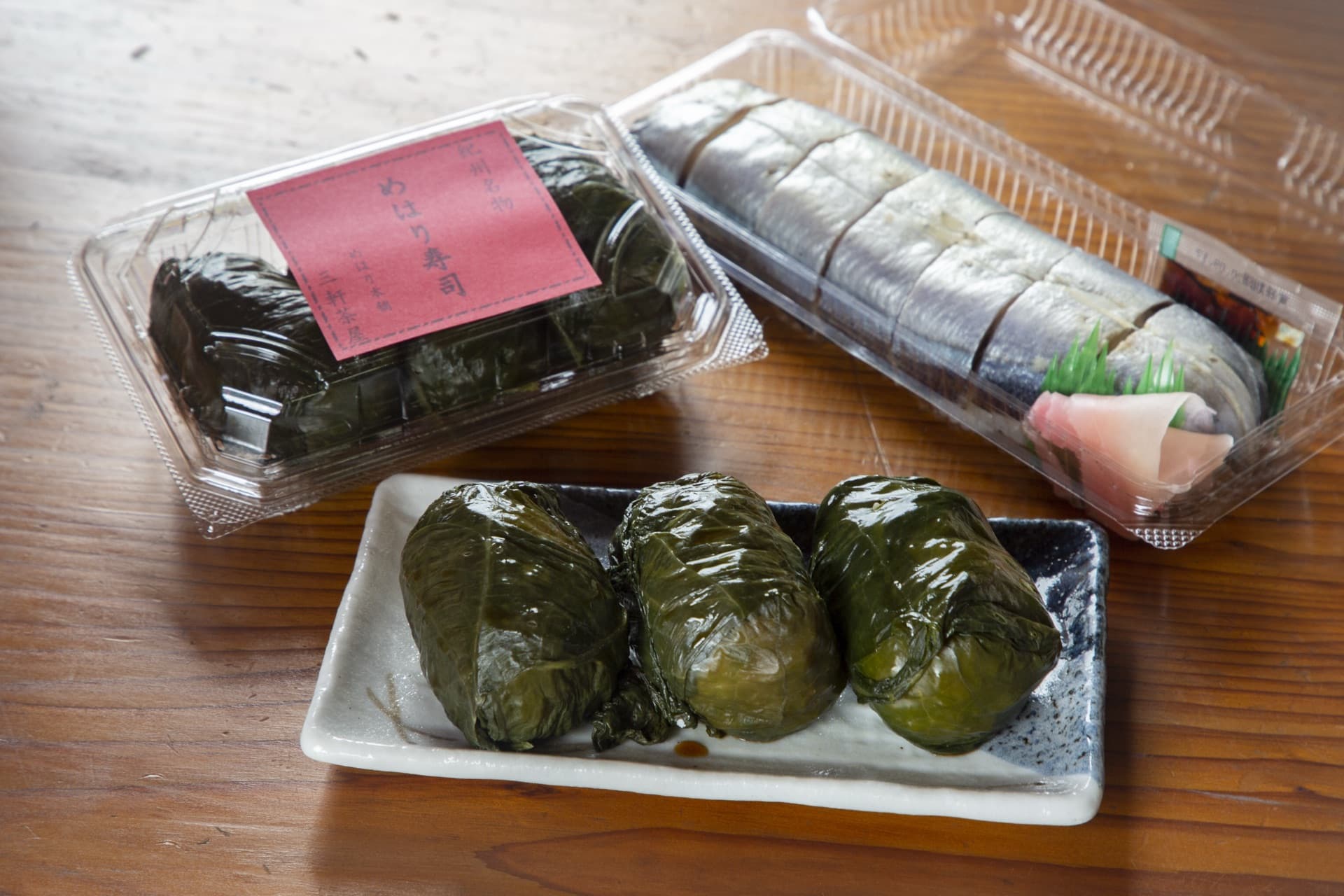
Deciding what to eat for lunch on a day walking the Kumano Kodo can be surprisingly tricky. That's where the local sushi, long beloved in this region, comes in. The two most famous are mehari-zushi and sanma-zushi. Both are humble dishes born of a way of life shaped by mountains and sea.
Mehari-zushi | A Mountain Rice Ball Wrapped in Takana Leaves
Mehari-zushi is something like a rice ball wrapped in salt-pickled takana (mustard greens) leaves. Fillings and rice seasonings vary from place to place and household to household — and that's part of the fun.
The name is said to come from the way you have to open your eyes wide (*me wo miharu*) when biting into one. Other theories exist too, so if you ask a local on your travels, you may hear an unexpected story.
Why It's Said to Suit the Ancient Trails
- You can hold it in your hand and bite right in
- The salt and aroma of the takana leaves are just what a tired body needs after walking
- Wrapped in leaves, it's easy to eat and easy to carry
It's long been cherished as a portable meal for breaks during mountain work. The sight of someone perched on a rock in the shade, taking a hearty bite, fits right into the scenery of the ancient trails.
Sanma-zushi | A Gentle Tartness from a Seaside Town
Sanma-zushi is a kind of whole-fish sushi made with pacific saury, long enjoyed as a local specialty in Shingu and other communities facing the Kumano-nada Sea. The flavor of vinegar-cured fish pairs with the gentle sweetness of the rice. Preparation and seasoning vary from household to household and shop to shop, so comparing them is part of the pleasure.
In Kumano, the sea and mountains sit close together. If mehari-zushi is 'a taste of the mountains,' then sanma-zushi is 'a taste of the sea.' Sampling both on the same trip gives you a clearer picture of local life.
Match the Dish to the Moment and Your Trip Comes Together
| Occasion | Recommended Dish | Why |
|---|---|---|
| Lunch along the ancient trail | Mehari-zushi | Easy to eat with one hand; the saltiness replenishes you |
| Evening after a day of walking | Sanma-zushi | Sit down and savor the flavor of the fish |
| On the train or bus home | Either one | Fun to hunt for at stations and shops |
Tips for Carrying Them Along
1. Check where to buy in advance: Always confirm availability and reservation requirements with your lodging or the shop.
2. Be especially careful in warm weather: Sushi and rice dishes spoil easily, so use an ice pack and eat them sooner rather than later.
3. Take the wrapper back with you: There are almost no trash cans along the ancient trails. Bringing a plastic bag will give you peace of mind.
4. Choose where to eat: Not in the middle of the trail — use rest areas or open spots with a nice view.
A Note from the Editors
Beyond just visiting famous sights, a single bite of what the local people have long eaten can deepen the memory of your walk. Next time you visit Kumano, consider quietly adding these two kinds of sushi to your lunchtime options.
Image: めはり寿司とさんま寿司 (via (公社)和歌山県観光連盟)


