 LOCAL FIT KUMANOBack to list
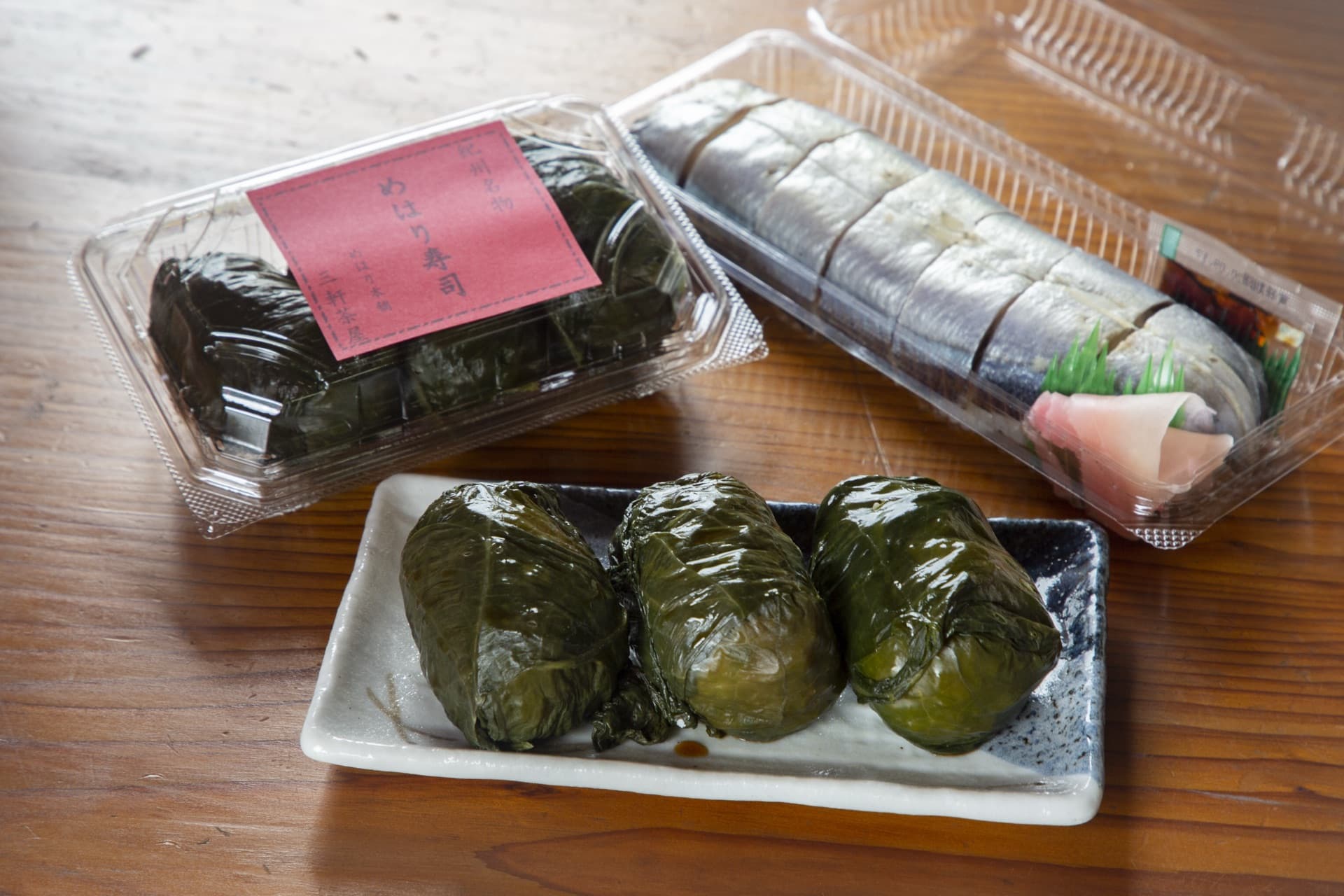
Lunch in Kumano Begins with "Sushi You Eat by Hand"
On a walking trip through Kumano, deciding what to have for lunch can be a pleasant dilemma. At such times, two local dishes come to mind: mehari-zushi and sanma-zushi. Both are unpretentious home-style foods, nurtured by life in a land nestled between the mountains and the sea.
Mehari-zushi | A Big Rice Ball Wrapped in Takana Leaves
Mehari-zushi is something like a fist-sized rice ball, wrapped in salt-pickled takana (mustard greens) leaves. The best-known explanation for its name is that you have to open your eyes (and mouth) wide to take a bite — 'mehari' meaning 'eye-widening.' Other theories exist too, varying slightly by region and storyteller.
Tips for Enjoying It
- Savor the gentle saltiness of the takana together with the mild sweetness of the rice
- Pick it up with your hands and bite into it, leaf and all
- Fillings and rice seasonings differ by shop and household, so comparing them is part of the fun
Because the takana leaves wrap the rice, your hands stay clean and it travels well. It's said to have been eaten during breaks from mountain work, which makes it a perfect lunch companion on the old pilgrimage paths.
Sanma-zushi | Stick Sushi with Pacific Saury Cured in Vinegar
The other dish representing the food culture of Higashi-Kishu, facing the Kumano-nada Sea, is sanma-zushi. Butterflied Pacific saury is cured in vinegar, laid over vinegared rice, and shaped into a stick form. It's a local flavor that has long graced festival and celebration tables.
Things to Keep in Mind When Eating
- Cut it into slices and first try a piece plain, as is
- The richness of the fish and the strength of the vinegar vary by shop, so taste and compare without preconceptions
- Season and availability differ by shop, so check in advance on days you want to try it
Planning It as a Lunch on the Old Trail
If you plan to eat mehari-zushi or sanma-zushi for lunch, it's best to pick them up before you start walking.
1. Check the day before: Contact shops that carry them and ask whether reservations are needed
2. Pick them up in the morning: Collecting them before departure makes them easy to carry until lunchtime
3. When to eat on the day: On hot days, don't carry them too long — eat them sooner rather than later
4. Take your trash with you: Never leave wrappers or bags on the old paths
Carrying the Memory of the Journey to Your Table
Mehari-zushi, eaten in big mouthfuls, satisfies an appetite earned by walking. Sanma-zushi offers a taste of how people living beside the Kumano-nada Sea have long engaged with the ocean. Beyond the scenery and the shrine visits, tasting what the people of the land have eaten day after day gives your Kumano journey a more three-dimensional feel.
The next time you visit Kumano, try treating lunchtime, too, as part of your pilgrimage — and savor it slowly.
Image: めはり寿司とさんま寿司 (via (公社)和歌山県観光連盟)


