 LOCAL FIT KUMANOBack to list
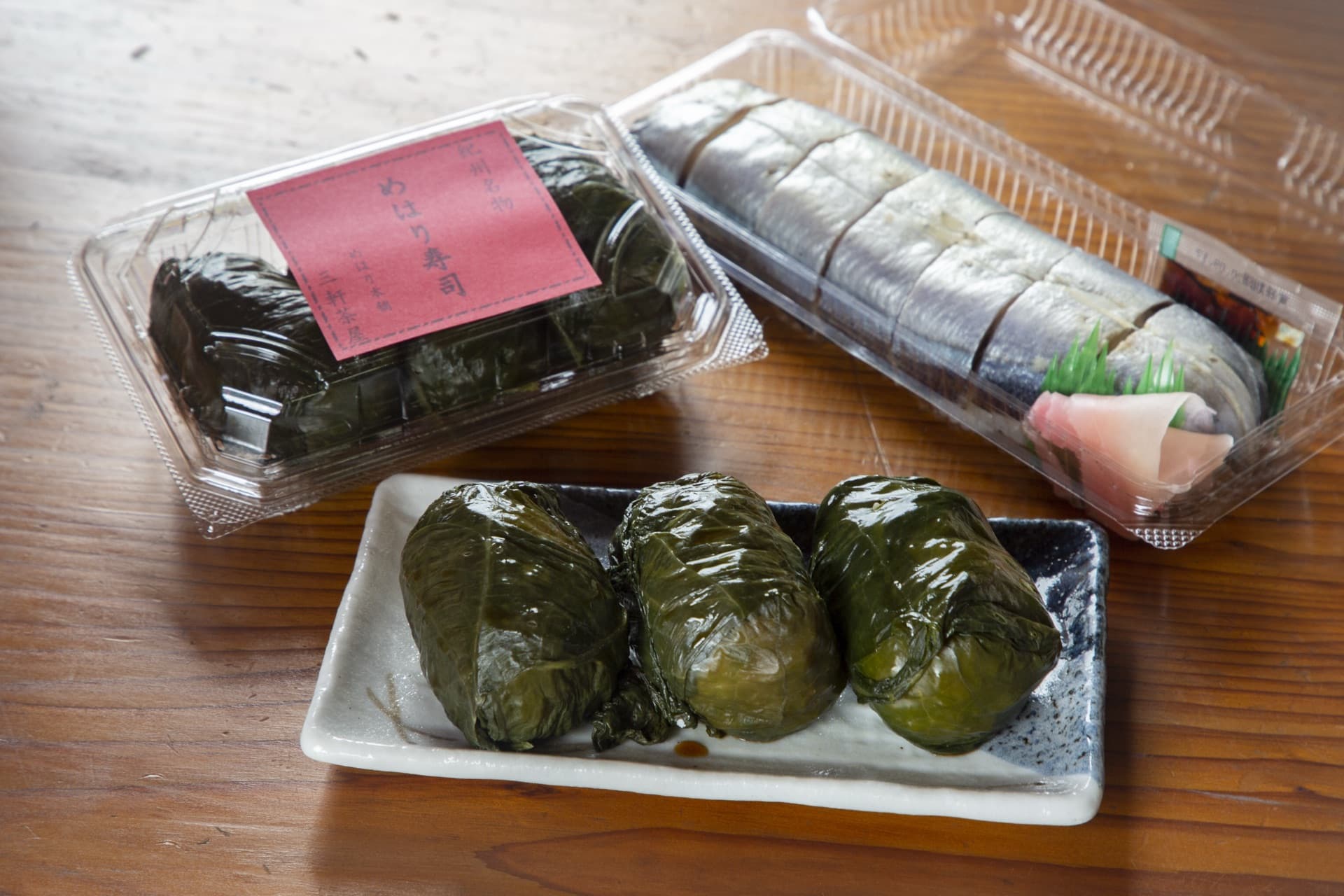
Lunch in Kumano Just Suits "Sushi"
When traveling through Kumano, it is often not the fancy tourist-oriented dishes but the simple, palm-sized sushi that captures your heart. The two most representative examples are "mehari-zushi" and "sanma-zushi." Both are local foods born from the daily life of Kumano, a land nestled between mountains and sea, and both go well as a lunch for walkers of the old pilgrimage routes.
Mehari-zushi | A Mountain Rice Ball Wrapped in Pickled Greens
Mehari-zushi is a sushi in which rice is wrapped in salt-pickled takana (mustard greens) leaves. Many versions use plain white rice rather than vinegared rice, and its character comes from the gentle saltiness of the takana and the crisp texture of the leaves.
The name is said to come from the idea that "you open your eyes wide (me-hari) because you have to open your mouth so big to eat it." There are other theories as well, and some say it was eaten as a quick meal between mountain work or fieldwork.
A Good Match for Walking the Old Roads
- Easy to hold and eat by hand, making it ideal for a quick bite along the way
- The saltiness of the takana is just right for a body that has been sweating
- The generous amount of rice gives you energy for afternoon climbs
That said, size and fillings vary by maker. If you plan to eat it on a mountain trail, it is reassuring to check with the shop when buying whether it should be eaten the same day and whether it can be carried along.
Sanma-zushi | The Autumn Taste of the Kumano Sea
Sanma-zushi is a sushi made by curing a butterflied Pacific saury (sanma) in vinegar and placing it atop vinegared rice. It has long been enjoyed in areas facing the Kumano Sea, such as Shingu. The vinegar and vinegared rice cleanly bring together the rich, fatty sanma.
Differences from Mehari-zushi
| Mehari-zushi | Sanma-zushi | |
|---|---|---|
| Main ingredient | Takana and rice | Pacific saury |
| Flavor impression | Simple, with mild saltiness | Aroma of vinegar and the umami of fish |
| Best occasion | A light snack while walking | A sit-down lunch |
Mehari-zushi reflects life in the mountains, and sanma-zushi reflects the bounty of the sea. Tasting them side by side, you truly feel that Kumano is a land open to both mountains and sea.
How to Work Them Into Your Trip
1. If buying before you walk: Plan to eat them the same day, and in summer prepare a cooler bag or ice pack.
2. If eating after you walk: Enjoy them slowly at a restaurant with a cup of hot tea.
3. If taking them as a souvenir: Always check at the shop how many days they will keep and how to store them.
Because they involve raw ingredients, extra care is needed when temperatures are high. When in doubt, it is safest to finish them locally.
A Note from the Editors
In Kumano, you often encounter foods that are less "famous specialties" than "things families have eaten at home for generations." Even without flash, these are the dishes that quietly linger in your travel memories. Why not add a piece of local sushi to your journey, either before or after walking the old roads?
Image: めはり寿司とさんま寿司 (via (公社)和歌山県観光連盟)


