 LOCAL FIT KUMANOBack to list
Why Is the Kumano Kodo a World Heritage Site? First, Know What Was Actually Inscribed
When you hear "the Kumano Kodo is a World Heritage Site," you might imagine only the stone-paved paths were inscribed. The official name of the registration is "Sacred Sites and Pilgrimage Routes in the Kii Mountain Range." Inscribed in 2004, it bundles together three sacred areas — Yoshino and Omine, the Kumano Sanzan, and Mount Koya — along with the pilgrimage routes that connect them. The Kumano Kodo refers specifically to the pilgrimage routes leading to Kumano.
What's noteworthy is that not only buildings and ruins, but also the "routes" themselves are essential components. It is rare in the world for pilgrimage routes themselves to be inscribed, and the Kumano Kodo is often spoken of alongside the Camino de Santiago de Compostela in Spain. Because of this connection, Kumano and the Camino de Santiago have become officially recognized sister pilgrimage routes and continue to exchange visitors and ideas.
Reason ①: A Deep, Embracing Faith Where Shinto, Buddhism, and Shugendo Overlap
Kumano has an ancient tradition of worshipping nature itself as divine, and onto this foundation layered Buddhism and Shugendo, the mountain-ascetic tradition. Each of the three Kumano Sanzan shrines has preserved the form of *shinbutsu-shugo* — the harmonious fusion of Shinto deities and Buddhist figures within a single spiritual stream.
One hallmark of Kumano faith is its openness: it welcomes everyone, regardless of sect or social standing. In the Heian period, retired emperors and nobles made repeated pilgrimages known as the *Kumano Gokо̄*, and later commoners followed in such numbers that the scene was likened to "a procession of ants to Kumano" (*Ari no Kumano mōde*). The coexistence of different faiths in one place, sustained for more than a thousand years, is a central pillar of its recognition.
Reason ②: A "Living Route" Walked by People for Over a Thousand Years
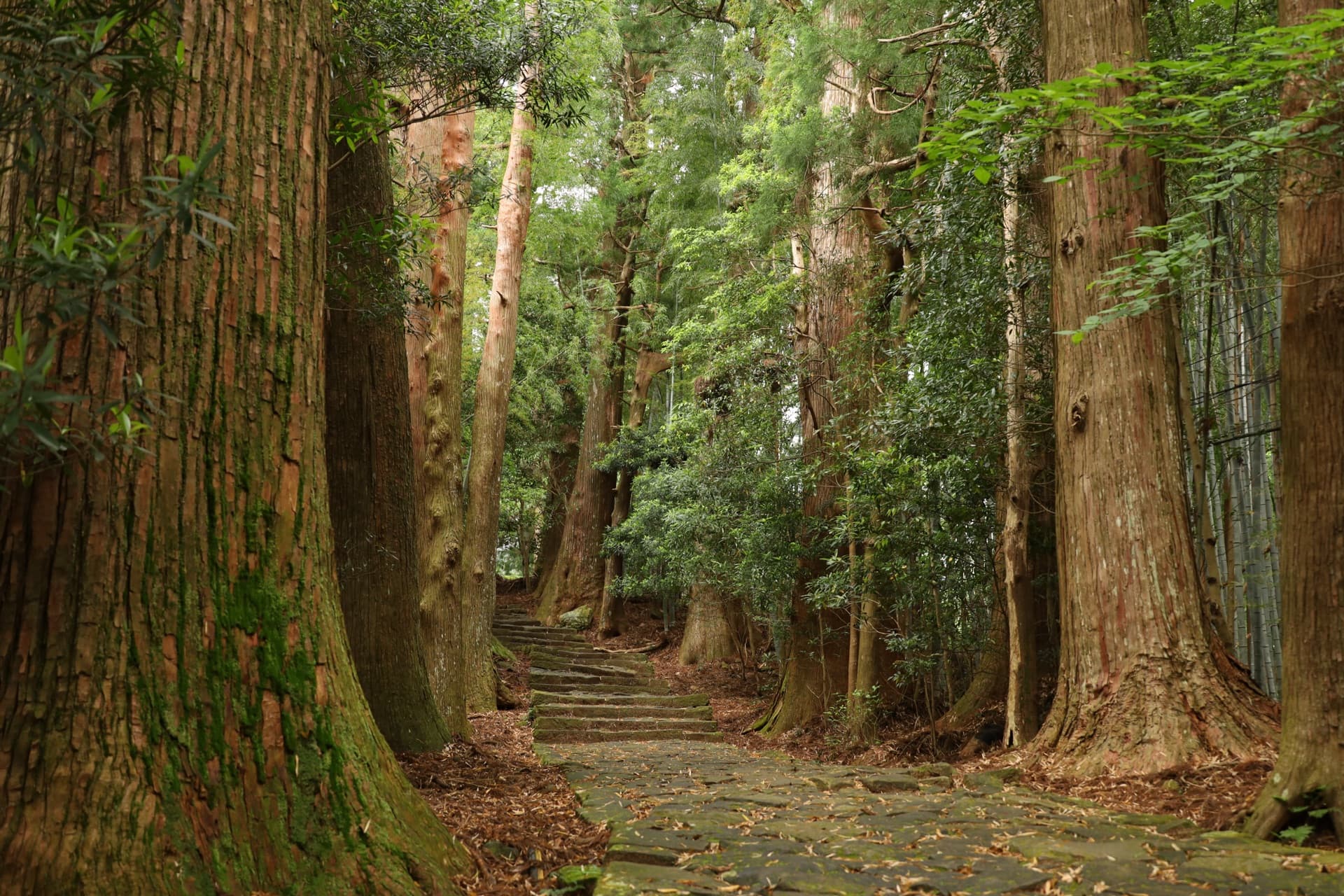
When we think of World Heritage Sites, we tend to imagine quiet ruins preserved as they once were. But the Kumano Kodo is a path still walked, still prayed upon, and still cared for by local communities. Today's travelers walk alongside old stone pavements and moss-covered *oji* shrine remains.
The fact that memories of the past have never been severed and still connect to present-day life is essential to this route's value. The footsteps of today's walkers become a continuation of history itself — this is the charm of Kumano.
Reason ③: A Landscape Where Forests, Rivers, and Waterfalls Are One with Faith
The pilgrimage routes of Kumano pass through mountain valleys of deep cedar groves, clear rivers, and towering waterfalls. In many places, like Nachi Falls, nature itself has long been an object of worship.
The result of people holding nature in awe, revering it, and creating places of prayer within it remains today as a single, continuous landscape. This perspective is known as a "cultural landscape" — a way of protecting historic structures and their surrounding scenery as inseparable wholes.
The Expanded Registration in 2016
In 2016, the inscribed area was expanded with the addition of further pilgrimage routes. For the Kumano pilgrimage routes, there is a growing effort to protect not only the popular Nakahechi route but the surrounding routes as well. When choosing a section to walk, keep in mind that each route has its own distinct character.
A Mindset for Walking a World Heritage Site
You don't need special preparation just because it's a World Heritage Site. But remembering that this is a path local people have protected for generations may subtly change how you walk it.
- Stay on marked paths so as not to damage the stone pavements or moss
- Take your trash home; don't remove plants or stones
- Offer a greeting to people you pass and to those in local villages
- Pause quietly before *oji* shrines and small wayside altars
In Summary
The reasons the Kumano Kodo became a World Heritage Site can be summed up in three points: the layering of faiths, a history of continuous pilgrimage, and a landscape where nature and prayer merge. Walking the route with this background in mind, you may sense a thousand years of time in even a single stretch of stone pavement or at the base of a single cedar tree.
*Please check official information from local governments and tourism associations before visiting for details on route conditions and inscription specifics.*
Image: 熊野古道中辺路 大門坂 (via (公社)和歌山県観光連盟)


