 LOCAL FIT KUMANOBack to list
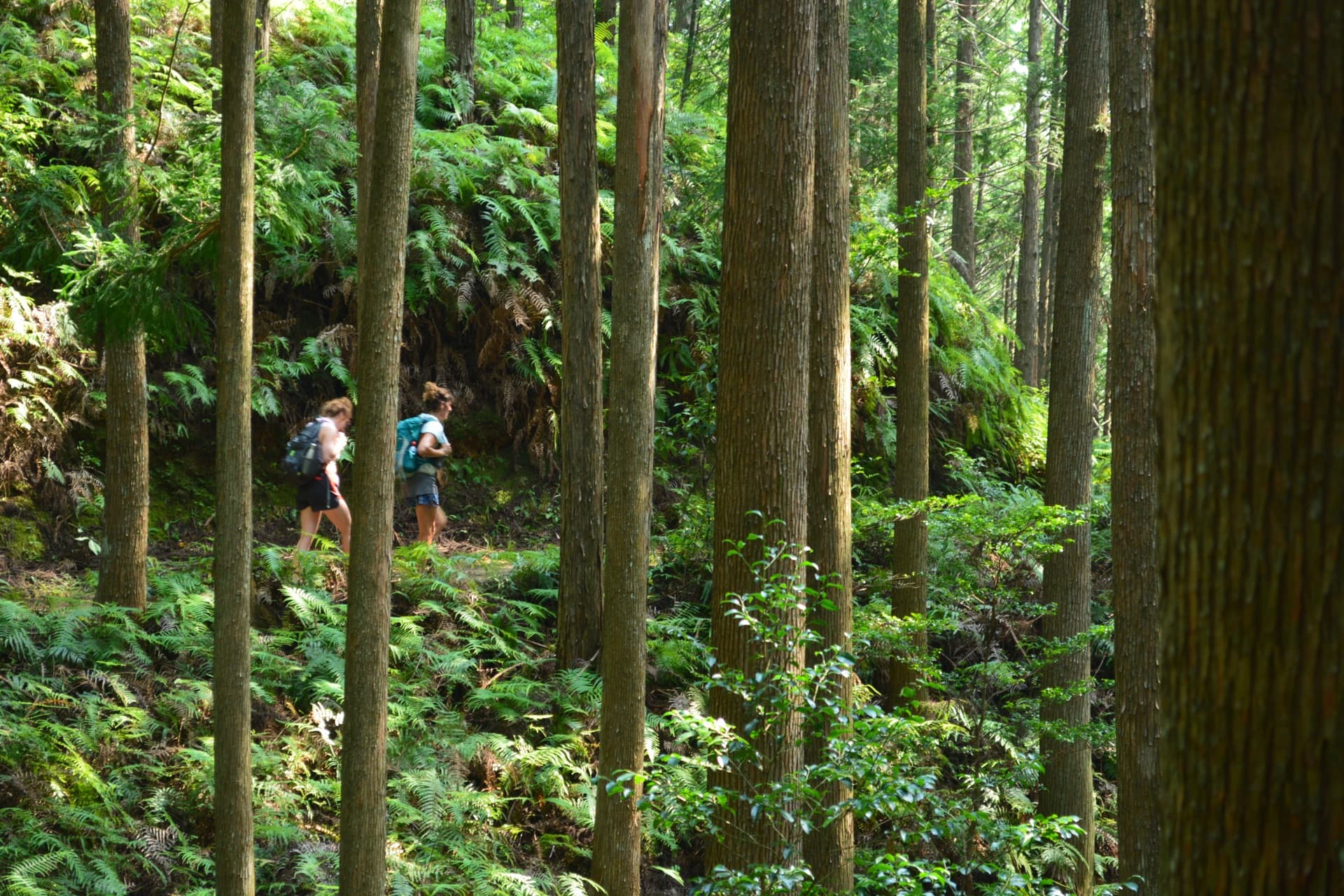
If you've searched for information on getting lost or stranded on the Kumano Kodo, chances are you're hoping to ease some anxiety before your walk. The Kodo is a well-maintained pilgrimage route, but it still winds through the mountains and forests of the Kii Peninsula. Enter with a city-walking mindset, and you may find yourself caught off guard. This article outlines situations that commonly lead to trouble, and the steps you can take beforehand to prevent them.
Situations Where Trouble Is Most Likely on the Kumano Kodo
The Kodo isn't all steep, technical trails requiring special gear. Even so, any of the following can happen to anyone.
- Missing a trail marker at a junction and taking the wrong path
- Walking takes longer than planned, and the sun sets before you finish
- Rain or fog reduces visibility and throws off your sense of direction
- Foot pain or fatigue leaves you unable to continue
- Your phone battery dies, cutting off both your map and your way to call for help
Rather than dramatic accidents, most difficult situations arise from small mishaps piling up. Keeping this in mind makes your preparations more concrete.
Three Things to Do Before You Set Out
1. Don't try to cover too much ground
Times on the Kodo stretch longer than you'd think, once you factor in breaks, photos, and visits to shrines. Add a generous buffer to the estimates in your guidebook, and plan your route with one priority above all: arriving while it's still light. Sunset in the mountains feels earlier than on flat ground. It's worth checking the sunset time for the season as well.
2. Carry both a paper map and an app
Mobile signal can be weak or absent in the mountains. Having a paper map, an official trail map, or a map app that works offline makes it much easier to check your location when you're out of range.
3. Tell someone your plan
Let your accommodation or family know which section you're walking, what time you're starting, and when you plan to finish. This is especially important if you're walking alone. Knowing someone will notice if they don't hear from you is reassuring in itself.
How to Walk Without Getting Lost
- At every junction, stop and compare the trail marker with your map before continuing
- If you feel it's been a while since the last marker, don't push on — return to the last point you can confirm
- Don't follow faint tracks or animal trails through the trees
- Don't step off the path for a photo
The most dangerous reaction when you realize you're lost is to think, "It should open up soon" and keep going. The rule is: go back the way you came.
Basic Items to Bring
- A spare battery (in case your phone dies)
- A headlamp or small flashlight (insurance against twilight)
- Water and snacks (bring more than you think you'll need)
- Rain gear and warm layers (weather changes quickly)
- Shoes that fit well, plus simple first-aid items like adhesive bandages
- A whistle (to signal when your voice won't carry)
When to Turn Back
Deciding to stop is harder than deciding to continue. In any of the following cases, don't press on — turn back, or head down to a nearby village or bus stop.
- You're running significantly behind schedule
- Rain, fog, or strong wind is picking up
- Your feet or body don't feel right, and your pace is slowing
- You've lost confidence in the route
The Kodo isn't going anywhere. Come back another day, and the same stone-paved path will be waiting.
In Case of Emergency
If you're injured or unable to move, stay calm, confirm your location, and call the police (110) or fire/ambulance (119). In areas with poor reception, carefully consider whether you can safely move to a spot with signal — don't push yourself. Being able to describe nearby landmarks or the last point you passed will help rescuers reach you faster.
In Summary
The keys to walking the Kumano Kodo safely are a relaxed plan, backup maps, sharing your itinerary, and the courage to turn back. Prepare well, and savor the quiet hours of this ancient path to your heart's content.
Image: 熊野古道中辺路 (via (公社)和歌山県観光連盟)


