 LOCAL FIT KUMANOBack to list
Are There Snakes on the Kumano Kodo? What to Know First
The Kumano Kodo, with its stone-paved paths and cedar groves, is a trail where the mountain's natural environment remains intact. For that reason, depending on the season, you may come across snakes. That said, snakes almost never chase after people — most will quietly slip away when they sense a human presence. There's no need to be overly afraid; walk with a mindset of keeping your distance, treating them as fellow residents of the mountains.
Japan's mountains are home to venomous species such as the mamushi (pit viper) and the yamakagashi (tiger keelback). If you're not confident in identifying them, the safest approach is simply: "Don't approach or touch any snake," regardless of species.
Know When You're Most Likely to Encounter Them
Sunny Spots in Warm Seasons
Snakes become active as temperatures rise. From spring through autumn, they may be found basking motionless on sunlit stone steps or at the edge of the trail.
After Rain or Along Overgrown Trail Edges
Beneath fallen leaves, in gaps between stone walls, and in grassy patches — these are easy places for snakes to hide. When sitting down by the trail or stepping off to take a photo, carefully check your footing.
Dim Times of Day
In the early morning and evening, your footing becomes harder to see. Especially during seasons when daylight is short, planning your route with plenty of time to spare contributes to your safety.
Basic Preparations for Walking
- Covered shoes and long pants: Even in summer, reducing exposed skin is reassuring.
- Walk in the middle of the path: Avoid placing your hands or feet near grassy areas or along stone walls.
- Look before you place your hand: Before stepping over rocks or fallen logs, check where you'll put your feet.
- Make some noise while walking: Rather than being too quiet, walking while chatting normally helps snakes notice you as well.
- Don't look at your smartphone while walking: Stop first, then check it.
What to Do If You See One
1. Stop, slowly back away, and put distance between you and the snake.
2. Don't poke it with a stick or try to chase it off.
3. If you want a photo, take it from a distance. Don't force your way closer.
4. If it's blocking the path, wait for it to move or take a wide detour.
If you are bitten (or think you might have been), don't panic or move around — stay calm and contact emergency services (119) or a medical facility as soon as possible. Rather than relying on self-treatment, it's essential to follow the instructions of professionals. Since there are sections where mobile phone reception is poor, it's reassuring to check communication options along your planned route in advance.
A Tale of Snakes and Kumano: Anchin and Kiyohime
Speaking of snakes, some people may think of a famous legend tied to the Kumano pilgrimage: the story of "Anchin and Kiyohime," passed down in Hidaka in the former Kii Province. The tragic love story between a monk heading to Kumano on pilgrimage and the young woman who longed for him is told through her transformation into a serpent, and it has become the subject of Noh, Kabuki, and more. It is often told in connection with Dōjō-ji Temple (in Gobō City), reminding us that the roads leading to Kumano have carried the feelings of countless people.
Knowing this legend may slightly change how you see snakes along the old road. Rather than simply fearing them, it's worth quietly seeing them off with respect, as beings that have long been deeply woven into people's lives and stories.
Summary
Snakes on the Kumano Kodo aren't something to worry excessively about. If you simply know that "you might encounter one" and prepare accordingly, you can respond calmly. Choose proper shoes and clothing, watch your footing carefully, and keep your distance if you see one. Keep these three points in mind, and take your time savoring both the nature and the stories of the old road.
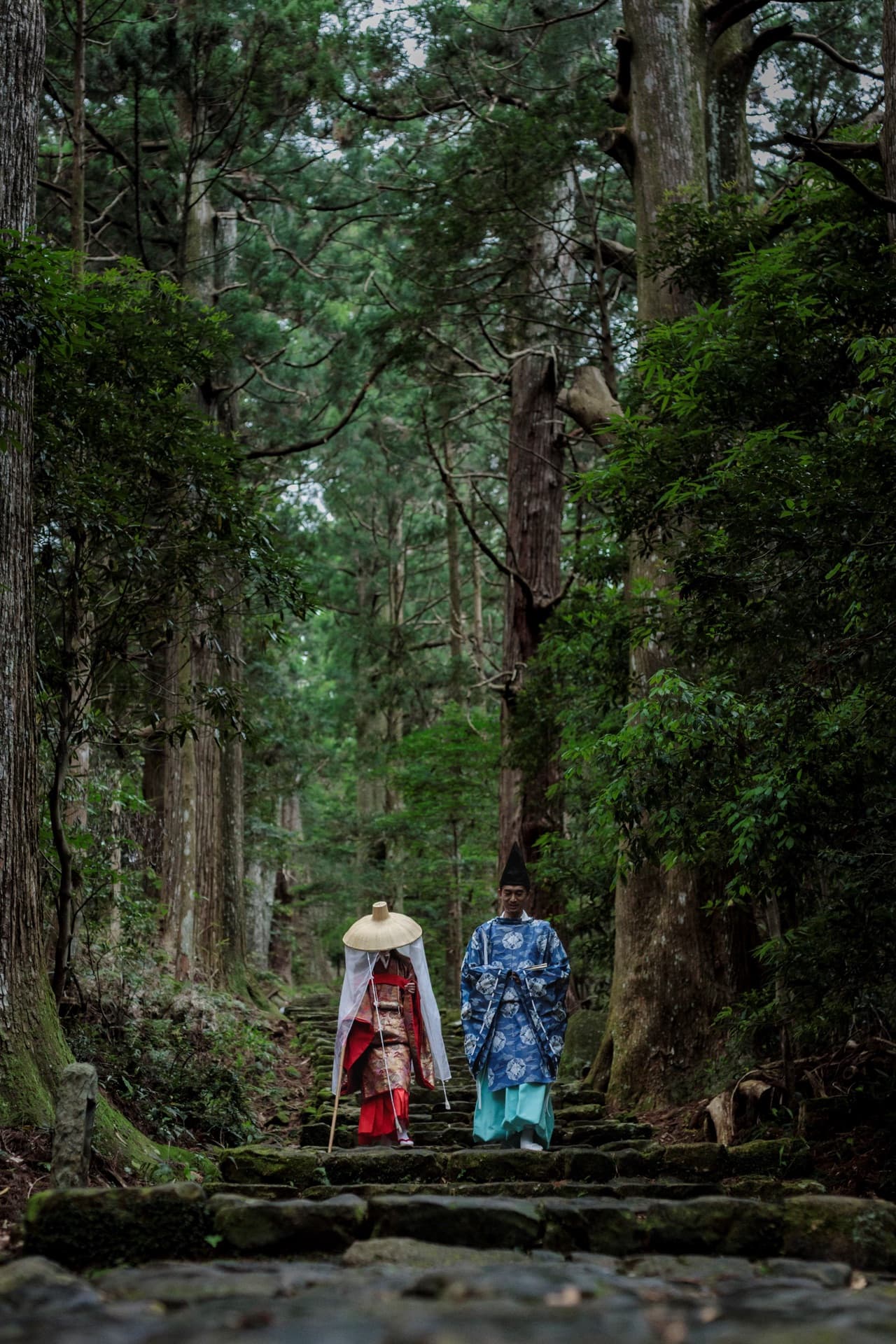
Image: 熊野古道中辺路 大門坂 (via (公社)和歌山県観光連盟)


