 LOCAL FIT KUMANOBack to list
What is the Kumano Kodo? A Simple Definition
The Kumano Kodo is the collective name for the pilgrimage routes that people have walked for centuries across the Kii Peninsula — spanning Wakayama, Mie, and Nara Prefectures — to reach the Kumano Sanzan, the three grand shrines of Kumano Hongu Taisha, Kumano Hayatama Taisha, and Kumano Nachi Taisha.
It is not the name of a single road. Rather, it is easier to picture it as a network of trails that weave through mountains and along coastlines, all converging on Kumano.
The Kumano Kodo in 5 Key Points
1. A "Path of Prayer" Walked for Centuries
Kumano has long been revered as a sacred land where gods and buddhas dwell. In the Heian period, retired emperors and aristocrats made the pilgrimage; later, samurai and common people followed. The endless stream of pilgrims was famously likened to "ants making the Kumano pilgrimage" (ari no Kumano mōde).
2. A UNESCO World Heritage Site
In 2004, the Kumano Kodo was inscribed as part of the World Heritage Site "Sacred Sites and Pilgrimage Routes in the Kii Mountain Range." What makes it especially distinctive is that the pilgrimage routes themselves — not only the shrines and temples — are included in the designation. It is one of only a few "pilgrimage routes" recognized as World Heritage, alongside Spain's Camino de Santiago.
3. The Trails Are Divided into Several Routes
The main routes include the Nakahechi, which runs from Tanabe to Hongu; the Kohechi, connecting Mt. Koya and Kumano; the Ohechi, which follows the coastline; the Iseji, continuing from the Ise region; and the Omine Okugakemichi, a route used for the ascetic training of mountain monks (shugenja). For beginners, we recommend starting with accessible sections such as the Nakahechi or the stone-paved path at Nachisan.
4. The Highlight Is "The Path Itself"
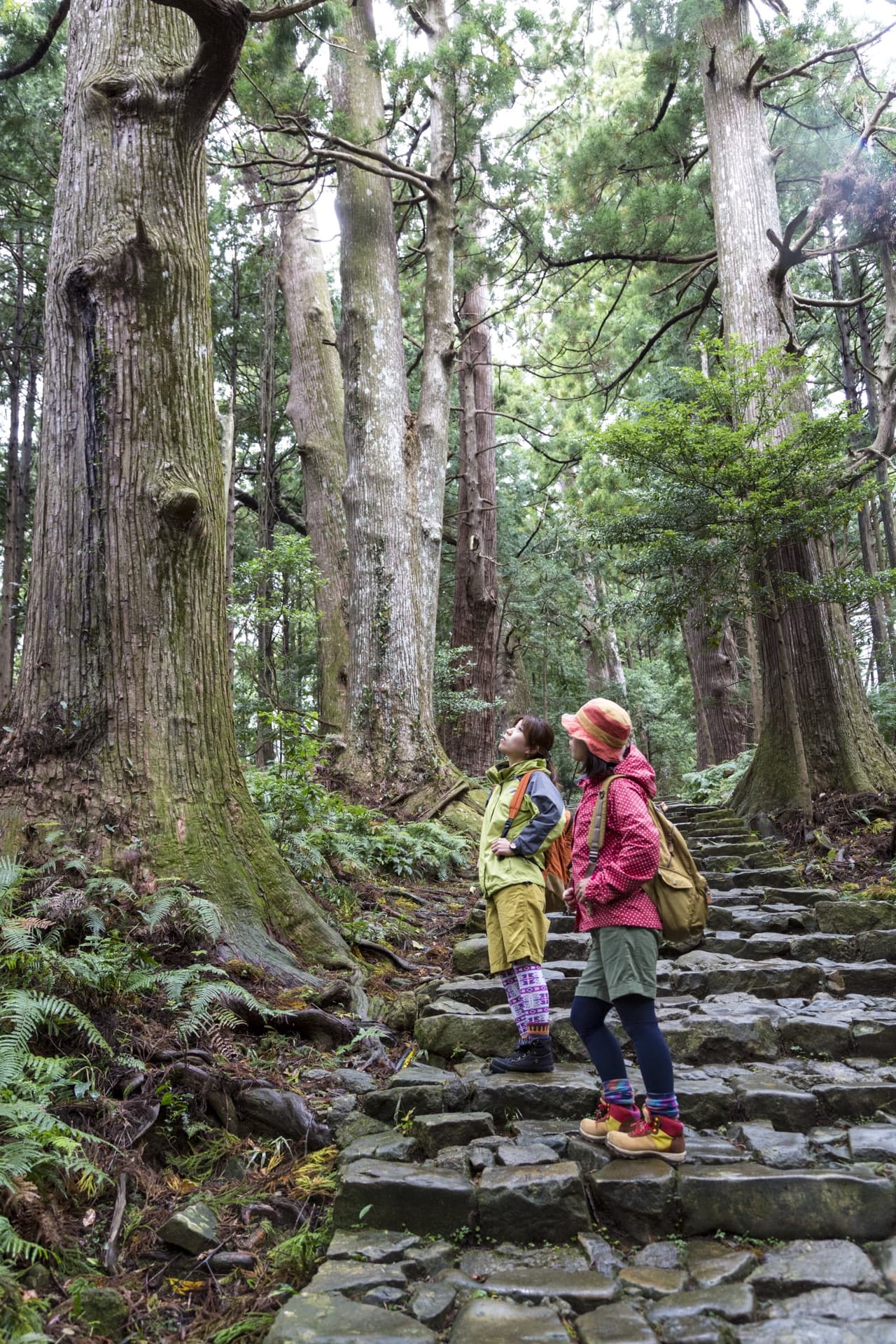
Moss-covered stone pavements, groves of cedar, and the remains of oji (small shrines where pilgrims once offered prayers along the way) — the appeal lies in quiet, understated scenery rather than flashy sights. Spots like Daimonzaka at Nachisan let you experience the atmosphere in just a short walk.
5. You Don't Have to Walk the Whole Thing
Some people spend days walking the trails; others experience the stone paths for just half a day. The goal isn't to "walk it all" — simply choosing a section that fits your fitness level and schedule is more than enough.
A Note for First-Time Visitors
Since the Kodo is a mountain trail, the basics include comfortable walking shoes, rain gear, drinks, and leaving enough time to finish before sunset. Trail conditions can change by section, so be sure to check the latest information before setting out. For those who want to learn more about the history behind the paths, hiring a local storyteller guide (kataribe) can be a reassuring companion.
In Summary
The Kumano Kodo is a network of paths that once carried prayers to the Kumano Sanzan. Knowing the history before you walk makes even the same stone-paved trail feel far more meaningful. Start with a short, slow walk, and let yourself take in the atmosphere of Kumano.
Image: 熊野古道中辺路 大門坂 (via (公社)和歌山県観光連盟)


