 LOCAL FIT KUMANOBack to list
On the Kumano Kodo, Your Footwear Changes How Tired You Get
Ask anyone who has walked the Kumano Kodo and you'll often hear, "I ended up talking about my feet more than the scenery." That's because the paths themselves are surprisingly varied. Whether you finish the day thinking "I'm glad I wore those shoes" or "I wish I'd chosen different ones" can change the memory of your trip considerably. Before you set out, take a little time to get your footwear right.
The Path's Surface Is Never Just One Thing
Even along the same Kumano Kodo, what your soles feel changes from section to section.
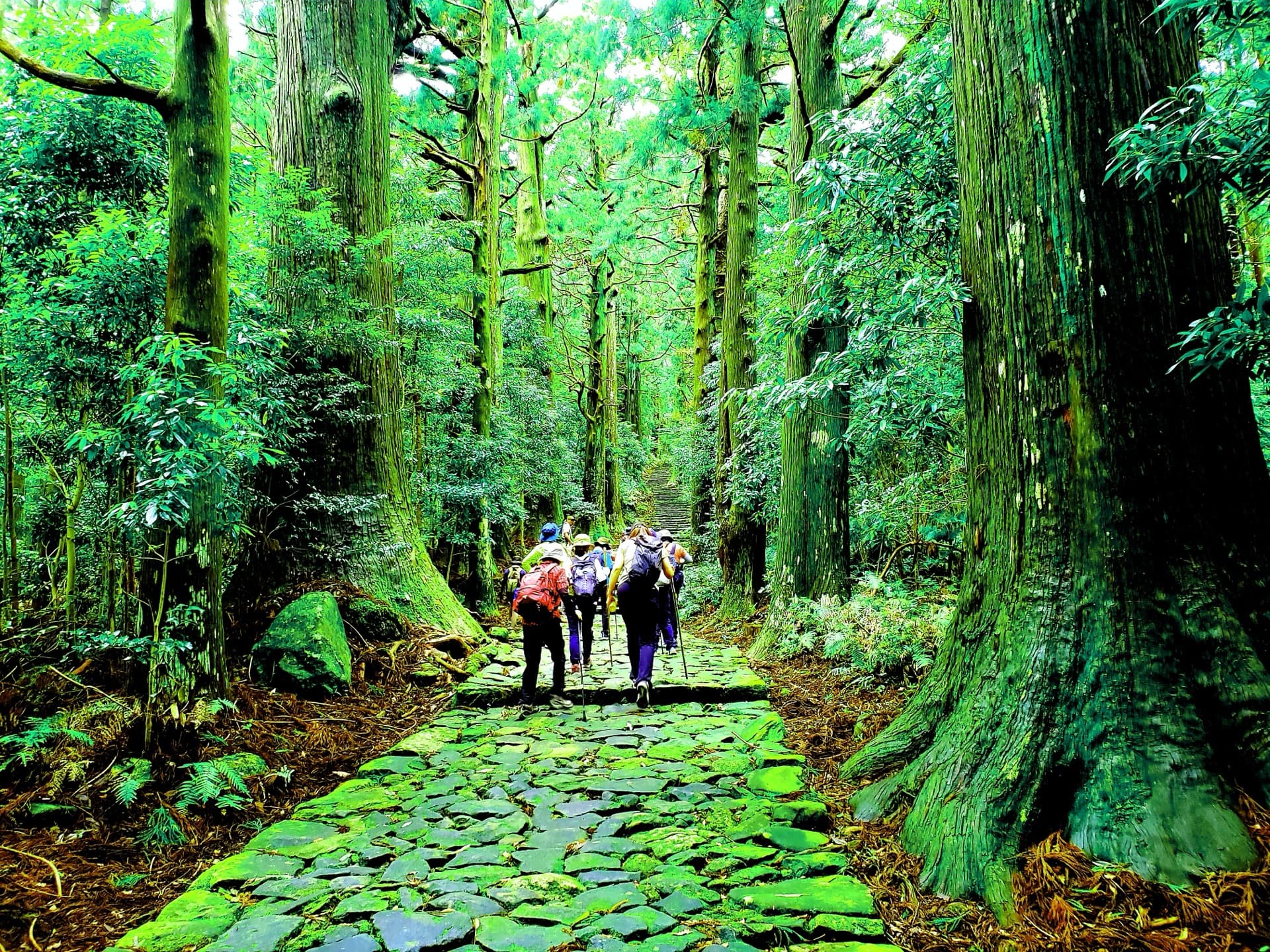
- Stone pavement: Uneven steps and gaps become slippery when wet from rain or morning dew.
- Earthen paths and leaf-covered trails: Soft and gentle on the feet, but some spots turn muddy easily.
- Paths with exposed cedar and cypress roots: Easy to trip on, so you'll spend more time watching your step.
- Paved roads and village lanes: These appear between old-road sections and can stretch on longer than you'd expect. They're surprisingly tiring on the soles.
Many people find that descents strain the toes more than climbs. Checking the character of each section in advance—on a map or at a tourist information center—will make choosing shoes much easier.
How to Choose Your Shoes | Three Guidelines
1. Does the sole have grip?
Smooth-soled shoes feel unreliable on stone pavement or mossy spots. Choosing a pair with deep treads gives you more confidence with every step.
2. Do they support your ankles?
For short sections, some walkers do just fine in familiar sneakers or walking shoes. But for longer stretches, mountain passes, or rainy days, trekking shoes that support your ankles will feel reassuring. When in doubt, decide based on the distance, the weather, and your own leg strength.
3. Are they broken in?
The one thing to avoid above all is wearing brand-new shoes on the day. Break them in on neighborhood walks beforehand to reduce the risk of blisters.
Socks Are Your "Second Shoe"
Socks matter just as much as shoes. Many walkers find that quick-drying synthetic fibers or wool blends are more comfortable than cotton, which gets cold once it absorbs sweat. Pick a thickness that doesn't cramp your feet inside the shoe. Tucking a spare pair into your backpack lets you change if your feet get wet or during a rest stop.
Small Tricks for Preventing Blisters
- Before setting out, apply protective tape to spots that tend to rub—heels, little toes, and so on.
- Before a descent, retie your laces during a break (this prevents your toes from jamming forward).
- If something feels off, stop and deal with it before it gets worse.
Walking on through small pains can affect your plans the next day too. Even a few bandages, however small, are worth carrying.
Treat Your Feet Kindly Afterward
Once you've finished walking for the day, take off your shoes and let your feet rest. Kumano has many hot springs, and soaking in the water to loosen tired feet is one of the pleasures of the journey. A light pair of sandals to change into at your lodging or on the way home will make your feet feel much better.
In Closing
On the Kumano Kodo, what matters is not fancy gear but footwear that fits your own feet. Picture the face of the path and prepare your shoes and socks one step at a time. We believe that preparation is itself part of the old-road journey. Once your feet are ready, you can turn your attention more slowly to the scenery and the sound of the streams.
Image: 熊野古道中辺路 大門坂 (via (公社)和歌山県観光連盟)


