 LOCAL FIT KUMANOBack to list
What is the Dual Pilgrimage of Kumano Kodo and Santiago?
When researching the Kumano Kodo, you will almost always come across the word 'Santiago.' This refers to the pilgrimage route that leads to Santiago de Compostela, a sacred site in northwestern Spain. Along with the Kumano Kodo, it is one of only a handful of 'roads' in the world registered as a World Heritage Site.
In 2015, the two pilgrimage routes formed a partnership. A system was created to recognize those who have walked both routes as Dual Pilgrims, and this is what is known as the Dual Pilgrimage.
Why is the 'road' itself a World Heritage Site?
When we think of World Heritage Sites, we tend to picture 'points' — single buildings like castles, temples, or shrines. But the Kumano Kodo (Sacred Sites and Pilgrimage Routes in the Kii Mountain Range) and the Camino de Santiago are recognized as cultural heritage in the form of 'lines' — roads that people have continued to walk for centuries.
- People have walked these paths with prayer in their hearts for ages
- The nature, villages, and faith along the route are deeply intertwined
- People still walk them today — the roads are still alive
This idea of a 'road that continues to be walked' is the great common thread linking the two.
Similarities and Differences
Similarities
- Open to all, regardless of denomination or nationality: Kumano has long been known as a sacred place that welcomes all 'regardless of purity or impurity,' and Santiago likewise attracts people from all over the world.
- The act of walking itself becomes a prayer: It's not just about reaching the destination — these are journeys that find meaning in the time spent along the way.
- A culture of pilgrim 'tokens': On the Camino de Santiago, pilgrims collect stamps in a pilgrim's passport. In Kumano too, commemorative stamps and proofs of worship are part of the enjoyment.
Differences
- The shape of the destination: Santiago leads to a single goal — the cathedral. Kumano involves visiting three grand shrines — Hongu, Hayatama, and Nachi — with multiple routes branching out.
- Religious background: Santiago is rooted in Christianity, while Kumano is a world of shinbutsu-shūgō, where Shinto, Buddhism, and Shugendo overlap.
- Scenery: Santiago features wide plateaus and farmland, while Kumano is defined by deep cedar forests, stone-paved paths, rivers, and the sea.
If You're Interested in the Dual Pilgrimage
Certification as a Dual Pilgrim involves specific conditions — such as walking and worshipping at certain places in each region — and dedicated application points. Since the details may be updated, be sure to check the latest requirements through the official information on both the Kumano and Santiago sides.
Even if certification isn't your goal, there are plenty of ways to enjoy the experience:
1. Before setting out, read books or watch films about the Camino de Santiago
2. In Kumano, don't be greedy about distance — walk one day carefully and attentively
3. Ask people you meet along the way about the thoughts behind their walk
Quite a few people come from overseas to walk the Kumano Kodo. Passing someone on the old road who has also walked Santiago, and exchanging a few words with them, is one of the special flavors unique to this path.
In Summary
The Dual Pilgrimage of Kumano Kodo and Santiago is the story of two paths — from different countries and different religions — connected by 'the meaning of walking.' Don't overthink it; just take one step at a time along the stone paths of Kumano. That single day may just become your gateway to the distant roads of Spain.
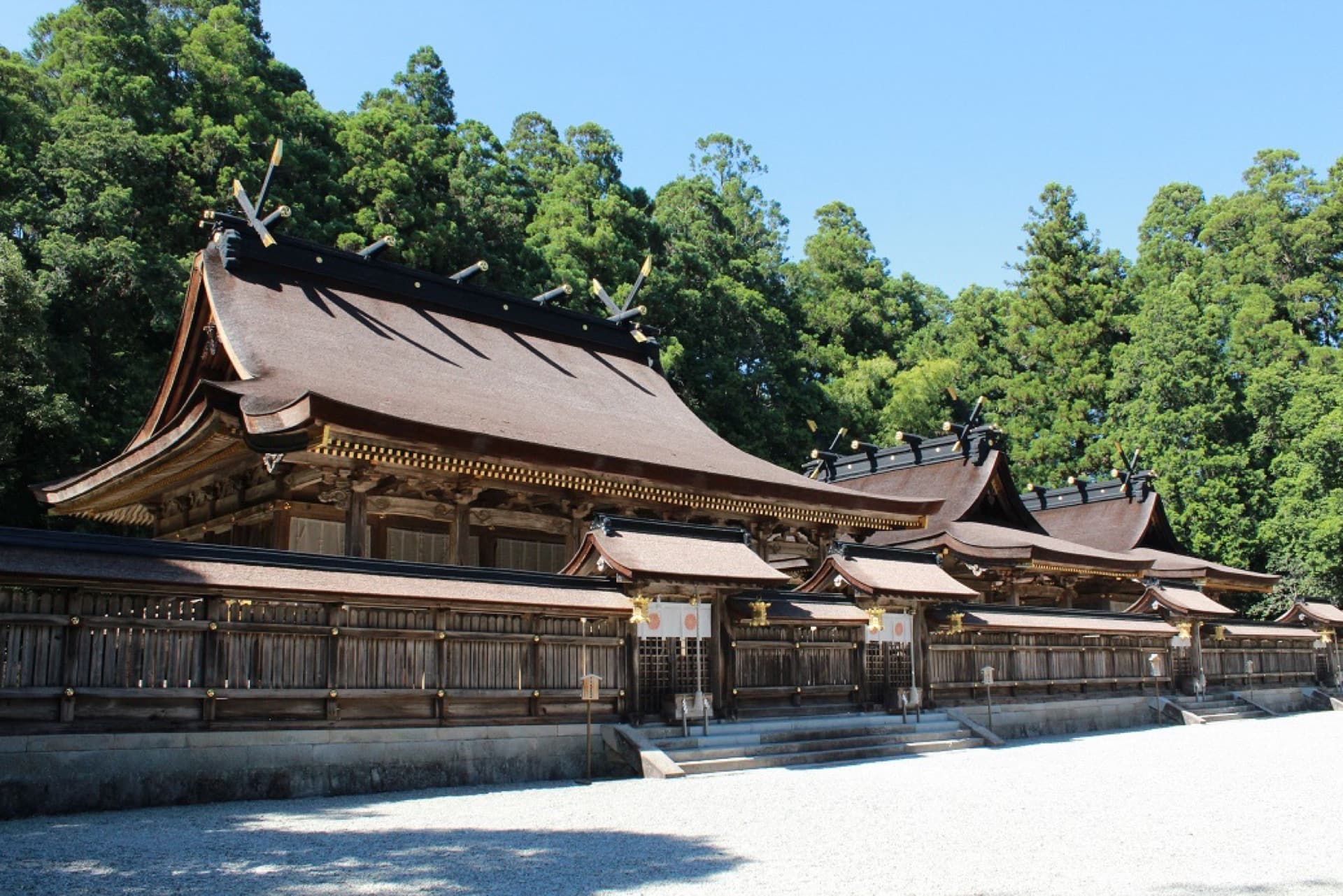
Image: 熊野本宮大社 (via (公社)和歌山県観光連盟)


