 LOCAL FIT KUMANOBack to list
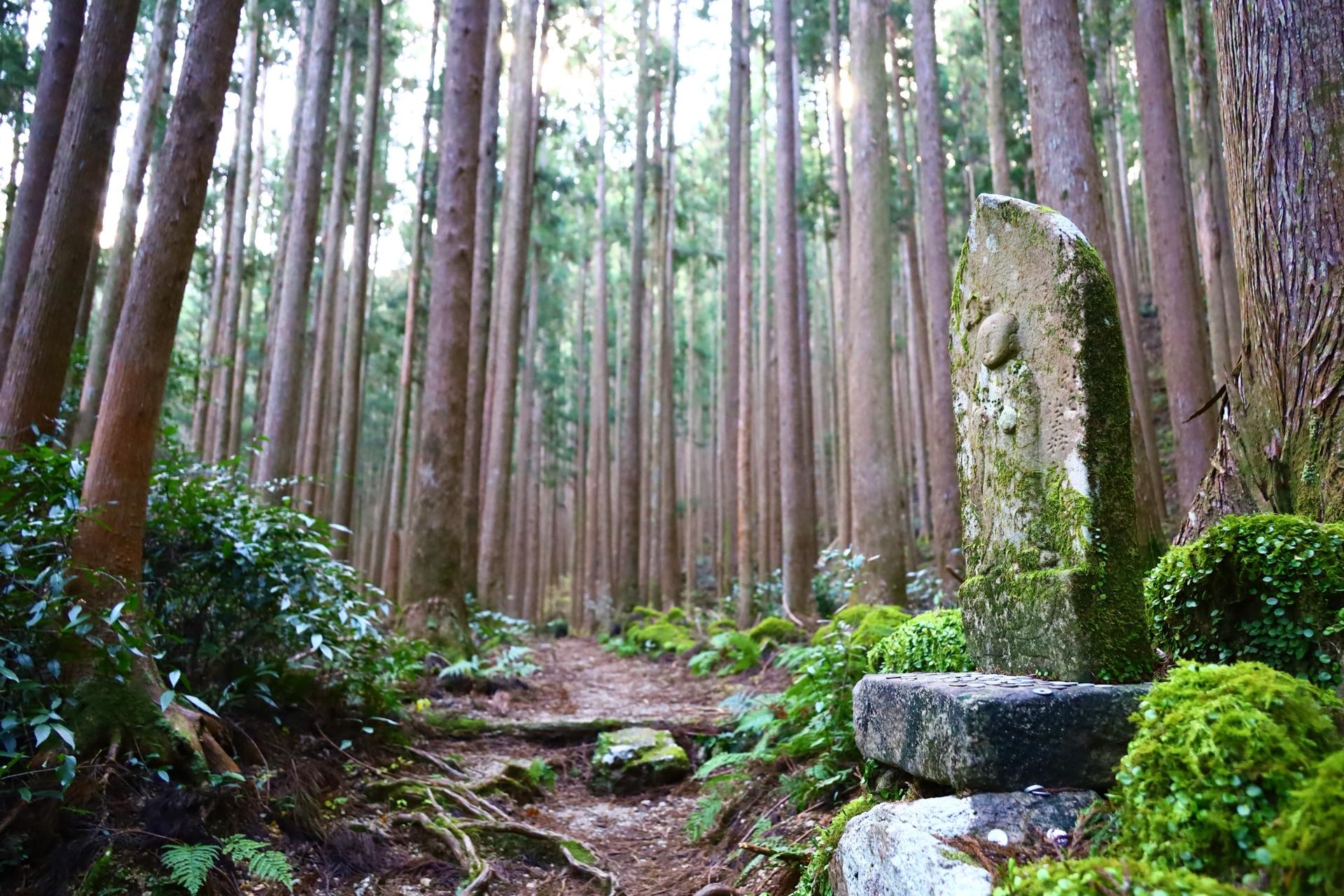
Walk the Old Road, and "Oji" Appear Everywhere
Once you start walking the Kumano Kodo, you'll repeatedly encounter signboards and small shrines marked "◯◯ Oji." The word *oji* literally means "prince," but here it refers to shrines enshrining the child deities (*mikogami*) of the Kumano gods. Think of them as small "branch offices" along the road, watching over travelers on their way to Kumano — that image makes them easier to grasp.
Collectively, these shrines are known as the Kujūkyū Ōji, or "Ninety-Nine Oji." The "ninety-nine" is less a literal count than a way of saying "a great many," reflecting the fact that places of prayer were scattered all along the pilgrimage route.
Oji Are the "Punctuation Marks" of the Road
Each time you pass an oji shrine, it feels like a punctuation mark placed in a long sentence.
- A natural cue for a short breather
- A landmark for opening your map and checking where you are
- A moment to press your palms together in the same spot as travelers of old
Even on a day of several hours' walking, dividing the route into "just as far as the next oji" lightens the mental load. This is a style of walking especially worth trying if you're unsure of your stamina, or traveling with children.
Pause for a Moment in Front of an Oji
Most oji shrines are modest — not grand halls, but small shrines, stone markers, or quiet clearings in the forest. There's nothing flashy about them, and that's exactly why they reward a closer look.
Things Worth Noticing
- The trees: Great cedars, camphor trees, and other old growth often stand as if guarding the oji
- Stones underfoot: The worn stone steps and paving tell the history of countless travelers passing through
- Signboards: These often explain the origin of the oji's name and what the site was once like
- The feel of the air: In some places the forest opens and light pours in — every spot has its own atmosphere
When paying respects, a small bow and a quiet moment with your palms together is more than enough. Don't crowd the shrine or damage the surrounding trees and stones — treat it simply as a passing greeting.
The "Gotai Ōji" — Oji of Highest Rank
Among the Ninety-Nine Oji, a group of especially revered shrines is known as the Gotai Ōji (Five Great Oji). This term always comes up when reading about the Kumano Kodo, so keeping the name in the back of your mind adds to the joy of discovery: "Ah, this is one of *those* oji!" as you walk.
A Little Preparation Before You Walk
1. Check the names of the oji along your route on a map or brochure
2. Note the distances between oji and picture where you'll take breaks
3. Decide in advance, depending on weather and condition, where you'll turn back if needed
Using the oji as markers also makes it easier to pick sensible turnaround points without overdoing it.
In Closing
For Kumano Kodo pilgrims, it wasn't only the destination that mattered — the road itself was a place of prayer. The oji shrines stand as quiet witnesses to that, continuing softly through the forest. Between glances at the scenery, let your eyes fall also to the small shrines at your feet and beneath the trees. Your pace will naturally slow, and the time of the old road will feel a little closer.
Image: 熊野古道中辺路 大雲取越 (via (公社)和歌山県観光連盟)


