 LOCAL FIT KUMANOBack to list
The Kumano Kodo and Multilingual Guides
The Kumano Kodo is registered as a World Heritage site, and many people come from overseas to walk it. It is also known for its sister-route exchange with the pilgrimage paths of Spain, and the shared theme of "pilgrimage" has become a cue for bridging the language gap.
Even so, words like *ōji*, *sankei-michi* (pilgrimage road), and *yugori* can be tricky to explain even for Japanese speakers. When searching for a "Kumano Kodo multilingual guide," it helps to combine people, paper, and smartphones to build several "language bridges" for peace of mind.
The First Bridge: Guided by People
Finding a Guide Who Speaks Your Language
The strength of a human guide is that you can ask questions on the spot about the history and faith of the old road. Among the local storytellers (*kataribe*) and licensed interpreter-guides, some can offer tours in foreign languages. However, the supported languages, dates, group sizes, and meeting places vary by guide and organization. If you want a tour in a specific language, inquire early to confirm.
A Few Tips When Making a Request
- Share the section you want to walk, the time you'd like to spend, and your fitness level in advance
- Let them know whether you'd like to focus on worship and history, or scenery and nature
- Organize your companions' native languages and which languages are easiest to communicate in
The Second Bridge: Printed Materials
On mountain trails where signal is weak, paper becomes reliable. Tourist information centers and lodgings sometimes offer multilingual brochures and maps. Since availability varies by location, it's a good idea to ask at the first stop on your itinerary.
Make Your Own "Mini Glossary"
If you're walking with friends from overseas, jotting down words like the following along with short explanations can really get conversations flowing.
- Ōji: Small shrines along the pilgrimage road that enshrine branch spirits of the Kumano deities
- Ishidatami: Stone-paved paths that have protected the footing of the old road
- Kataribe: People who pass down the local history and faith through storytelling
- Yugori: The custom of purifying oneself in a hot spring before worship
Even just adding English next to the Japanese greatly deepens understanding when reading signboards on site.
The Third Bridge: Smartphones and Translation
Translation apps and audio guides are handy, but signal tends to be unstable in mountain areas. Before you set out, take care of the following for peace of mind.
- Download the language data you'll use in advance
- Make sure it works offline, along with maps
- Carry a mobile battery
App translations of historical terms can sometimes feel stiff. In such cases, combining the mini glossary above with simple paraphrases helps get your meaning across.
When You're Stuck for Words on the Trail
When speaking with innkeepers or locals, the basics are slowly, briefly, and with a smile rather than perfect sentences. Gestures and pointing at a map alone can communicate surprisingly well.
In situations involving safety, such as getting lost or feeling unwell, don't rely solely on translation — ask someone nearby or your lodging right away.
Summary
Rather than relying on just one, a multilingual guide becomes more reassuring the more you layer people, paper, and smartphones. With a little advance inquiry and preparation, language differences turn into enjoyable margins of your journey along the old road. The "What's this?" conversations you share with friends will surely become another cherished memory of the Kumano Kodo.
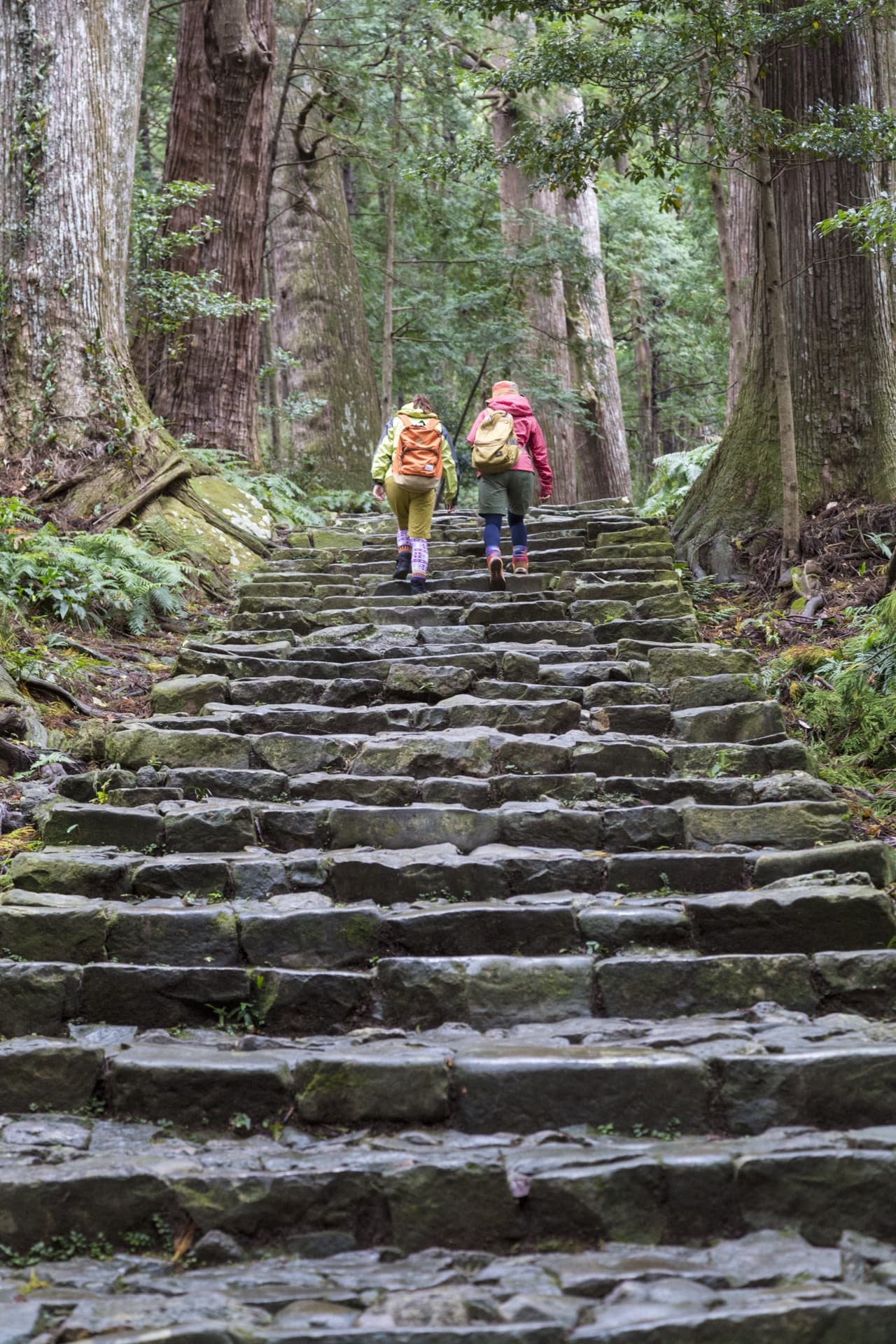
Image: 熊野古道中辺路 大門坂 (via (公社)和歌山県観光連盟)


