 LOCAL FIT KUMANOBack to list
'Most Popular' Depends on How You Measure It
When someone asks, 'Which Kumano Kodo route is the most popular?', even locals find it hard to narrow it down to just one. That's because popularity has several faces:
- Many people walk it (a well-known classic)
- Easy to walk (reassuring for first-timers)
- Striking scenery or atmosphere (memorable, photogenic)
Looking through these three lenses, the trails that qualify as 'popular' shift a little depending on which measure you apply.
Three Classic Sections That Come Up Again and Again
The Nakahechi Section Leading to Hongu|A Route That Captures the Pilgrim's Spirit
The section walked just before reaching Kumano Hongu Taisha has long been popular as 'the old road to Hongu.' You can enjoy mountain village scenery and the quiet of the forest as you approach your sacred destination, which suits travelers who want to savor the feeling of a pilgrimage.
The walking distance and time vary widely depending on where you start. It's wise to check the latest information on starting points and bus schedules in advance.
Daimonzaka at Nachi|A Short Path With a Strong Impression
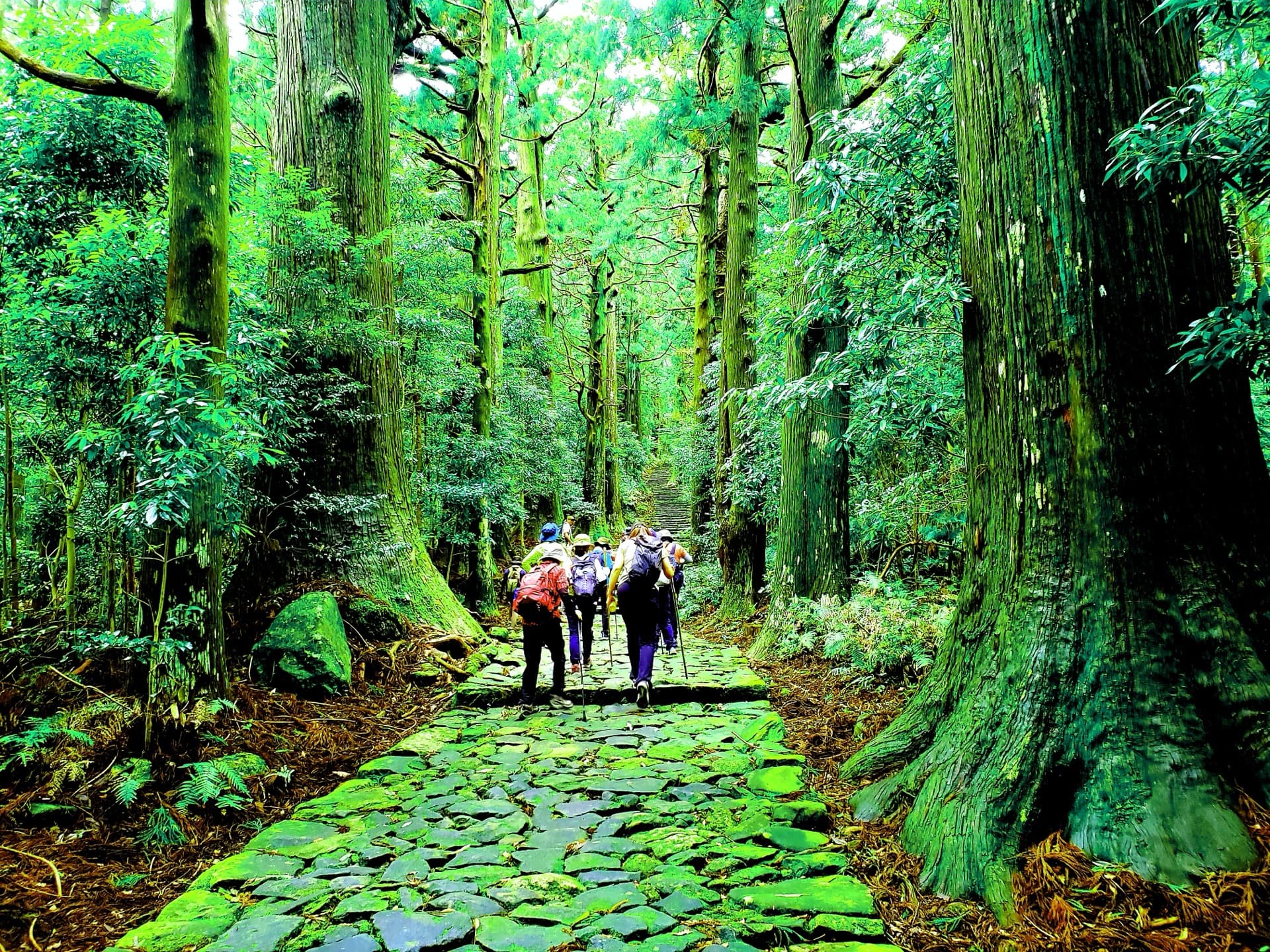
With moss-covered stone paving and rows of towering cedars, Daimonzaka is often introduced as the quintessential image of the Kumano Kodo. It pairs easily with the nearby waterfall and shrines, making it a popular choice for those who are less confident about their stamina, or who simply want to experience the old road as one scene in their journey. Its popularity comes from both its walkability and its scenic impact.
Mountain Passes on the Iseji|A Path Where Sea and Mountain Life Meet
The Iseji route includes passes like Magose-toge and Matsumoto-toge, where you can sense both the stone paving and the nearby sea. Though less famous than the Nakahechi, these trails can easily become 'the number-one route' for travelers who prefer a quiet walk or want to combine their hike with seaside towns.
A Guide for When You Can't Decide
| Purpose of Your Trip | Recommended Route |
|---|---|
| Want to feel the pilgrimage spirit toward Hongu | Nakahechi section leading to Hongu |
| Want to see classic Kumano Kodo scenery in a short time | Daimonzaka |
| Prefer a quiet path with fewer people | Mountain passes on the Iseji |
If you're drawn to all of them, for your first walk we recommend choosing 'a route that fits naturally with your lodging and transportation for the day.' A plan that accounts for how you'll get back — rather than simply chasing the most popular option — tends to leave you more satisfied in the end.
Preparations to Make Before You Walk
- Footwear: Stone paving and dirt paths can be slippery when wet, so wear shoes you're used to.
- Water and snacks: Assume that resupply points on the trail are limited.
- Return transport: Some sections have very few buses, so decide how you'll get back before you set out.
- Allow extra time: Plan to finish walking before sunset.
In Summary
There is no single 'most popular' Kumano Kodo route. But if you choose the one that best fits your purpose from among the classics, that will become your own most popular route. Start by picking one trail that catches your interest, and build your trip from there.
Image: 熊野古道中辺路 大門坂 (via (公社)和歌山県観光連盟)


