 LOCAL FIT KUMANOBack to list
What Are the 'Ōji' You See Along the Old Road?
Once you start walking the Kumano Kodo, you'll come across signposts and small shrines inscribed with '○○ Ōji' again and again along the path.
Despite the name 'Ōji' (literally 'prince'), these aren't shrines dedicated to people. They enshrine the child deities (*mikogami*) of the Kumano gods, and the series of such shrines lining the Kumano pilgrimage routes are collectively known as the Kujūkuōji (literally, 'Ninety-Nine Ōji').
'Ninety-nine' doesn't mean exactly 99 shrines — it's a figurative number meaning 'many.' Because the lineup changed over the ages, there are still various ways of counting them today.
The Ōji Were 'Milestones' Along the Journey
From the end of the Heian period into the Kamakura period, imperial pilgrimages to Kumano (*Kumano Gokō*) by nobles and retired emperors were at their peak. Along the way, the processions are said to have stopped at each Ōji shrine as they progressed.
- A place to pray for safe travel
- A place to rest and tidy oneself
- A landmark signaling one was drawing nearer to Hongu
In today's terms, they were something like 'checkpoints' on the pilgrimage. By dividing the long road into segments from one Ōji to the next, pilgrims could gradually attune both mind and body to the sacred realm of Kumano.
The Rank Called 'Gotai Ōji'
Among the many Ōji, five are considered especially prestigious — the Gotai Ōji ('Five-Body Ōji'). These are generally listed as Fujishiro, Kirime, Inabane, Takijiri, and Hosshinmon.
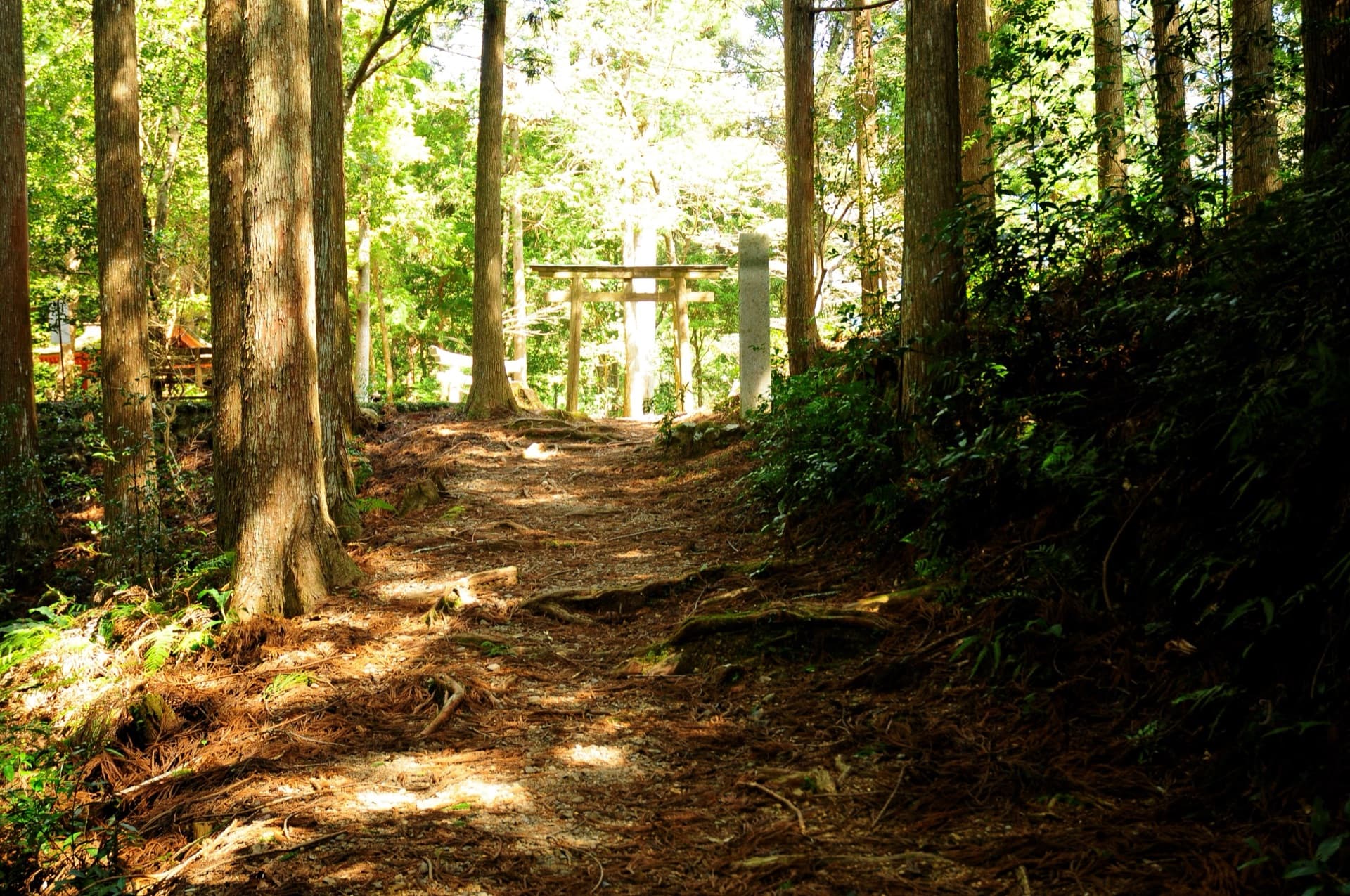
For those walking the Nakahechi route, Takijiri-oji (the gateway to the sacred realm) and Hosshinmon-oji (the gate marking the approach to Hongu) serve as natural milestones at the 'beginning' and 'final stretch' of the journey. Other Ōji vary widely: some are quiet spots with only a torii gate and a small shrine, while others are now marked only by a stone monument indicating the former site.
Three Perspectives to Enjoy as You Walk
1. Read the Names on the Signposts Aloud
The names of the Ōji are tied to local place names, topography, and legends. Checking the pronunciation as you walk lets the memory of the land slowly come into view.
2. Look Up at the Trees Around the Shrine
Ancient cedars and camphor trees often stand within an Ōji's precincts. Even if the shrine building itself is small, the trees create an atmosphere that tells you, 'This is a special place.'
3. Use 'The Next Ōji' as Your Milestone
If you're worried about stamina, deciding 'I'll rest once I reach the next Ōji' makes the walk more manageable. Walking in the same segments as travelers of old is one of the unique pleasures of the Kumano Kodo.
A Word Before You Set Out
The Ōji shrines are places of prayer still carefully looked after by local communities today. When visiting, please offer your prayers quietly and refrain from taking any plants or stones from the precincts.
Also, the spacing between Ōji and the condition of the trails vary greatly from section to section. Once you've decided which section to walk, check the latest trail maps or local tourism association information to confirm the locations of the Ōji and estimated walking times.
In Summary
The Kujūkuōji allow you to experience the Kumano Kodo not as isolated points but as a connected chain. Even without visiting them all, simply pausing at one Ōji and setting the next as your goal will deepen your journey along the old road. Keep an eye out for those small signposts by the wayside.
Image: 熊野古道中辺路 発心門王子 (via (公社)和歌山県観光連盟)


