 LOCAL FIT KUMANOBack to list
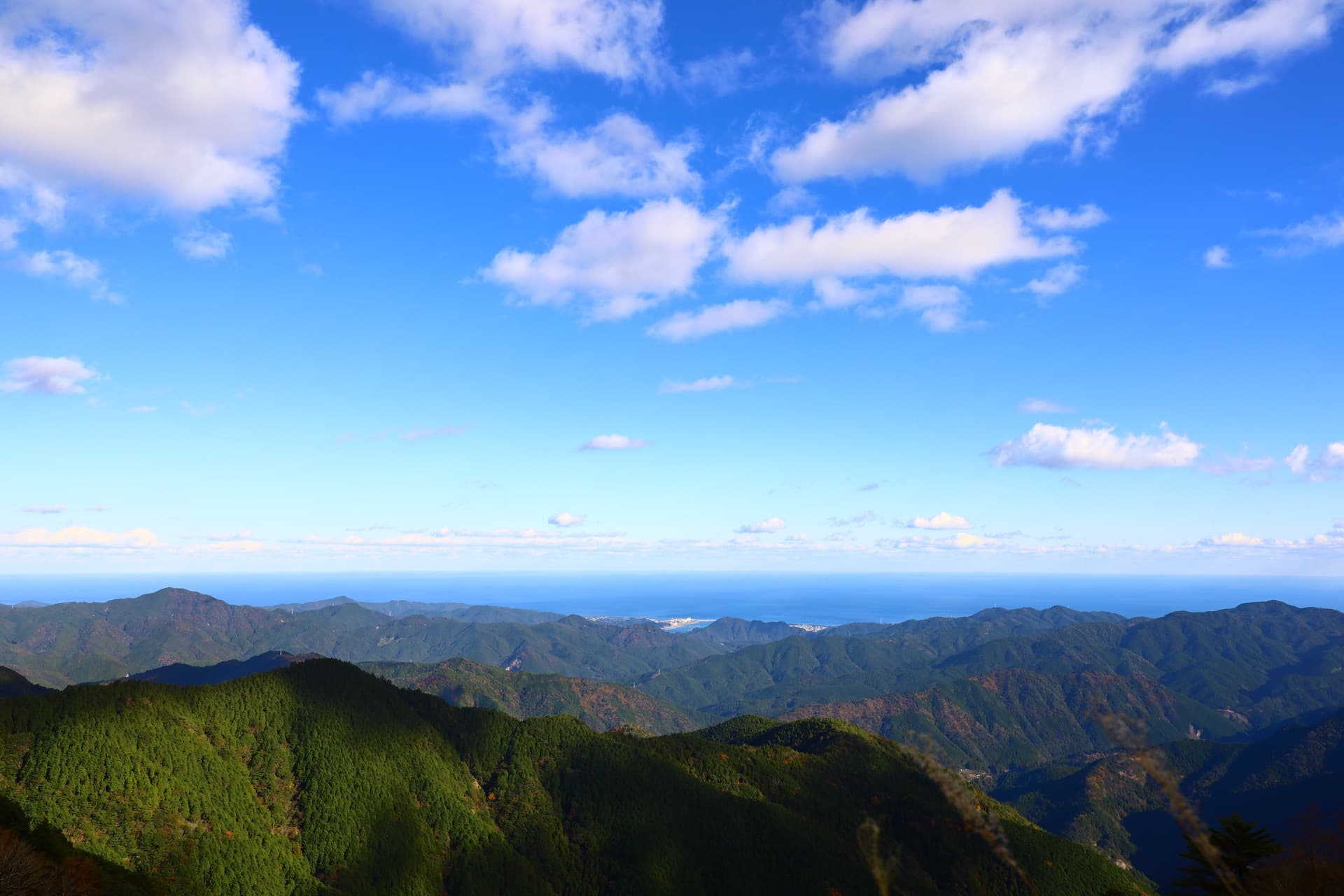
The Kumano Kodo Also Has a "Seaside Face"
When people hear "Kumano Kodo," many imagine mountain trails winding through groves of cedar. But the Iseji route, which heads from Ise Jingu toward Kumano, has a slightly different character.
It is a path that crosses, one by one, the mountain passes lying between seaside towns along the Kumano Sea. Unlike the Nakahechi, which leads deep into the mountains, the Iseji could be called "an ancient road that walks with the presence of the sea."
The Hallmark of the Iseji: "Each Pass Shows a Different Face"
The Iseji progresses by a repeated rhythm — crossing a pass, descending into a coastal village, and then climbing up to the next pass.
- On the ascent: forests of cedar and cypress, and moss-covered stone paving
- At the summit: glimpses of the sea between the trees
- On the descent: the alleys of fishing towns and the air of the harbor
In this way, the texture of the scenery shifts again and again within a single day. Even as an ancient road, the walking experience feels quite different from the Nakahechi.
Mago-goe Pass | A Pass Where the Stone Pavement Takes Center Stage
Mago-goe Pass, located between Owase and Kihoku Town, is known as one of the finest stone-paved sections of the Iseji.
When the dampness on the stone surface, the moss lining both sides of the path, and the sunlight filtering through the trees all come together, time itself seems to slow down. The stone pavement can be slippery after rain, so it's wise to watch your footing.
Matsumoto-toge | Looking Down at the Sea Near Onigajo
Matsumoto-toge in Kumano City is a pass located near Onigajo. As you walk, admiring the roadside Jizo statues and the stone paving, you realize that just behind this seaside sightseeing area, the road once traveled by pilgrims of old still remains.
The view of the Kumano Sea and the sweeping Shichiri Mihama shoreline from the pass gives a real sense of "I've walked all the way here."
Things to Keep in Mind While Walking
Many of the Iseji's passes are short in distance, which is part of their charm — you can enjoy them in sections of about half a day. Still, because the sea is close by, it pays to be attentive to changes in the weather.
1. Rain gear and non-slip shoes: Stone paving becomes more slippery when wet than you might expect.
2. Preparation for wind: On pass summits and along the coast, wind can lower the perceived temperature.
3. Water and light snacks: There are stretches where you won't find any shops until you descend to a seaside town.
4. Check your return transport in advance: Trains and buses are infrequent, so it's reassuring to look things up before setting out.
A Word from the Editors
What makes the Iseji so appealing, we feel, is that the "sacred realm of the mountains" and the "life of the sea" are linked by one single road.
For those walking the ancient route, the sea beyond the pass must have been — then as now — a welcome landmark where one could pause and catch a breath. The passes of the Iseji are well suited to those who have walked the Kumano Kodo a few times already, or to those who want to savor its atmosphere over shorter distances.
Before you set out, please check with local tourist associations for the latest trail conditions and any closures.
Image: 熊野灘 (via (公社)和歌山県観光連盟)


