 LOCAL FIT KUMANOBack to list
The 'Highlight Section' of the Kumano Kodo Differs from Person to Person
When you search for 'Kumano Kodo highlight section,' you can sense the desire for someone to recommend one classic route. However, the Kumano Kodo is a general name for several routes spread across the Kii Peninsula. There is no single 'correct' route—in reality, the highlight changes depending on the scenery you want to see.
In this article, we introduce five entry points by 'type of scenery' from a local's perspective. Since distances and times vary with the season, trail conditions, and your fitness, please check with local tourism associations for the latest information.
Five Highlight Sections, Chosen by Type of Scenery
1. For Mountain Village Views and the Satisfaction of a Pilgrimage: Hosshinmon-oji to Kumano Hongu Taisha
Among the Nakahechi route, this section is often said to give first-time walkers the clearest sense of 'having walked the Kodo.' Ridge-top hamlets, distant layers of mountains, and quiet paths through cedar groves continue until you finally arrive at Kumano Hongu Taisha. With the shrine visit as your goal, you can experience how the path and faith connect.
2. To Meet Roadside Stories: Gyuba-doji near Chikatsuyu
The small stone statue of Gyuba-doji is well known as a symbol of walking the old road. Its charm is not in a grand vista but in the modest presence that appears suddenly along the path. Walking while listening to stories of the oji shrines and teahouse ruins brings you closer to the pilgrims' point of view.
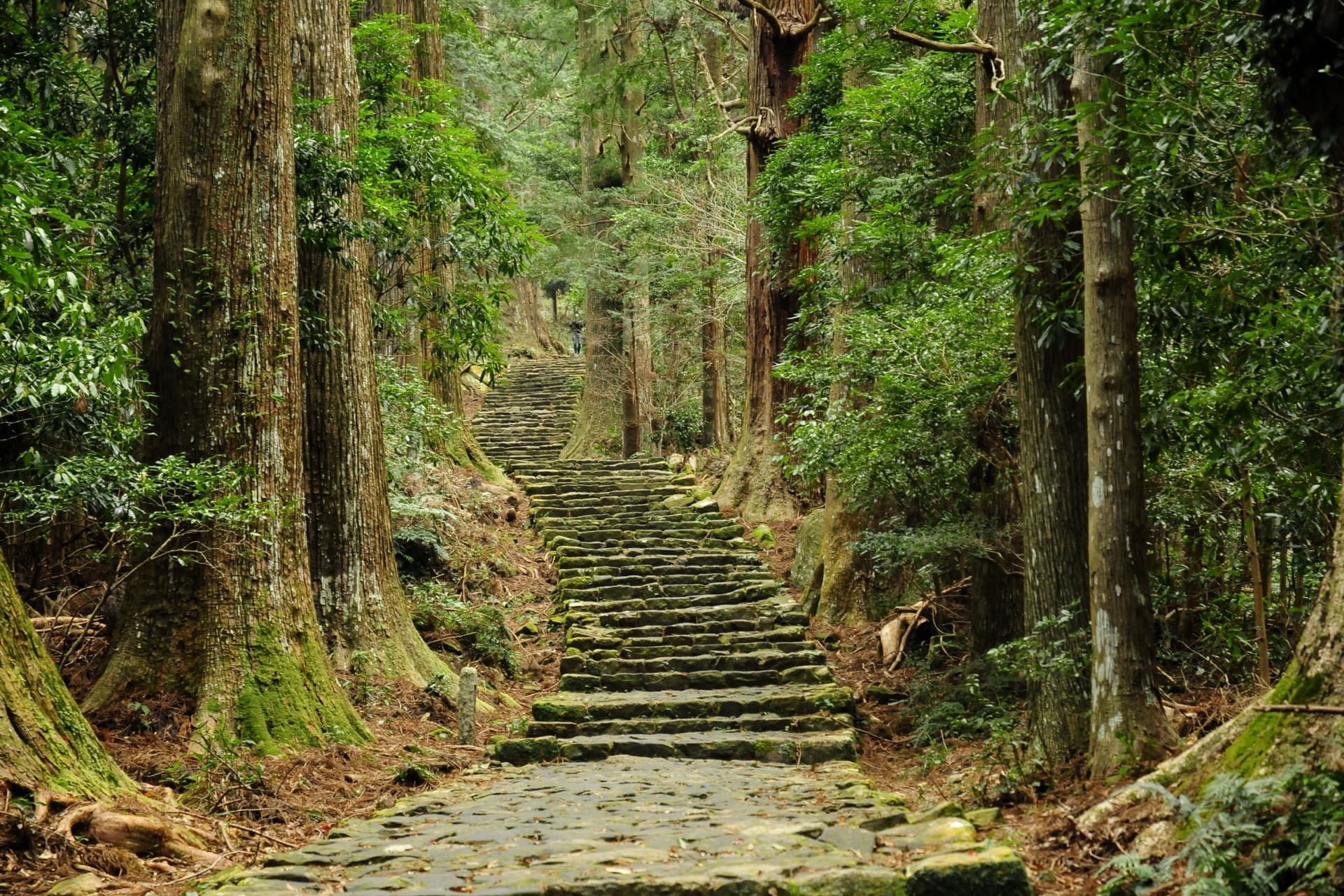
3. For Cedar Groves and Stone-Paved Steps: Daimon-zaka at Nachi
Aged cedars tower on both sides, and moss-covered stone steps continue—this slope embodies the classic image of the Kodo. Even in a short distance, you easily feel 'I've arrived in Kumano,' and it combines well with a visit to the shrines and temples of Mt. Nachi.
4. For the Atmosphere of a Mountain Pass: Umegose-toge on the Iseji
The Iseji route runs close to the sea, and Umegose-toge is memorable for its mossy stone paths and the damp air of the forest. It suits those who want a quieter walk than the Nakahechi, or who want to savor the texture of stone paving. Since it's a mountain pass, prepare your footwear carefully.
5. For a Full Walking Challenge: Okumotori-goe and Kokumotori-goe
These are more mountainous routes connecting Kumano Hongu and Nachi, intended for those who want a serious walk. They are sections for experienced hikers with time, stamina, and the ability to judge the weather. First-timers should start with a shorter section to get a feel for things.
How to Decide When You're Unsure
- Want to get a sense of the atmosphere in half a day: Daimon-zaka
- Want to savor the walk and shrine visit as one continuous experience: Hosshinmon-oji toward Hongu
- Want to immerse yourself in quiet stone paths: Umegose-toge
- Want a real walking experience: Consider Kumotori-goe, but start with a shorter section first
Rather than trying to conquer them all, walking one route slowly lets you feel the essence of Kumano more deeply.
A Few Small Preparations Before You Walk
Stone paths become slippery after rain, and buses are limited in frequency. Check your return transportation first, and bring well-worn walking shoes and rain gear. When you're uncertain about your condition or the weather, the courage to turn back is also part of the journey.
Choose one 'scenery you want to see,' and step onto the old road from that entry point.
Image: 熊野古道中辺路 大門坂 (via (公社)和歌山県観光連盟)


